2026 Best Material Handling Equipment for Global Buyers
In 2026, global buyers need Material Handling Equipment that performs reliably across warehouses, factories, ports, and distribution centers. The right choice depends on load weight, aisle width, floor conditions, energy access, and local service capacity. A compact electric forklift may suit a clean indoor facility, while a diesel model may handle demanding outdoor yards. Pallet trucks, conveyors, reach trucks, stackers, automated guided vehicles, and warehouse software each solve different operational problems. The cheapest option is rarely the lowest-cost option.
Real purchasing decisions require more than attractive specifications. Buyers should examine lifting capacity, battery life, safety features, maintenance intervals, operator training, spare-part availability, and total ownership costs. A machine that looks efficient in a showroom may struggle on uneven floors or during extended shifts. Small details matter. Think worn dock plates, narrow turning spaces, and a battery charger placed too far away. Manufacturer certifications and independent testing can strengthen confidence, but they should not replace site-specific evaluation. No system is perfect.
This guide compares leading equipment categories for international buyers and explains where each solution fits best. It considers practical performance, automation readiness, durability, energy efficiency, and supplier credibility. Regional regulations and workplace standards also deserve careful review before purchase. Some businesses may overestimate automation benefits without reliable data or trained technicians. That assumption needs testing. Experienced buyers often begin with workflow measurements, then request demonstrations under realistic loads. The best investment supports safer handling, predictable productivity, and future expansion without creating unnecessary complexity.
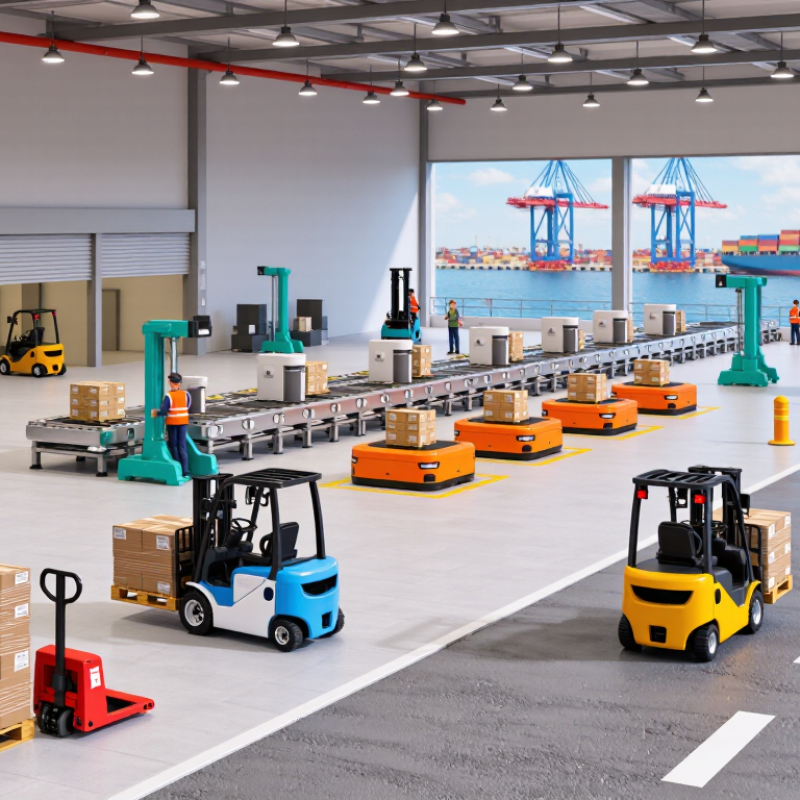
What Material Handling Equipment Is and Why It Matters in 2026
Material handling equipment includes the tools used to move, store, protect, and control goods. It covers forklifts, pallet trucks, conveyors, stackers, hoists, shelving systems, and automated guided vehicles. These machines support every warehouse movement, from receiving a container to placing a carton on a dispatch pallet. A practical warehouse assessment often starts with simple observations: aisle width, floor condition, load weight, lifting height, and daily travel distance.
In 2026, this equipment matters because warehouses face tighter labor availability, higher energy costs, and faster delivery expectations. Electric machines can reduce local emissions and operating noise, especially indoors. Sensors and fleet software can reveal idle time, battery health, collision risks, and poor route planning. Safety remains central. Clear visibility, stable loads, speed controls, and operator training can prevent serious incidents. Small design choices matter.
Automation is not always the answer. A fully automated system may struggle with irregular cartons, changing product sizes, or unreliable data. That is easy to overlook. Global buyers should compare total operating cost, spare-parts access, local service capacity, charging infrastructure, and compliance requirements. Equipment must suit the site, not merely look advanced in a catalog. A compact electric stacker may outperform a larger machine in a narrow facility, while a rough outdoor yard may require different tires and protection. The best purchase is practical, maintainable, and safe under real working conditions.
How to Classify Material Handling Equipment by Function
For global buyers in 2026, material handling equipment should be classified by function, not appearance.
Transport equipment moves goods across a facility. Examples include conveyors, pallet trucks, carts, and guided vehicles. Lifting and positioning equipment raises, lowers, or reorients loads. Forklift trucks, hoists, scissor lifts, and work-positioners serve this role. A practical test is simple: observe the pallet’s movement, height, and turning point.
Storage and retrieval equipment controls where goods wait. Racking, automated storage systems, vertical lifts, and retrieval machines improve space use and inventory access. Unit-load formation equipment stabilizes products before movement. Stretch wrappers, strapping tools, and palletizers reduce shifting during transit.
According to the MHI 2024 Annual Industry Report, 55% of surveyed organizations increased investment in supply chain innovation. That figure supports a broader shift toward connected handling systems.
Identification and control equipment gives operations visibility. Barcode readers, sensors, warehouse software, and weighing systems help confirm location, quantity, and status. The International Federation of Robotics reported 541,302 industrial robots were installed worldwide in 2023, showing strong automation momentum.
However, automation does not fix poor layouts. The distinction is useful, but not perfect. A robotic palletizer may form unit loads, lift them, and communicate with storage equipment. Buyers should map each task, load weight, aisle width, floor condition, and operator interaction before selecting equipment. Small details matter. A two-centimeter floor gap can disrupt smooth travel.
Key Equipment Types for Warehousing, Manufacturing, and Distribution
2026 Best Material Handling Equipment for Global Buyers
Warehousing, manufacturing, and distribution require different equipment priorities. Forklifts and electric pallet trucks remain practical for loading bays, narrow aisles, and mixed pallet sizes. Conveyors support steady carton movement, while automated storage and retrieval systems improve space use in high-volume facilities. Mobile robots can connect picking, replenishment, and dispatch areas, but floor markings and reliable traffic controls still matter.
The MHI 2024 Annual Industry Report found that 83% of supply chain professionals expect to increase technology investment over the next five years. That trend supports demand for warehouse control software, sensors, and scalable automation. In manufacturing, the International Federation of Robotics reported 541,302 industrial robots installed worldwide in 2023. Material handling decisions should therefore consider both production flow and worker interaction. Guarding, visibility, charging areas, and maintenance access are not optional details.
Capacity is only one test. A 2.5-ton forklift may look efficient, yet it can waste time in a congested aisle. Measure travel distance, pallet turnover, dock cycles, and peak-hour delays before purchasing. Automation is not always the answer. A manual pallet jack may outperform a complex system in a small facility with changing layouts. I would also question optimistic payback calculations. Labor savings can shrink when training, software updates, batteries, and downtime are included. The right equipment is usually the one operators can use safely, maintain locally, and expand without redesigning the entire site.
This chart compares representative rated load capacities commonly specified for major material handling equipment categories used in warehousing, manufacturing, and distribution. Actual capacity depends on configuration, lift height, load center, and operating conditions.
How Global Buyers Should Compare Safety, Cost, and Performance
For global buyers, material handling equipment should be compared by safety, total cost, and measurable performance—not by purchase price alone. OSHA reports that powered industrial trucks cause about 35,000 serious injuries and 85 fatalities annually in the United States. Buyers should therefore check rated capacity, braking distance, operator visibility, emergency controls, and training requirements. A short safety demonstration on a crowded warehouse floor can reveal more than a polished specification sheet. Small details matter.
Cost requires a wider view. Include energy use, scheduled maintenance, spare parts, operator training, downtime, and disposal value. MHI’s 2024 Annual Industry Report found that 91% of supply chain professionals planned to increase technology investment. That spending still needs discipline. A cheaper unit may consume more energy or require frequent service. I would not trust a five-year cost estimate without local electricity prices and realistic shift data.
Performance should be measured in completed moves, uptime, travel distance, and error rates. The U.S. Bureau of Labor Statistics reported over 2.6 million nonfatal workplace injuries and illnesses in private industry during 2023. Ergonomics deserves attention, especially where operators repeat lifting or turning movements. Buyers can request trial data under normal loads, temperature, aisle width, and floor conditions. Perfect test results are rare. That is useful. It forces a more honest comparison.
How to Select Equipment for Different Industries and Operating Environments
2026 Best Material Handling Equipment for Global Buyers
Selecting material handling equipment starts with the workplace, not the catalog. A narrow warehouse may need compact electric lift trucks with precise steering. A construction site may require rough-terrain machines, stable tires, and protected controls. Measure aisle width, floor strength, turning space, and daily load cycles before comparing equipment.
Cold-storage operations create different demands. Batteries lose efficiency in freezing temperatures, while moisture can damage exposed components. Choose sealed systems, suitable battery technology, and controls that workers can operate with gloves. Food-processing facilities require smooth surfaces and easy cleaning. Dusty sites need protected motors and reliable filtration. Equipment used near loading docks should handle ramps, vibration, and changing weather.
Capacity ratings must reflect real conditions. A 2,000-kilogram load placed far from the mast can reduce practical lifting capacity. Ask suppliers for tested performance data, maintenance intervals, spare-part availability, and operator training. These details often matter more than purchase price. I have seen equipment selected correctly on paper but poorly matched to traffic patterns. That mistake increases waiting time and wear.
Do not ignore energy use. Electric equipment can lower indoor emissions, but charging space and power access must be planned. Fuel-powered equipment may suit outdoor work, yet ventilation and noise require careful control. A pilot trial during the busiest shift can reveal problems that specifications miss. Review the results honestly. One test is rarely enough.