
2026 Best Portable Electric Winch Types for Global Buyers

Choosing the right Portable Electric Winch in 2026 requires more than comparing pulling capacity and price. Global buyers face different terrain, power systems, weather conditions, and supplier standards. A compact winch that performs well on a dry workshop floor may struggle in wet forests, sandy construction sites, or steep recovery work.

This guide examines practical winch types for vehicles, trailers, boats, workshops, and light industrial applications. It considers rated line pull, motor efficiency, battery demand, cable or synthetic rope, braking control, waterproof protection, and remote operation. These details matter when a 12-volt system faces a cold morning, a drained battery, or a muddy load. Small differences can become serious delays.

Real-world testing should support every specification. Manufacturer manuals provide useful limits, but independent measurements can reveal heat buildup, slow rewinding, or inconsistent remote signals. A higher rating is not automatically safer. Poor anchoring, uneven loading, and neglected maintenance can reduce performance quickly. That assumption deserves attention.

Some models look excellent on paper. They may still disappoint after repeated pulls. Buyers should verify duty cycles, replacement parts, warranty support, plug compatibility, and regional service access before ordering. Certification marks can also vary by market, so documentation should be checked carefully with qualified local professionals. This overview aims to offer balanced guidance, not a perfect answer. The best Portable Electric Winch depends on the job, the environment, and the operator’s judgment. Expect trade-offs. Reliability is built through suitable selection, careful installation, and consistent inspection.
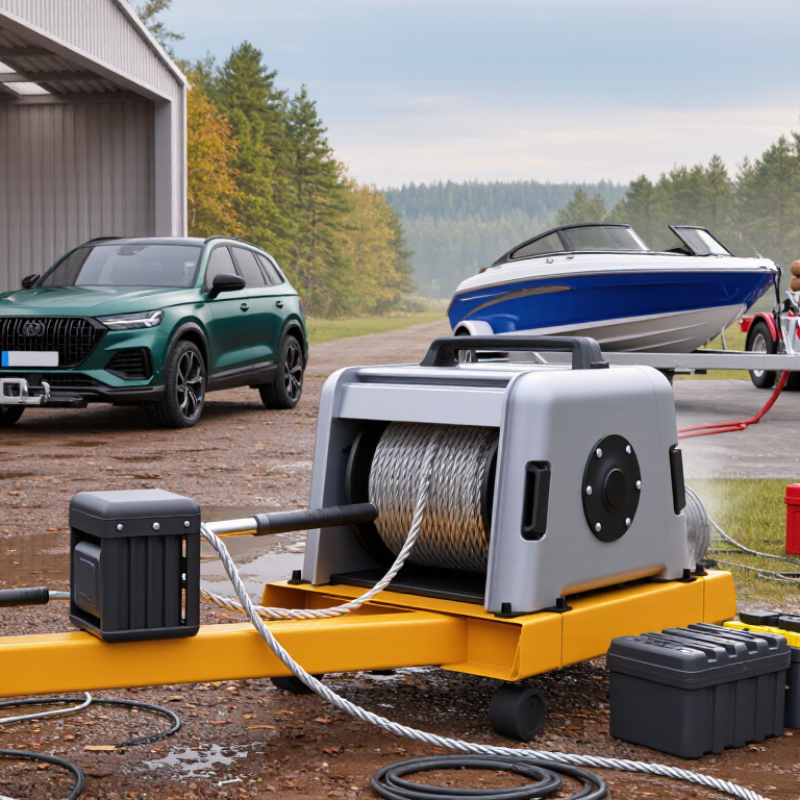
2026 Best Portable Electric Winch Types for Global Buyers

Portable Electric Winch Basics and Essential Components

A portable electric winch converts battery power into controlled pulling force. Its main parts include an electric motor, reduction gearbox, drum, cable, fairlead, brake, controller, and mounting plate. The motor creates rotation, while the gearbox increases torque at the drum. The brake holds the load when power stops.

Check the rated line pull carefully. Maximum capacity usually applies to the first cable layer, not every layer. Pulling force decreases as more cable wraps around the drum. A steel cable tolerates abrasion well, while synthetic rope is lighter and easier to handle. Both require regular inspection for crushed sections, fraying, corrosion, or heat damage.

Power planning is often underestimated. A winch may draw substantial current during heavy pulling, so the battery, wiring, fuse, and connectors must match its demand. The controller should respond smoothly and remain protected from water and dust. A sealed enclosure helps, but it is not permission to ignore maintenance. I would also check the mounting surface, because a strong winch can damage a weak support point. The published rating is useful, but real conditions are messier: mud, slope, cable angle, and rolling resistance can change the load. Leave a safety margin. Small oversights become expensive.

2026 Best Portable Electric Winch Types for Global Buyers

Portable electric winches are commonly selected by application, rated line pull, power supply, and portability. The chart compares representative maximum rated line-pull capacities found across common winch categories.

How to read the chart: Rated line pull is the maximum pulling force commonly specified for the first layer of cable on the drum. Actual capacity decreases as more cable is wound onto the drum and depends on battery condition, cable angle, anchoring, terrain, and friction.

Essential Portable Electric Winch Components

  • Electric motor: Converts battery or vehicle electrical power into mechanical pulling force.
  • Gear train: Reduces motor speed and increases drum torque.
  • Drum and synthetic rope or steel cable: Stores the pulling line and transfers force to the load.
  • Solenoid or contactor: Controls high-current motor operation during forward and reverse movement.
  • Fairlead: Guides the rope or cable onto the drum and helps reduce abrasion.
  • Control system: Includes a wired or wireless remote, emergency stop function, and overload protection.
  • Mounting plate and hook: Provide secure attachment to a vehicle, trailer, anchor point, or temporary structure.

How to Classify Portable Electric Winches by Design and Power

2026 Best Portable Electric Winch Types for Global Buyers

Portable electric winches are easier to compare when buyers classify them by design and power. Design affects portability, mounting, and control. Power affects pulling capacity, battery demand, and operating time.

A rope winch uses synthetic line, which is light and easier to handle in wet conditions. A cable winch uses steel wire, offering strong abrasion resistance but adding weight. Handheld models suit short recovery tasks and quick repositioning. Frame-mounted models provide better stability for repeated work. Some units include wireless controls, while others rely on wired switches. Control distance matters near vehicles, boats, or raised loads.

Power classification should include rated pulling force, motor wattage, battery voltage, and duty cycle. A higher force rating does not always mean better performance. The drum may slow under load. Battery temperature can also reduce output. Buyers should check rope length, line speed, overload protection, and charging compatibility. Regional voltage requirements deserve attention, especially for international orders. Certification documents and clear operating instructions improve purchasing reliability.

Tips: Match the winch to the real load, not an optimistic estimate. Leave a practical safety margin. Check the anchor point before every operation. Keep hands away from the drum and moving line. Inspect cables, hooks, and connectors regularly. This classification is useful, but never perfect. Actual performance changes with slope, friction, battery condition, and weather. Test the complete setup carefully before depending on it.

Key Specifications for Comparing Winches in 2026

2026 Best Portable Electric Winch Types for Global Buyers

Key Specifications for Comparing Winches in 2026

Comparing specifications matters more than advertised pulling power. A compact recovery winch suits vehicles and outdoor work. A utility winch fits workshops, trailers, and controlled pulling tasks. Choose the application first, not the appearance.

Rated line pull should match the real load, slope, and surface friction. Check first-layer and bottom-layer ratings. Capacity changes as rope builds on the drum. Motor voltage must match the available battery or power system. Compare duty cycle, thermal protection, gear ratio, and no-load speed. Synthetic rope reduces weight but needs inspection after abrasion. Steel cable handles rough contact better, yet adds mass and stores more energy. Check the brake, control sealing, emergency stop, mounting dimensions, and weather protection. An IP rating helps. It does not replace maintenance.

Tips: Ask how each capacity figure was tested. Carry spare fuses, gloves, and a rated anchor strap. Verify local electrical and lifting requirements before importing. Never use a pulling winch for people. Buyers often underrate battery drain and cable storage. I would also check gearbox play, noise, and remote range under realistic conditions. A specification sheet may look complete while hiding a weak duty cycle. That uncertainty deserves attention.

2026 Best Portable Electric Winch Types for Global Buyers - Key Specifications for Comparing Winches in 2026
Portable Winch Type Typical Rated Line Pull Common Power System Typical Rope Type and Size Approx. Product Weight Typical Line Speed at No Load Typical Duty Profile Recommended Applications Important Selection Factors Main Limitations
Compact Utility Winch Lightweight portable model for general pulling and positioning 450–1,000 kg
1,000–2,200 lb
12 V DC
Common current draw: 60–150 A under heavy load
Synthetic rope or galvanized wire rope
Approx. 4–6 mm diameter
6–14 kg 3–8 m/min Intermittent use with cooling pauses Small trailers, gates, landscaping equipment, light cargo positioning, and workshop tasks Mounting method, circuit-breaker rating, remote-control range, rope abrasion resistance, and battery capacity Not intended for vehicle recovery, lifting people, or continuous industrial operation
ATV and UTV Recovery Winch Compact recovery winch designed for off-road vehicles 1,600–2,700 kg
3,500–6,000 lb
12 V DC
24 V versions are available for selected fleet and utility applications
Synthetic rope or wire rope
Approx. 5–8 mm diameter
10–22 kg 4–12 m/min Short recovery cycles; allow motor and gearbox to cool between pulls ATV and UTV self-recovery, snow, mud, sand, forestry access roads, and farm work Vehicle gross weight, rated single-line pull, fairlead type, waterproofing, braking performance, and battery reserve Rated capacity decreases as the rope is layered on the drum; anchoring equipment is usually required
Portable Vehicle Recovery Winch Detachable winch that can be used from a receiver, bumper, or anchor point 2,700–4,500 kg
6,000–10,000 lb
12 V or 24 V DC
High-current battery connection required
Synthetic rope or galvanized wire rope
Approx. 8–10 mm diameter
25–45 kg 3–9 m/min Intermittent recovery operation with controlled thermal loading 4x4 recovery, utility vehicles, agricultural vehicles, and remote-area transport Portable mounting strength, vehicle recovery points, cable length, waterproof connectors, braking system, and accessory compatibility Heavy and power-hungry compared with ATV models; not a substitute for a permanently mounted recovery system in frequent use
Boat Trailer Winch Winch for loading and positioning boats on trailers 1,000–3,600 kg
2,200–8,000 lb
12 V DC
Some models use a rechargeable battery pack or detachable power lead
Strap or synthetic rope
Approx. 6–10 mm equivalent width
12–30 kg 2–6 m/min under load Short-duration loading cycles with regular inspection of strap and hook Boat launching and retrieval, marine trailers, and controlled ramp operations Boat and trailer combination weight, saltwater corrosion protection, strap length, waterproof controls, and manual override Designed for trailer loading rather than free-spooling vehicle recovery or vertical lifting
Handheld Capstan Winch Portable friction-drum winch using a separate anchor point 700–1,500 kg
1,500–3,300 lb
12 V or 24 V DC
Some designs use a compact rechargeable power source
Separate synthetic rope
Usually 10–12 mm diameter, depending on model
8–18 kg excluding rope and battery 8–20 m/min Flexible intermittent operation; load depends on rope friction and anchoring Forestry, land management, pulling logs, farm maintenance, and remote work sites Anchor quality, rope length, rope compatibility, ergonomic carrying design, overload protection, and battery runtime Requires correct rope wrapping and operator control; capacity is not directly comparable with drum winch ratings
Electric Trailer and Machinery Winch Higher-capacity portable or semi-portable model for equipment movement 2,700–5,400 kg
6,000–12,000 lb
12 V or 24 V DC
High-current cables and a properly sized battery are essential
Galvanized wire rope or synthetic rope
Approx. 8–11 mm diameter
30–55 kg 2–7 m/min Short pulls with extended cooling intervals under high load Equipment loading, car transporters, agricultural machinery, utility trailers, and recovery of heavy movable loads Rated capacity at the first rope layer, mounting frame strength, thermal protection, gearbox braking, cable gauge, and battery charging method May require two-person handling and reinforced mounting; high capacity does not mean suitability for overhead lifting
Portable Electric Hoist Compact lifting device for controlled vertical material handling 125–500 kg
275–1,100 lb
110–240 V AC or low-voltage DC
Power requirements vary by lifting capacity
Wire rope or chain
Typical lifting length: 6–20 m
10–30 kg 2–8 m/min lifting speed Duty class and rated on/off cycle must be observed Workshops, maintenance areas, stage or event equipment, and light material handling Rated lifting capacity, upper and lower limit switches, overload protection, suspension point, emergency stop, and applicable local safety rules Not designed for vehicle recovery or pulling loads horizontally; personnel lifting is prohibited unless specifically certified
Battery-Powered Cable Puller Cordless compact puller for light-duty positioning 300–900 kg
660–2,000 lb
18–36 V rechargeable battery system
Runtime depends on battery capacity and load
Synthetic rope or small-diameter wire rope
Approx. 4–7 mm diameter
5–15 kg including battery 4–15 m/min Short intermittent cycles; battery and motor temperature affect performance Light equipment positioning, temporary barriers, small trailers, and maintenance work Battery availability, spare-battery cost, charger voltage, overload cutoff, wireless control, and operating temperature range Limited runtime and lower sustained pulling capacity than hard-wired 12 V or 24 V systems
Comparison note: The figures shown are representative 2026 market ranges for portable electric winches and are intended for preliminary comparison. Actual performance varies by rope layer, battery condition, mounting arrangement, incline, duty cycle, ambient temperature, and manufacturer-rated operating limits. Line-pull ratings must not be treated as safe working load limits for overhead lifting or personnel transport.

Best Portable Electric Winch Types for Different Applications

Portable electric winches serve different jobs, so one design cannot fit every buyer. For off-road recovery, choose a compact winch with strong pulling capacity, a sealed motor, and a wireless controller. A wide synthetic rope can reduce handling strain. It also needs enough battery power for repeated pulls. One pull is not enough evidence.

For boat launching, corrosion resistance matters more than extreme pulling force. Look for sealed electrical parts, a reliable brake, and a smooth drum. Agricultural users may prefer a portable winch with a long cable and simple anchoring options. Construction teams often need a lighter unit for moving materials across short distances. Check the working load, duty cycle, rope length, and mounting stability before purchase. I have seen buyers focus on maximum capacity, then overlook heat buildup during repeated use.

Tips: Match the winch to the real load, not the advertised maximum. Keep the line straight whenever possible. Inspect the rope, hook, battery leads, and anchor point before each operation. Wear gloves and eye protection. Never stand in the line of pull. Test the winch under controlled conditions before relying on it in mud, water, or remote areas. A practical field test may reveal limits that a specification sheet misses.

Global Buying Standards, Safety Requirements, and Maintenance Needs

Global buyers choosing a 2026 portable electric winch should treat it as lifting equipment, not a powerful extension cord. Selection starts with rated line pull, duty cycle, drum capacity, voltage, and anchoring conditions. EN 14492-1, ASME B30.7, and ISO 12100 offer useful reference points, but local adoption differs. Check the conformity documents. Ask for load-test records, emergency-stop design, guarding, and instructions in the operator’s language. IEC 60529 ingress ratings matter when rain, dust, or wash-down exposure is expected.

The ILO’s 2023 report estimates nearly three million work-related deaths annually worldwide. That figure is not winch-specific, but it explains why a low-cost safety shortcut is difficult to defend. The U.S. Bureau of Labor Statistics reported 5,283 fatal work injuries in 2023. Again, these are broad workplace data, not proof of a product defect. Use them as risk context. Operators should stay outside the rope’s line of fire, inspect hooks and cables before every shift, and stop with damaged components. Never trust appearance alone.

Maintenance needs are often underestimated. Keep terminals dry, clean carbon dust, inspect insulation, and lubricate only where the manual permits. Wire-rope discard criteria should follow ISO 4309 or the applicable regional rule. Battery models need controlled charging, correct storage temperature, and documented capacity checks. A practical purchasing preference is a dated inspection tag beside the control pendant. It reveals missed checks quickly, although tags can create false confidence. A second-person pre-use check is slower, yet safer in poor visibility.

keep me informed

Subscribe

By clicking SEND means that you agree to our Terms & Conditions, Privacy and Cookie Policies.