
2026 Best Steel Plate Manufacturer for Global Buyers?
Choosing the 2026 Best Steel Plate Manufacturer for Global Buyers requires more than comparing prices.
Steel demand remains closely tied to construction, energy, shipbuilding, machinery, and infrastructure. The World Steel Association reported global crude steel production of about 1.89 billion tonnes in 2023. Its Short Range Outlook also shows that demand recovery depends heavily on regional investment and economic confidence. These figures reveal a practical point: buyers need dependable supply, not impressive claims alone.
As Lakshmi Mittal, Executive Chairman of ArcelorMittal, has said, “Steel is the backbone of modern industry.” That statement remains relevant, but modern buyers must ask harder questions. Can the supplier provide certified chemical composition? Are thickness tolerances controlled across repeated batches? Can mill test certificates, ultrasonic testing, and traceability records be verified? A strong Steel Plate Manufacturer should answer clearly.
The OECD has warned about rising global steelmaking capacity and continued market pressure. Meanwhile, the International Energy Agency identifies steel as one of the difficult industrial sectors to decarbonize. These reports make supplier evaluation more complex in 2026. Carbon reporting, furnace technology, recycled content, and delivery reliability now influence purchasing decisions.
This guide will compare manufacturers through production capability, plate grades, inspection systems, export experience, and after-sales support. No ranking can suit every project. A shipyard may prioritize impact toughness, while a bridge contractor may focus on weldability and long-term documentation. That difference matters.
Some supplier data may also be incomplete or difficult to compare. Buyers should remain cautious. The best choice is not always the cheapest mill, but the manufacturer that can repeatedly deliver safe, traceable, specification-compliant steel plate.
Steel Plate Manufacturing: Processes, Standards, and Product Categories
2026 Best Steel Plate Manufacturer for Global Buyers?
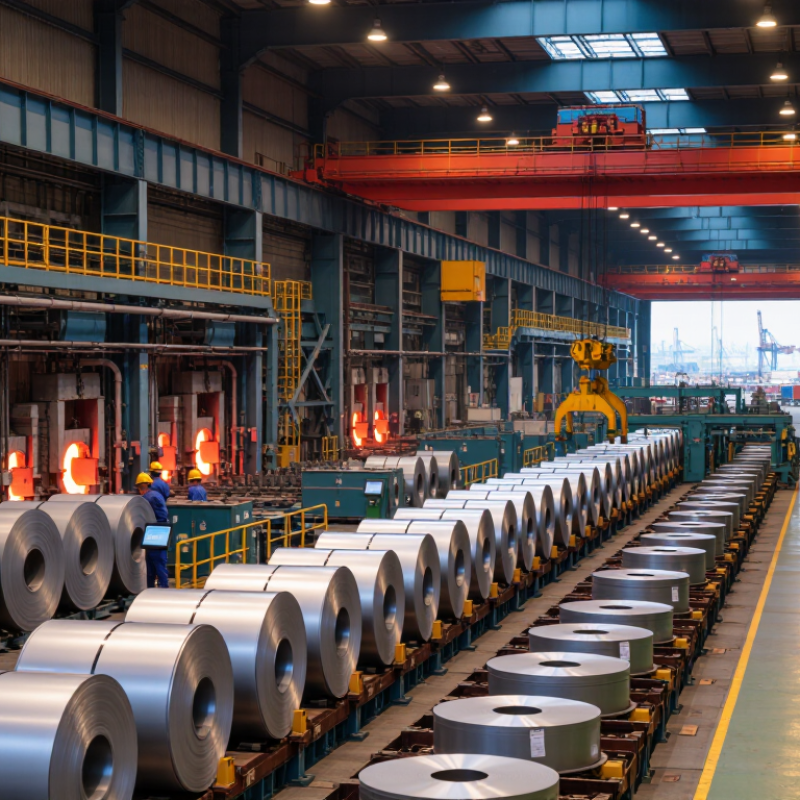
Steel plate manufacturing begins with controlled steelmaking, casting, and rolling. Slabs are reheated, then passed through heavy rollers to reach the required thickness. Some plates receive normalizing, quenching, or tempering for improved strength and toughness. Cold rolling may provide tighter dimensions and a smoother surface, but it is less common for very thick plate.
Product categories should match the application. Carbon steel plate suits general structures and fabrication. High-strength low-alloy plate reduces weight in bridges, vehicles, and machinery. Alloy and stainless plates support demanding conditions, including heat, corrosion, or pressure. Standards such as ASTM, EN, JIS, and ISO define grades, testing, dimensions, and tolerances. However, standards are not interchangeable. A similar grade name may hide different chemistry or mechanical requirements. Buyers should check the exact edition and project specification. Mistakes happen here.
Tips: Request a mill test certificate, heat number, dimensional report, and ultrasonic testing results when needed. Confirm yield strength, tensile strength, impact temperature, surface condition, and plate tolerance before production. Ask for sample reports, not broad promises. A reliable manufacturer should explain its rolling route, inspection equipment, and corrective process. No supplier gets every detail right. The important test is how clearly problems are reported and corrected. A practical review should also compare packaging, marking, moisture protection, and loading photographs before shipment.

2026 Steel Plate Manufacturing: Standards and Product Categories
Representative minimum specified yield strength values for widely used steel plate grades
Steel plates are commonly produced through hot rolling, controlled rolling, normalizing, quenching and tempering, or thermo-mechanical controlled processing. The chart compares representative minimum specified yield strengths for common product categories and standards. Actual requirements can vary by plate thickness, chemical composition, delivery condition, standard edition, and purchasing specification.
How to Evaluate Steel Plate Manufacturers in 2026
Choosing a steel plate manufacturer in 2026 requires more than comparing quoted prices. Start with technical fit: grade, thickness, width, length, surface condition, and delivery standard. Ask for recent mill certificates, not generic samples. Each certificate should match the heat number stamped on the plate. Confirm chemistry, yield strength, tensile strength, elongation, and impact results. These details reveal whether the supplier controls production consistently.
Request inspection records for ultrasonic testing, dimensional checks, and surface repairs. A reliable producer explains acceptance limits before production begins. Ask how plates are marked, packed, stored, and protected from moisture. Photograph-based approval can miss edge laminations or uneven surfaces. An independent inspection before shipment adds useful evidence, especially for thick or critical plates. Visit the mill when possible. Check the records. A polished website proves little.
Evaluate capacity with real production schedules, not promises. Compare lead times, minimum orders, replacement policies, and responses to nonconforming material. Ask for references from projects using similar grades and plate dimensions. Reliable communication matters when a vessel, bridge, or fabrication line faces delay. However, no audit removes every risk. Certificates can contain errors, and experienced buyers may overlook packaging details. Record every requirement in the purchase contract, then verify it at dispatch. The best manufacturer can show evidence, admit limits, and correct mistakes quickly.
Global Certifications, Quality Control, and Traceability
2026 Best Steel Plate Manufacturer for Global Buyers?
For global buyers, certification is more than a logo on a website. A reliable steel plate manufacturer should provide current certificates with clear scopes and valid issuing bodies. ISO 9001 supports documented quality systems, while EN 10204 3.1 inspection documents connect test results to each shipment. Requirements may differ by country, project, and application. Check them carefully.
Quality control should be visible on the shop floor. Inspectors may review chemical composition, tensile strength, impact performance, plate dimensions, surface condition, and ultrasonic testing. Calibrated instruments matter. So does trained personnel. In real purchasing work, paperwork sometimes looks complete, but a heat number may be typed incorrectly. That small error can delay approval. Traceability should follow the plate from raw material to final loading. Heat numbers, production records, inspection results, and packing photos should match.
Tips: Ask for sample inspection documents before ordering. Verify certificate dates, standards, test methods, and material grades. Request a traceability map for one plate. It should connect the heat number, test report, inspection status, and shipping record. Keep communication written. Small details protect large projects.
2026 Best Steel Plate Manufacturer for Global Buyers? - Global Certifications, Quality Control, and Traceability
| Evaluation Area | Buyer Requirement | Relevant International Reference | Recommended Evidence | Verification Focus |
|---|---|---|---|---|
| Quality Management | A documented system for controlling production, inspection, nonconformities, corrective actions, and customer complaints. | ISO 9001:2015 | Valid certificate issued by an accredited certification body, including scope and certification status. | Certificate validity, production scope, internal audit records, and corrective-action performance. |
| Environmental Management | Controls for significant environmental impacts associated with steelmaking, rolling, waste, energy, and emissions. | ISO 14001:2015 | Current environmental management certificate and applicable regulatory records. | Certificate scope, legal compliance, environmental objectives, and monitoring procedures. |
| Occupational Health and Safety | A structured system for identifying workplace hazards and controlling risks in manufacturing operations. | ISO 45001:2018 | Valid occupational health and safety management certificate. | Certificate scope, incident records, worker training, and risk-control procedures. |
| Product Specification | Steel grade, thickness, width, length, surface condition, delivery condition, and tolerances must match the purchase order. | Applicable ASTM, ASME, EN, JIS, or other contractually specified product standard. | Approved technical data sheet, purchase-order review, inspection and test plan, and certificate of conformity. | All requirements are checked against the exact grade and standard edition stated in the contract. |
| Chemical Composition | Heat chemistry must comply with the specified limits for carbon, manganese, silicon, phosphorus, sulfur, and alloying elements. | The selected material standard and its chemical-analysis requirements. | Heat analysis report and, where required, product analysis report. | Laboratory results, heat number consistency, sampling method, and compliance with the specified standard. |
| Mechanical Properties | Yield strength, tensile strength, elongation, impact toughness, hardness, or other properties must meet the contract requirements. | Applicable product standard and agreed test method, such as ASTM or ISO methods. | Mill test certificate, tensile-test results, impact-test results where applicable, and laboratory records. | Test temperature, specimen direction, sampling location, test method, and specified acceptance limits. |
| Testing Laboratory Competence | Testing equipment must be calibrated, maintained, and operated by competent personnel. | ISO/IEC 17025:2017 for testing and calibration laboratory competence. | Laboratory accreditation scope, calibration certificates, and test-method qualification records. | The accreditation scope must cover the actual chemical, mechanical, dimensional, or NDT tests performed. |
| Ultrasonic Testing | Internal discontinuities must be evaluated when required for pressure vessels, structural applications, or critical components. | ASTM A435, ASTM A578, EN 10160, or another standard specified in the purchase order. | Ultrasonic test report identifying plate, heat, test standard, scanning coverage, and results. | Acceptance level, scanning direction, coverage, equipment calibration, and operator qualification. |
| Dimensional and Surface Inspection | Thickness, width, length, flatness, edge condition, and surface quality must conform to the selected standard. | Relevant dimensional-tolerance and surface-quality requirements in the agreed product standard. | Inspection checklist, calibrated measuring-device records, photographs, and packing-list details. | Actual measurements, tolerance limits, visible defects, repair practices, and plate identification. |
| Material Certification | Each shipment must include traceable inspection documentation matching the supplied material. | EN 10204:2004, with inspection document type 3.1 or 3.2 when contractually required. | Signed inspection certificate containing grade, heat number, dimensions, chemical results, mechanical results, and standard. | Certificate authenticity, authorized signatory, document type, and consistency with plate markings. |
| Heat and Plate Traceability | The material must be traceable from raw material or heat through rolling, testing, storage, and shipment. | Traceability controls defined by the quality system and the applicable product standard. | Heat-number map, production route, plate list, barcode or stencil records, and shipping documentation. | No breaks between heat number, plate identification, test results, certificate, packing list, and invoice. |
| Weldability and Through-Thickness Quality | For welded or highly restrained structures, additional controls may be required for weldability and lamellar-tearing resistance. | EN 10164 or another agreed through-thickness property requirement; welding standards as applicable. | Through-thickness tensile results, carbon-equivalent calculation, and supplementary inspection records. | Required quality class, Z-direction elongation, weldability criteria, and purchaser-approved testing. |
| Nonconformance Control | Nonconforming plates must be identified, segregated, reviewed, and dispositioned before shipment. | ISO 9001 nonconformity and corrective-action requirements. | Nonconformance reports, concession approvals, repair records, and release authorization. | No unapproved substitution, repair, downgrade, or deviation from the purchase order. |
| Export Packaging and Shipping | Packaging must protect plates against moisture, impact, corrosion, and identification loss during international transport. | Contract packaging instructions, carrier requirements, and applicable import regulations. | Packing list, photographs before loading, shipping marks, weight records, and container or vessel documents. | Secure lifting points, corrosion protection, readable markings, correct quantities, and document consistency. |
Supply Capacity, Customization, Pricing, and Delivery Performance
2026 Best Steel Plate Manufacturer for Global Buyers?
A reliable steel plate manufacturer should show capacity with evidence, not confident promises. Ask for monthly output, furnace schedules, and recent shipment records. A practical supplier can explain plate thickness ranges, heat numbers, and available production slots. Site audits remain valuable. Photographs alone can hide bottlenecks.
Customization affects both quality and cost. Experienced manufacturers can adjust dimensions, chemical composition, surface condition, and mechanical properties within approved standards. Request mill test certificates, ultrasonic testing records, and sample plates before placing a large order. Small trial batches reveal edge quality, flatness, packaging, and communication habits. Details matter.
Pricing should include steel grade, cutting, testing, packing, inland transport, and export handling. The lowest quotation may exclude important services. Compare the full landed cost instead. Delivery performance needs measurable targets, such as production days, port cut-off dates, and replacement procedures for damaged plates. Delays happen. A trustworthy supplier reports them early and offers workable options. No supplier performs perfectly every month. That gap deserves honest discussion, not polished sales language. Check whether the manufacturer maintains buffer stock, confirms vessel bookings, and shares inspection results before shipment. Reliable cooperation is built through repeated records, clear documents, and realistic promises.
Best-Fit Manufacturer Selection for Different Buyer Requirements
2026 Best Steel Plate Manufacturer for Global Buyers?
Best-Fit Manufacturer Selection for Different Buyer Requirements
In 2026, the best steel plate manufacturer is not automatically the largest producer. Fit matters more than reputation. Match the supplier to your application, thickness range, steel grade, testing needs, and delivery route. A bridge fabricator may need consistent flatness, certified weldability, and repeat deliveries. A pressure-equipment buyer may prioritize impact testing, traceability, and controlled heat treatment. Marine projects often require corrosion resistance, classification documents, and dependable export packing.
Ask for evidence, not polished promises. Review mill test certificates, heat numbers, ultrasonic inspection records, and recent production samples. Confirm whether the stated tolerance is measured at the mill or after cutting. That difference can change fabrication costs. During supplier evaluation, inspect calibration records, production flow, storage conditions, and nonconformance procedures. An experienced technical team should explain chemistry, tensile results, yield strength, and weld-related limitations clearly. Pause there when answers remain vague.
Cost still matters, but the lowest quotation can hide extra leveling, rework, testing, or port charges. Calculate landed cost beside lead time and claim response. Request a small trial order when project risk is high. I once treated a short delivery promise as proof of capacity. It was not. Production slots changed, and our schedule suffered. That mistake taught me to verify capacity with dated orders, not confident language. A reliable manufacturer should accept reasonable scrutiny and document each critical step. Perfection is unlikely. Clear records are not.
