
2026 Top Floating LNG Bunkering Station Pump Skid Suppliers
Selecting a Floating LNG Bunkering Station Pump Skid supplier in 2026 takes more than comparing catalog prices. The equipment must transfer cryogenic LNG reliably while fitting the vessel’s layout and operating plan. Small details matter. A pump skid may combine cryogenic pumps, insulated piping, valves, instruments, and control interfaces. Each part affects maintenance access, transfer stability, and the crew’s daily workload.
This guide examines suppliers through practical, verifiable criteria: relevant project experience, engineering support, documented testing, customization options, and after-sales service. It also considers how suppliers address vibration, limited deck space, weather exposure, and connections to bunkering systems. Ask for clear specifications, operating limits, and evidence that the proposed configuration suits the intended duty. Brochures can be polished. Real operating conditions are less tidy.
Supplier comparisons are not always perfectly direct. Some companies publish detailed technical information, while others provide it only during a project review. That gap deserves attention, not guesswork. The strongest choice is not automatically the largest brand or the lowest quote. It is the supplier able to explain design decisions, identify limitations, and support the skid throughout commissioning and service. Readers should confirm every specification against their vessel requirements and obtain qualified technical review before procurement. This overview offers a starting point, not a substitute for project-specific engineering.
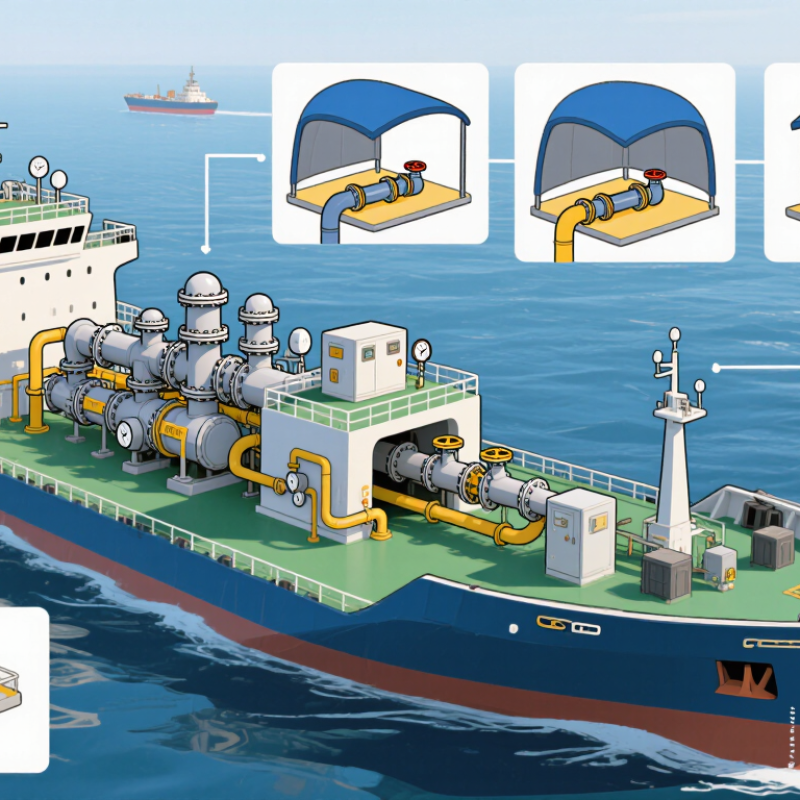
What Is a Floating LNG Bunkering Station Pump Skid?
What Is a Floating LNG Bunkering Station Pump Skid?
A floating LNG bunkering station pump skid is a preassembled unit that moves liquefied natural gas from onboard storage to a vessel receiving fuel. It is built on a rigid frame and commonly combines cryogenic pumps, pipes, valves, instruments, and control equipment. The pumps handle LNG at very low temperatures, near minus 162°C, so materials and seals must suit cryogenic service. The skid also helps operators regulate transfer flow and monitor pressure. It is one part of a larger bunkering system, not a complete station by itself.
A practical design depends on the vessel layout, required transfer rate, available space, and connection points. Engineers should review vibration, pipe supports, emergency shutdown interfaces, and access for inspection. Vapor return arrangements may also affect the system design. A detail that is easy to overlook is maintenance access: a valve can be technically reachable yet awkward to operate beside insulated piping. Small errors matter. The layout should be checked against actual operating procedures before fabrication.
Tips: Confirm the pump’s flow and pressure range against the receiving vessel’s needs. Check insulation, instrument locations, and drain provisions on the skid drawings. Ask how routine inspection will be performed in confined deck spaces. No single arrangement fits every floating facility, and early review can prevent costly changes later.
2026 Top Floating LNG Bunkering Station Pump Skid Suppliers - What Is a Floating LNG Bunkering Station Pump Skid?
This supplier-evaluation table summarizes common pump-skid functions and project-dependent design considerations. Values and configurations should be confirmed against the vessel, LNG composition, transfer system, and applicable local requirements.
| Evaluation Dimension | Typical Technical Information | Function in a Floating LNG Bunkering Station | What to Verify with a Supplier |
|---|---|---|---|
| Pump skid definition | A pre-assembled base frame carrying LNG pumps and associated piping, valves, drives, instruments, and connections. | Provides a packaged means of transferring LNG between storage and the bunkering connection or receiving vessel. | Confirm package boundaries, tie-in points, lifting arrangements, maintenance access, and interfaces with the vessel’s systems. |
| Pump technology | Cryogenic centrifugal pumps are commonly used. Depending on the arrangement, pumps may be submerged in a tank or installed as externally mounted units. | Creates the pressure and flow needed to move LNG through the transfer line. | Review the pump curve, operating range, materials, allowable operating conditions, and suitability for the planned installation. |
| Cryogenic service | LNG is typically stored and transferred near its boiling temperature, approximately −162°C at atmospheric pressure. Actual conditions depend on composition and pressure. | Requires equipment and piping designed to remain functional at low temperatures and to accommodate thermal contraction. | Check design temperature, cooldown and warm-up procedures, insulation or cold-box arrangements, and thermal-stress provisions. |
| Flow and pressure duty | Required flow rate and discharge pressure are project-specific; they depend on transfer-line size, vessel layout, receiving-system pressure, and bunkering duration. | Determines the pump size, motor rating, number of pumps, and expected transfer performance. | Request the guaranteed duty point, full pump curve, minimum and maximum operating flow, and performance at relevant LNG conditions. |
| Pump arrangement | Single or multiple pumps may be specified. Duty/standby arrangements are selected according to availability, capacity, and maintenance requirements. | Provides the required transfer capacity and, where specified, operational redundancy. | Confirm operating philosophy, standby changeover method, isolation provisions, and whether the stated capacity is per pump or for the complete package. |
| Materials and piping | Cryogenic-compatible materials are selected for the specified temperature, pressure, fluid, and applicable design code. Stainless steels and other qualified low-temperature materials may be used. | Maintains structural integrity and leak-tight performance during cold service and temperature changes. | Review material specifications, traceability, welding procedures, inspection records, and compatibility with the project’s LNG composition and design conditions. |
| Motor, seals, and leakage control | Drive and sealing arrangements vary with pump type. Cryogenic pump designs may use submerged motors or other configurations suited to low-temperature service. | Drives the pump while limiting leakage and supporting safe operation in the designated hazardous area. | Verify motor protection, hazardous-area suitability, seal or containment design, temperature monitoring, and maintenance requirements. |
| Instrumentation and metering | Instrumentation may include pressure and temperature measurement, level or vibration monitoring, flow measurement, and equipment-status signals. | Supports operating control, performance monitoring, transfer measurement, and alarm handling. | Confirm instrument ranges, cryogenic suitability, calibration requirements, signal interfaces, and whether custody-transfer metering is included or supplied separately. |
| Safety and emergency shutdown | Typical project provisions may include emergency shutdown interfaces, isolation valves, alarms, and connections to the vessel’s safety system. | Helps stop or isolate transfer equipment when an abnormal condition or emergency is detected. | Review cause-and-effect documentation, shutdown interfaces, fail-safe positions, hazardous-area design, and integration with transfer-line emergency release arrangements where applicable. |
| Skid structure and marine integration | The frame, supports, and equipment layout are designed for the specified deck loads, movement, environmental conditions, and maintenance envelope. | Enables secure installation and operation on a floating facility while providing access for inspection and servicing. | Check structural calculations, loads and acceleration assumptions, corrosion protection, lifting points, footprint, and vessel-specific connection details. |
| Testing and documentation | Project documentation commonly includes drawings, data sheets, inspection and test records, operating instructions, and equipment certificates as required by the contract. | Supports design review, installation, commissioning, operation, and future maintenance. | Agree on factory testing scope, performance-test conditions, inspection hold points, document language, and applicable codes and jurisdictional requirements. |
