
2026 Top LVL Scaffolding Plank Suppliers for Global Buyers
Global construction buyers need more than a long supplier list in 2026. They need evidence, consistency, and practical purchasing guidance. This introduction presents leading LVL Scaffolding Plank suppliers for international projects, focusing on product quality, manufacturing capability, export experience, and customer support. Each supplier should be assessed against project requirements, local regulations, and accepted safety practices.
LVL Scaffolding Plank combines engineered wood veneers with controlled bonding processes. Its performance depends on dimensions, adhesive quality, moisture control, surface condition, and load testing. Reliable manufacturers can explain their grading system clearly. They should also provide technical data, inspection records, packaging details, and traceable batch information. A clean factory floor helps, but it proves little alone. Independent verification still matters.
Global procurement often reveals small but costly details. A plank may arrive with damaged edges, unclear markings, or moisture changes after shipment. These issues deserve attention. Supplier reviews should examine production capacity, quality-control procedures, sample approval, lead times, and communication speed. Certification claims must be checked against valid documents and applicable standards. Not every highly visible supplier offers the best fit.
This guide also recognizes uncertainty. Market rankings can change. Factory performance can vary between batches. Buyers should request current samples and confirm specifications before signing contracts. Careful comparison reduces avoidable risks. The strongest supplier is not always the largest one. It is the partner that delivers suitable LVL Scaffolding Plank consistently, documents its process, and responds responsibly when something goes wrong.
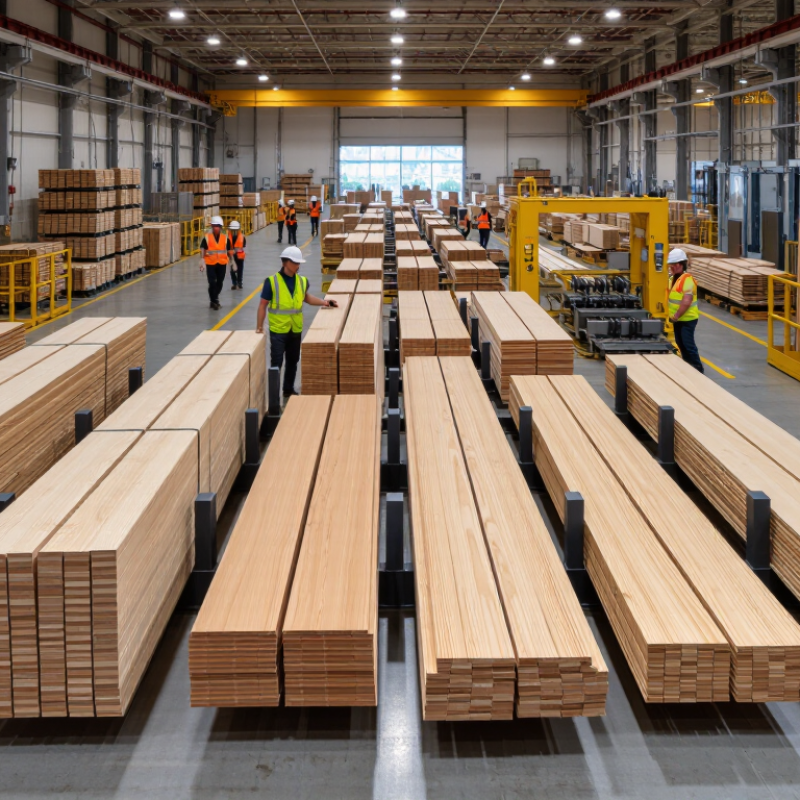
LVL Scaffolding Planks: Structure, Uses, and Key Performance Features
LVL scaffolding planks are engineered timber members made from thin wood veneers bonded with their grains running in one direction. This structure gives the plank stable bending strength and predictable dimensions. Unlike ordinary solid boards, LVL usually has fewer natural defects, such as large knots or sudden grain changes. It can support workers, tools, and materials across temporary platforms when correctly designed and installed.
Common uses include access decks, working platforms, stair systems, and industrial maintenance areas. Key performance features include bending capacity, stiffness, edge strength, surface condition, and resistance to moisture during service. Thickness, span length, support spacing, and load distribution must match the project requirements. A plank may look clean and straight, yet hidden damage near an end can reduce its reliability. That detail is easy to miss.
Tips: Check every plank before use. Look for splits, crushed edges, delamination, deep cuts, and water swelling. Keep planks flat, dry, and raised above the ground during storage. Do not mix unverified grades on one platform. Measurements should be recorded, not remembered. No inspection method is perfect. Global buyers should request test data, product dimensions, adhesive information, and traceable quality records from suppliers. Requirements may differ by region, so local engineers should confirm the intended application and allowable loads.

Global Safety Standards for LVL Scaffolding Plank Manufacturing
LVL scaffolding planks require more than high-strength veneers and clean surfaces.
Global safety depends on controlled manufacturing at every stage. Veneers should be graded for knots, splits, density, and moisture content before bonding. Waterproof structural adhesives must cure under monitored temperature and pressure. Small process errors can reduce strength across the entire plank.
Reliable factories verify plank dimensions, edge quality, surface damage, and moisture levels after pressing. They also conduct bending, stiffness, and load-performance tests using documented procedures.
Test results should identify sample size, loading conditions, failure behavior, and production batch. Traceability matters.
Each shipment should connect back to veneer records, adhesive batches, press settings, and inspection reports.
Safety requirements differ between regions. Buyers may need evidence aligned with relevant structural timber, temporary works, workplace safety, or product certification systems.
One certificate rarely proves universal compliance. A supplier should explain which standards were applied and where their limits exist. That honesty is valuable.
A plank can look flawless and still fail under repeated wetting, impact, or improper support spacing. Factory audits, independent testing, and clear installation guidance reduce that risk, although they cannot replace competent site supervision.
Real-world feedback should return to production teams, because manufacturing assumptions are sometimes wrong.
How to Evaluate the Top LVL Scaffolding Plank Suppliers in 2026
2026 Top LVL Scaffolding Plank Suppliers for Global Buyers
How to Evaluate the Top LVL Scaffolding Plank Suppliers in 2026
Choosing an LVL scaffolding plank supplier requires more than comparing prices. Start with manufacturing experience, production capacity, and documented quality procedures. Ask for test reports covering bending strength, stiffness, moisture content, and dimensional accuracy. A reliable supplier should explain its grading method clearly, not hide behind general claims. Check whether each plank receives consistent edge finishing and visible identification. Small details matter on crowded construction sites.
Tips: Request samples before placing a large order. Measure thickness, inspect veneers, and check for open gaps or swelling. Ask how the supplier controls moisture during storage and sea transport. Packaging should protect plank ends from rain and impact. Confirm loading plans, lead times, replacement policies, and export documents in writing. A factory visit or independent inspection adds useful evidence. Do not rely only on photographs.
Experienced buyers also review traceability. Each batch should connect to production records, inspection results, and shipment details. Ask for references from contractors who use similar plank sizes and working conditions. Suppliers should discuss safe load limits without exaggeration. They must distinguish tested performance from estimated performance. Be careful with unusually low quotations; weaker core quality or inconsistent thickness may appear later. I have seen attractive samples fail to represent regular production. That possibility deserves attention. Clear communication, honest limitations, and repeatable testing often reveal the strongest long-term supplier.
Regional Supplier Comparison for International Construction Buyers
2026 Top LVL Scaffolding Plank Suppliers for Global Buyers
Regional supplier comparison matters when purchasing LVL scaffolding planks for international projects. Product quality can vary between factories, even within one region. Buyers should compare strength grades, dimensions, moisture content, surface finish, and packaging methods.
Asian suppliers often provide competitive pricing and flexible production volumes. They may support customized lengths, but buyers should confirm factory testing and export experience. European suppliers commonly offer strong documentation and consistent manufacturing controls. Their prices may be higher, while delivery schedules can be less flexible. North American suppliers may suit projects requiring regional stock, quick replacement, and familiar compliance procedures. However, availability can change by province or state. Southeast Asian suppliers can offer useful logistical access, especially for nearby construction markets. Port congestion still creates uncertainty.
Ask for recent test reports. Not old samples. Request photographs of edge protection, pallet strapping, and moisture barriers. Confirm whether the declared load capacity matches the intended span and support spacing. A qualified engineer should review the design before site use.
Tips: Compare landed cost, not factory price. Check loading plans carefully. Include spare planks for damage and cutting errors. Clarify inspection responsibility before payment. A small inconsistency in thickness can affect installation quality. I have seen buyers focus on price and overlook packaging; that decision can become expensive after a wet ocean voyage. Supplier comparison is useful, but it is never a substitute for independent verification.
Ordering, Quality Inspection, and Import Planning for LVL Planks
2026 Top LVL Scaffolding Plank Suppliers for Global Buyers
Ordering LVL scaffolding planks requires more than comparing prices. Start with a written specification covering length, width, thickness, grade, load capacity, moisture range, and edge treatment. Ask suppliers for recent test reports, production records, and clear product photographs. Confirm whether dimensions are nominal or actual. That small detail can affect installation planning.
Request samples before placing a full order. Measure thickness at several points, inspect edges for splits, and check surfaces for delamination, warping, or open gaps. Use a calibrated moisture meter. Record every result. A third-party inspection can verify quantity, markings, packaging, and visible defects before shipment. Do not rely on photographs alone. They can hide uneven surfaces.
Import planning should begin early. Confirm the shipping unit, pallet size, gross weight, container loading plan, and required documents. Packaging must protect corners from rain and impact. Ask for packing photos before dispatch. Check whether local customs requires specific product descriptions, certificates, or wood-related declarations. Requirements may differ by destination.
Leave room for uncertainty. I have seen orders delayed because packaging dimensions were estimated, not measured. Build a schedule buffer and keep written approval for every specification change. A cheaper plank can become expensive after rework, inspection failure, or storage charges. Careful records make supplier discussions more objective and support better decisions.
