7 Best PTFE Lined Check Valve Suppliers for Global Buyers?
Choosing a reliable ptfe lined check valve supplier is more demanding than comparing catalog prices. Global buyers must examine materials, testing, delivery discipline, and technical support. A valve may look excellent in polished photographs, yet fail when corrosive liquid reaches a weak lining seam.
Roy J. Plunkett, the chemist credited with discovering PTFE, described its emergence as “a complete surprise.” That unexpected discovery later supported demanding applications in chemical processing, pharmaceuticals, semiconductor production, and water treatment. Today, supplier quality depends on more than PTFE itself. Buyers should inspect valve body construction, liner thickness, pressure ratings, temperature limits, sealing performance, and check mechanism design. Small details matter. A damaged hinge, uneven flange face, or poorly controlled molding process can create costly downtime.
This guide reviews seven ptfe lined check valve suppliers serving international buyers. The comparison considers manufacturing experience, customization capability, inspection procedures, documentation, export readiness, and after-sales response. It also considers practical issues, including sample approval, spare parts, delivery schedules, and communication across time zones.
No supplier is perfect. Some offer strong engineering but slower production. Others provide competitive prices but limited documentation. That trade-off deserves attention. Buyers should match each supplier with the application, not choose from rankings alone. Site audits, material certificates, pressure-test records, and reference projects can reveal more than promotional claims. A careful decision begins with questions, not assumptions.
What PTFE-Lined Check Valves Are and Why Global Buyers Choose Them
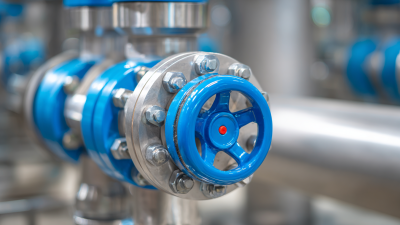
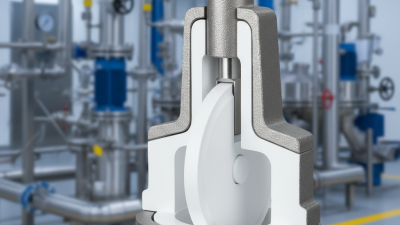
A PTFE-lined check valve is a one-way valve with internal surfaces protected by polytetrafluoroethylene. It allows fluid to move forward and closes when flow reverses. The lining helps separate corrosive media from the valve body. This design is common in chemical processing, water treatment, and industrial dosing systems.
Global buyers often choose PTFE because it offers strong chemical resistance and a smooth, low-friction surface. Fewer deposits may collect around the disc or ball. That can support steadier operation between maintenance periods. However, PTFE is not suitable for every temperature, pressure, or fluid. Permeation and liner deformation can become serious concerns.
Real purchasing decisions require more than a catalog photograph. Check the pressure rating, temperature range, connection standard, spring material, and sealing design. Ask suppliers for material certificates, pressure-test records, dimensional drawings, and batch traceability. Experience shows that small details matter. A mismatched gasket can cause leakage, even when the valve itself is well made. A low price may look attractive, but delayed delivery or weak technical support can increase total cost. I would also question vague claims about chemical compatibility. Laboratory data and actual operating conditions should guide the final selection. Suppliers with clear inspection procedures and responsive engineers are usually easier to trust. Still, every specification deserves review before approval.
Key Specifications for Comparing PTFE-Lined Check Valve Suppliers
When comparing PTFE-lined check valve suppliers, start with operating conditions, not catalog claims.
Confirm the valve size, pressure class, temperature range, flow direction, and connection type. PTFE lining should resist the actual chemicals, concentration, and process temperature. Ask whether the lining covers all wetted surfaces, including the disc, seat, and body cavities. Small gaps can become serious failure points.
A reliable supplier should provide material certificates, pressure-test records, dimensional drawings, and a traceable inspection process. Check the valve’s cracking pressure and leakage performance, especially for low-flow systems. Disc movement should be stable, without excessive chatter or water hammer. Experienced suppliers can explain testing methods and identify limits clearly. Vague answers are a warning sign. So are missing documents.
Tips:
Request a sample inspection report before ordering. Compare lead time, spare-part availability, warranty terms, and technical support. Confirm whether the supplier can handle custom dimensions or unusual flange standards. A practical trial may reveal issues that polished specifications hide. I would also examine the liner after thermal cycling, because PTFE can creep under repeated heat and pressure. That step is easy to overlook. Suppliers with consistent records, responsive engineers, and honest limitations are usually safer choices for global projects.
Seven Leading PTFE-Lined Check Valve Suppliers for International Buyers
For international buyers, seven supplier types commonly lead the PTFE-lined check valve market. They include established industrial valve manufacturers, fluoropolymer specialists, process-equipment integrators, regional stockists, custom fabrication workshops, sanitary valve producers, and engineering distributors. Each serves a different purchasing need. A stockist may ship quickly, while a fabricator can adjust flange dimensions, spring strength, or seal materials.
Experienced buyers inspect more than price. They request PTFE grade details, pressure ratings, temperature limits, and corrosion data. Ask whether the lining is molded, bonded, or replaceable. These details affect service life. A valve handling acids may require virgin PTFE, while abrasive slurry can expose weaknesses at the disc seat. Small differences matter.
Reliable suppliers provide dimensional drawings, material certificates, inspection records, and pressure-test results. They should explain cracking pressure clearly. They should also confirm whether the valve suits horizontal, vertical, or reverse-flow installation. Site experience helps here. In one plant, a technically correct valve still failed because the pipeline carried vibration into the body. That lesson is easy to miss. Some suppliers offer strong documentation but weak after-sales support. Others respond quickly but lack consistent batch testing. Buyers should compare both sides, not trust polished brochures alone. A sample inspection, witnessed test, and clear replacement policy can reveal more than a confident sales call.
How to Evaluate Quality, Compliance, Pricing, and Delivery
When comparing PTFE-lined check valve suppliers, inspect more than a polished datasheet. Ask for lining thickness records, vacuum tests, pressure-test certificates, and material traceability. API 598 and ISO 5208 provide useful testing frameworks for valve inspection. The supplier should also explain PTFE grade, temperature limits, sealing design, and backflow performance. A certificate alone is not proof of dependable production.
Compliance needs evidence. Request current ISO 9001 certification, audit scope, and batch-level documentation. The ISO Survey 2023 recorded over 1.5 million ISO 9001 certificates worldwide, so certification is common, but its practical value varies. Check whether the certificate covers the manufacturing site. Review sample inspection reports, welding procedures, and nonconformance records. I would test a sample valve independently when service involves corrosive chemicals. It costs more upfront.
Pricing should include lining inspection, spare parts, testing, packaging, freight, and possible downtime. Compare equivalent pressure classes and connection standards, not only unit prices. UNCTAD’s Review of Maritime Transport 2023 confirms that more than 80% of global merchandise trade by volume moves by sea. Delivery promises therefore need realistic production and transit buffers. Ask for a dated manufacturing schedule, shipping documents, and a contingency plan. Fast delivery sounds attractive. Yet rushed lining work may create hidden defects. One weakness in this evaluation is relying too heavily on paperwork; actual factory process control still deserves direct verification.