
10 Best Hazardous Area Lighting Options for Buyers

Choosing from the 10 Best Hazardous Area Lighting Options for Buyers is not just a matter of brightness. A lamp may look powerful on a showroom shelf, yet perform poorly in a dusty processing room or beside vibrating equipment. Buyers need to compare the area classification, temperature rating, ingress protection, mounting style, and light distribution. These details affect safety, maintenance, and visibility. A narrow beam can leave dark patches near stairs. A heavy fixture may also complicate installation on an older support.

Hazardous-area lighting engineer Alex Morgan puts the buying challenge this way: “The right fixture is the one that suits the hazard, the task, and the maintenance plan—not just the catalog.” Treat that as a practical principle, not a substitute for a site assessment. Check the product documentation and confirm that its ratings match the intended location. Consider LED high bays, floodlights, linear fixtures, portable lamps, and emergency models. Each serves a different job. There is no universal winner. Even a well-rated fixture can disappoint if its beam, controls, or mounting do not fit the space. This guide compares options and trade-offs, while recognizing that real sites rarely match a clean product photograph.
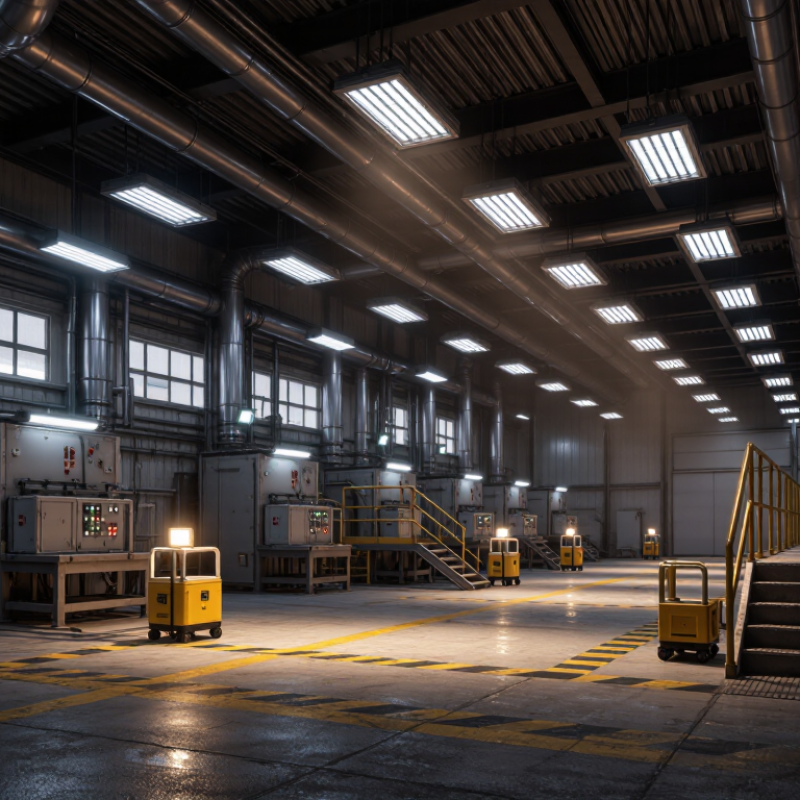
10 Best Hazardous Area Lighting Options for Buyers

Hazardous Area Lighting Types and How They Work

Hazardous Area Lighting Types and How They Work

Hazardous-area lighting protects against ignition risks while providing usable light for work. The enclosure alone is not enough. Fixture selection depends on the material present, its concentration, and the area classification. NFPA’s report Fires in Industrial or Manufacturing Properties (2011–2015) estimates an average of 37,910 such fires annually in the United States. This figure covers all reported industrial and manufacturing fires, not lighting-related incidents. That distinction matters.

Flameproof fixtures contain an internal ignition and limit flame escape through carefully engineered joints. Increased-safety designs reduce the chance of sparks, arcs, and excessive surface temperatures during normal operation. Pressurized fixtures use clean air or inert gas to keep hazardous atmospheres out of the enclosure. Intrinsically safe systems limit electrical energy, making them useful for low-power task lights and indicators. Dust-protected fixtures seal out combustible particles and control surface temperature. They work differently.

The IEC 60079 series provides technical requirements for equipment used in explosive atmospheres. Buyers should match the fixture’s protection method, gas or dust group, temperature rating, and zone to a documented site assessment. A label can look reassuring, but it cannot replace that review. Even a properly rated light may perform poorly if its beam leaves dark patches across a loading bay or inspection bench. Check the photometric layout, mounting height, and maintenance access, too.

Hazard Classifications, Zones, and Safety Certifications

Hazardous-area lighting should match the actual atmosphere, not just a broad industry label. Gas and vapor risks use different classifications from combustible dust. Under the IEC zone system, Zone 0 has an explosive gas atmosphere continuously or frequently; Zone 1 covers likely occurrence during normal operation; Zone 2 means it is unlikely and, if present, brief. Dust areas use Zones 20, 21, and 22. The label matters.

Some markets also use Class and Division classifications. These systems are not simple one-to-one translations of zone ratings. Check the site’s documented classification, including the hazardous material and its group. Then verify the luminaire’s marking against that exact requirement. Do not guess. A fixture suitable for a gas hazard may not suit dust, and the wrong temperature class can allow hot surfaces to become an ignition risk.

Certification details deserve close reading. Confirm the approval applies to the complete fixture, its intended zone or division, gas or dust group, and ambient temperature range. An IP rating helps describe resistance to water and dust ingress; it does not prove explosion protection. Also consider mounting height, beam spread, and access for maintenance. A technically certified light can still leave dark patches beneath pipes or platforms. Even careful buyers can overlook those practical gaps, so review the layout with qualified site-safety personnel before ordering.

10 Best Hazardous Area Lighting Options for Buyers — Hazard Classifications, Zones, and Safety Certifications
Lighting option Typical applications Hazard classification to assess Certification and marking checks Key buying considerations
LED explosion-protected high-bay luminaire High ceilings in process plants, tank farms, and indoor production areas Potentially Class I, Division 1 or 2 for gases and vapors; Zone 1 or 2. Dust suitability requires a separate dust approval. Seek a model-specific hazardous-location listing. International markings may include Ex db or Ex eb for gas, and Ex tb for dust, with the appropriate equipment group and protection level. Check mounting height, beam distribution, ambient-temperature range, ingress protection, and the certified temperature class.
Hazardous-location LED linear luminaire Pipe racks, corridors, conveyors, utility rooms, and long work areas Commonly specified for Class I, Division 1 or 2, or Zone 1 or 2; some models also carry separate dust approvals. Confirm the exact gas and dust markings on the luminaire. Zone 2-only models may use Ex ec; that marking does not establish suitability for Zone 1. Compare length, mounting method, lens material, glare, and whether the complete fixture—not just the LED components—is approved.
Hazardous-location LED floodlight Outdoor process equipment, loading areas, storage tanks, and perimeter work zones Choose ratings to match the site’s documented gas, vapor, or dust classification; a common target is Zone 1 or 2, or the corresponding specified Division location. Verify the certified protection concept, gas or dust group, temperature class, and ambient range. Check that the approval covers the intended orientation and mounting arrangement. Review beam angle, aiming adjustment, corrosion resistance, wind exposure, and the location of the driver or power supply.
LED wall-pack or bulkhead luminaire Doors, exterior walls, access routes, platforms, and low-clearance areas May be available for Class I or Class II locations and for selected Zones; the approved hazardous material group and zone vary by model. Check the nameplate for the exact classification and applicable certification. An IP rating alone is not hazardous-location approval. Assess mounting height, light distribution, impact resistance, washdown exposure, and access for maintenance.
Hazardous-location pendant luminaire Localized lighting over workstations, vessels, and equipment Use only where the fixture’s certification matches the specified Class/Division or Zone and the gases or dusts present. Confirm approval for the complete pendant assembly, including the enclosure, hub, and any supplied wiring entry components. Check pendant length, vibration, heat exposure, cable or conduit entry requirements, and whether a guard is required.
Portable intrinsically safe LED handlamp Inspection, confined maintenance tasks, and temporary work where portable lighting is needed Use only for the gas or dust locations stated on its certificate; portable equipment may have different ratings from fixed luminaires. Look for a recognized, model-specific intrinsic-safety approval and its complete Ex marking, such as Ex ib or Ex ia where applicable. Confirm permitted battery type. Check runtime, charging restrictions, allowed accessories, impact protection, and whether the certificate covers the lamp and battery together.
Hazardous-location emergency luminaire Escape routes, emergency exits, and areas requiring backup illumination during power loss Must match the classified location where it is installed; ordinary emergency lighting is not automatically suitable for hazardous areas. Verify both the hazardous-location approval and the applicable emergency-lighting requirements for the market and installation. Review rated emergency duration, battery type, charging temperature, test method, and whether the emergency mode remains approved.
Hazardous-location exit sign Marked egress routes and exit points in classified facilities Classification must match the particular exit location; do not assume a sign rated for an adjacent safe area is suitable inside a classified area. Check that the complete sign, enclosure, and power arrangement carry the required hazardous-location certification and egress approvals. Confirm viewing distance, legend and language, mounting position, backup power, and local code requirements.
Low-voltage hazardous-area task light Fixed or temporary task lighting near machinery, inspection points, and maintenance benches Low voltage does not remove ignition risk. Select a certified model for the site’s exact Class/Division or Zone and material group. Verify the complete light assembly’s approval, including any remote power supply, connectors, and cable entry components. Compare supply voltage, cable length, light output, mounting flexibility, and restrictions on power-supply placement.
Dust-ignition-protected LED high-bay or floodlight Grain handling, food processing, woodworking, and other combustible-dust work areas Assess Class II or Class III, Division 1 or 2, or Zone 20, 21, or 22 as applicable to the dust hazard and location. For IEC-style markings, check the dust group and protection level, such as Ex tb with an appropriate IIIC marking where required. Gas approval alone does not establish dust suitability. Check maximum surface temperature, dust-layer conditions, enclosure cleaning needs, and the site’s dust hazard analysis.

Selection note: The options above describe luminaire types, not universal approvals. Class/Division and Zone systems are not directly interchangeable. In the United States and Canada, check the applicable hazardous-location listing and installation rules; for international projects, verify the required ATEX or IECEx documentation. Always match the certified equipment group, protection level, temperature class, ambient limits, and enclosure rating to the site assessment. An IP or NEMA enclosure rating by itself does not certify a luminaire for a hazardous location.

Key Factors for Choosing Hazardous Area Lighting

Choosing hazardous area lighting starts with the site, not the fixture catalog. Confirm the area classification, likely gas or dust hazards, and the equipment temperature limits before comparing products. Gas groups and ignition temperatures matter. Dust can collect on a housing and trap heat. These details affect which fixtures are suitable. Have the area classification checked by a qualified professional; assumptions made from a quick walk-through can miss hidden risks.

Next, consider what workers need to see. Match light output and beam spread to the task, mounting height, and aisle layout. A bright fixture is not always better. Glare can make labels harder to read, especially on glossy surfaces. Check the ingress protection rating, ambient temperature range, and resistance to vibration or corrosion. A cold outdoor loading area needs different performance than a warm indoor process room.

Maintenance deserves a place in the decision. Look at access, cleaning needs, expected service life, and how often a fixture may need inspection. A sealed unit may reduce dust entry, but it can still need periodic checks. Review its approval markings against the site’s documented requirements and local standards. Keep those records. In practice, the best choice may involve a compromise between light distribution, installation cost, and ease of upkeep. That trade-off is worth revisiting before purchase.

Ten Hazardous Area Lighting Options for Different Applications

Hazardous-area lighting should match the task, mounting height, and classified location. Ten useful options cover different applications: high-bay fixtures for tall process halls; low-bay lights for compact rooms; linear fixtures over conveyors; floodlights for pipe racks and outdoor loading zones; wall-mounted bulkheads along walkways; portable hand lamps for maintenance; emergency fixtures for escape routes; tank-inspection lights for vessel work; canopy lights beneath covered bays; and compact task lights for workbenches. Each fixture must be specifically rated for the conditions where it will operate.

Tips: Confirm the area classification, gas or dust group, temperature limits, and ambient conditions before selecting equipment. Check mounting details and maintenance access, too. Wattage alone is an easy shortcut, but it can leave a floor unevenly lit. A bright spot is not always useful.

Ask for the applicable certification and installation instructions, then have qualified personnel verify compatibility with the site. Sealed construction may help resist dust or moisture, but it does not automatically make a fixture suitable for every hazardous location. Even a well-chosen light can disappoint if beams are blocked by pipes or equipment. That detail is easy to miss.

Comparing Options by Safety, Durability, Efficiency, and Cost

Hazardous-area lighting is not a one-size-fits-all purchase. LED high-bays suit tall production spaces, while low-bays provide closer, more controlled light. Floodlights cover outdoor yards and loading areas. Linear fixtures work well over processing lines, and compact bulkheads fit corridors or equipment rooms. Each option must match the area’s required hazardous-location rating, temperature class, and environmental protection level. Check the site classification before comparing prices.

LED fixtures often use less energy and need fewer lamp changes than older technologies. But the initial cost can be higher. Durable housings, sealed lenses, and corrosion-resistant finishes matter where dust, moisture, vibration, or chemical residue are present. Wall-mounted lights can illuminate walkways; portable units support temporary maintenance, when specifically rated for the intended area. Emergency and exit fixtures add visibility during power loss, but their backup systems require regular testing. Small detail. A poor mounting position can still leave shadows.

Compare the full cost, not just the fixture price: installation, energy use, replacement parts, and inspection all affect ownership costs. Match beam spread and brightness to the task; excessive glare can hinder work rather than improve it. Certifications and installation requirements vary by location, so confirm them with qualified safety personnel and the fixture documentation. A spreadsheet helps, but it cannot capture every awkward corner or changing work pattern. Walk the space before ordering.

keep me informed

Subscribe

By clicking SEND means that you agree to our Terms & Conditions, Privacy and Cookie Policies.