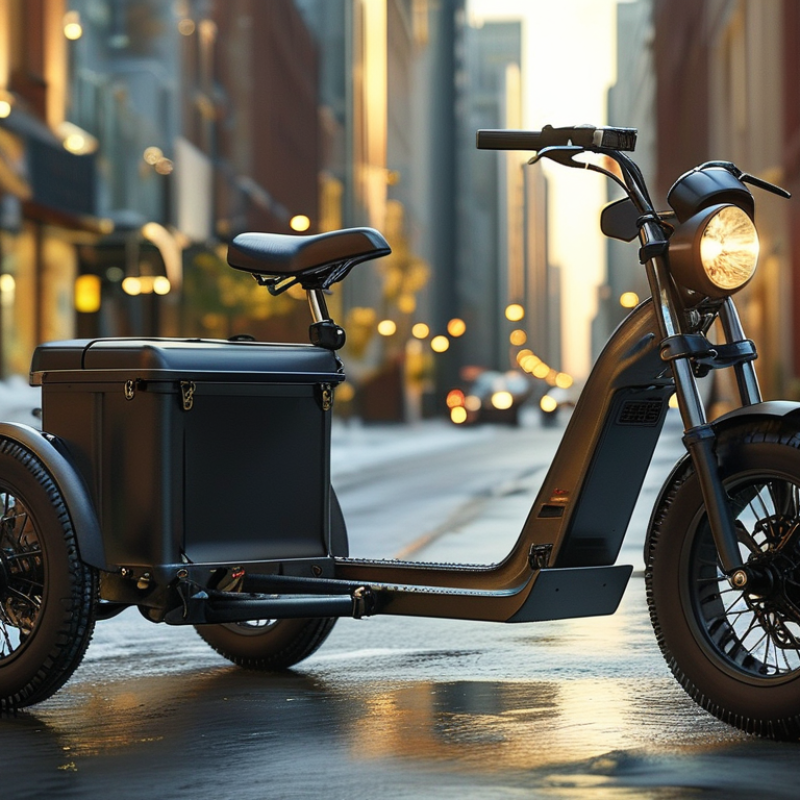
Is Cargo Tricycle the Best Choice for Your Business Needs?
In today's fast-paced business world, efficient transportation is crucial. The Cargo Tricycle emerges as a notable option. This vehicle is not only cost-effective but also versatile. Many small businesses rely on it for delivery and logistics.
Cargo Tricycles can navigate crowded streets easily. They are environmentally friendly and minimize fuel expenses. However, potential buyers should consider their specific needs. The load capacity and maintenance costs are essential factors to reflect on.
While the Cargo Tricycle offers great benefits, there are challenges. Weather conditions and varied terrain can impact performance. An informed decision is vital to ensure that it aligns with your business goals. Exploring these aspects helps determine if a Cargo Tricycle is truly the best choice for you.
Understanding Cargo Tricycles: Features and Specifications
Cargo tricycles are becoming increasingly popular in various industries. They offer versatility and efficiency for short-distance transport needs. A report from the Freight Transportation Research reports a 15% increase in the use of cargo tricycles in urban logistics over the last three years. This shift reflects their practical design and operational advantages.
When exploring features, cargo tricycles often include ample storage space and robust construction. Many models can carry loads between 200 to 500 kg, making them suitable for diverse applications. Ease of maneuverability is a standout characteristic. Their three-wheeled design provides both stability and agility in crowded environments. However, users should consider the specific requirements of their operations. For instance, cargo tricycles may struggle on steep inclines or uneven terrain.
Battery-powered options are gaining traction, with a noted increase of 25% in their adoption rate. Electric tricycles can contribute to reducing carbon footprints, yet they require regular charging, which can be limiting. The average charge time ranges from 4 to 8 hours. Businesses must evaluate whether these operational constraints align with their delivery schedules. Efficient for many, cargo tricycles are not suitable for every situation. Understanding these nuances is essential for making informed decisions.
Evaluating the Advantages of Cargo Tricycles for Businesses
Cargo tricycles are becoming increasingly popular for businesses that require efficient transportation. A recent report from the International Transport Forum shows that companies employing cargo tricycles can reduce their delivery costs by up to 30%. This significant savings is primarily due to lower operational expenses and reduced fuel consumption. Moreover, cargo tricycles can navigate congested urban environments more easily than larger vehicles, speeding up delivery times.
One major advantage is their eco-friendliness. According to a study by the European Cyclists' Federation, cargo tricycles emit 60% less CO2 compared to traditional delivery vans. This not only helps businesses meet sustainability goals but also appeals to environmentally conscious consumers. Many cities now incentivize the use of cargo cycles, further boosting their appeal for urban logistics.
Tips: When considering cargo tricycles, assess your typical delivery routes first. Routes that have tight corners or narrow streets greatly benefit from tricycles. Additionally, invest in high-quality storage solutions for transporting goods securely. Evaluating your delivery needs will ensure you make the best choice for your business. Keep in mind that cargo tricycles suit specific business models. They may not replace all function of larger vehicles but complement them effectively. Explore their potential and reflect on your current logistics strategy.
Assessing the Limitations and Challenges of Cargo Tricycles
Cargo tricycles can serve many business needs, but they have limitations. Their capacity may not meet all requirements. For larger items, load capacity becomes a challenge. Navigating busy streets can be tough too. Drivers might face traffic that slows deliveries. In cramped urban areas, maneuverability is an issue.
Weather conditions pose additional challenges. Rain or extreme heat can affect operations. Safety is another concern. Cargo tricycles may lack stability, especially on uneven surfaces. Businesses need to consider the qualifications of their drivers. Training on safe riding and cargo management is crucial. Investing in such training can prevent accidents and ensure timely deliveries.
While cargo tricycles offer cost-effective solutions, the drawbacks require careful thought. Evaluating the type of goods transported plays a vital role. Temporary solutions, like renting, might be more efficient in some cases. Reflecting on these aspects helps businesses decide if cargo tricycles fit their operations well.
Comparing Cargo Tricycles with Alternative Transportation Options
When considering transportation options for your business, cargo tricycles present a unique blend of utility and efficiency. These vehicles are particularly useful for urban settings, where narrow streets limit larger vehicles. Unlike traditional vans, cargo tricycles can navigate congested areas easily. Their compact size allows for deliveries in tight spaces and alleyways, making them ideal for small businesses.
In comparison to other options, cargo tricycles offer several advantages. They are often more cost-effective than motorized vehicles. Maintenance costs are lower, reducing long-term expenses. Furthermore, cargo tricycles are environmentally friendly, emitting no pollutants. This aspect appeals to businesses that prioritize sustainability. However, one must consider the load capacity. Cargo tricycles can transport significant amounts, but not as much as larger vehicles.
While cargo tricycles are a practical choice, they may not suit all business models. Businesses requiring speed may find them slower than vans. Furthermore, weather conditions can impact their usability. It is essential to assess your specific needs before making a decision. Balancing efficiency and practicality will help determine if a cargo tricycle is the right choice for your business.
Comparison of Cargo Tricycles and Alternative Transportation Options
Determining the Cost-Effectiveness of Cargo Tricycles for Your Needs
When evaluating the cost-effectiveness of cargo tricycles, consider various factors. These vehicles offer a unique blend of utility and affordability, making them appealing for small businesses. You can transport goods without high fuel costs. Operational expenses are lower than those for larger vehicles. Maintenance requirements are also minimal. However, you must factor in initial buying costs and potential repairs.
Assess how cargo tricycles fit your specific needs. Their payload capacity ranges, which may limit your options. If your business involves heavier loads, this could be a drawback. Also, consider urban regulations. Some areas have restrictions on vehicle types. This could affect accessibility and delivery efficiency. Researching local guidelines ensures compliance and smooth operations.
Lastly, think about the flexibility they offer. Cargo tricycles can navigate tight spaces. Delivery routes become more manageable in densely populated areas. Yet, there might be instances where they cannot compete with larger vehicles for speed or volume. Balancing these factors helps clarify if they are indeed the best fit for your business.