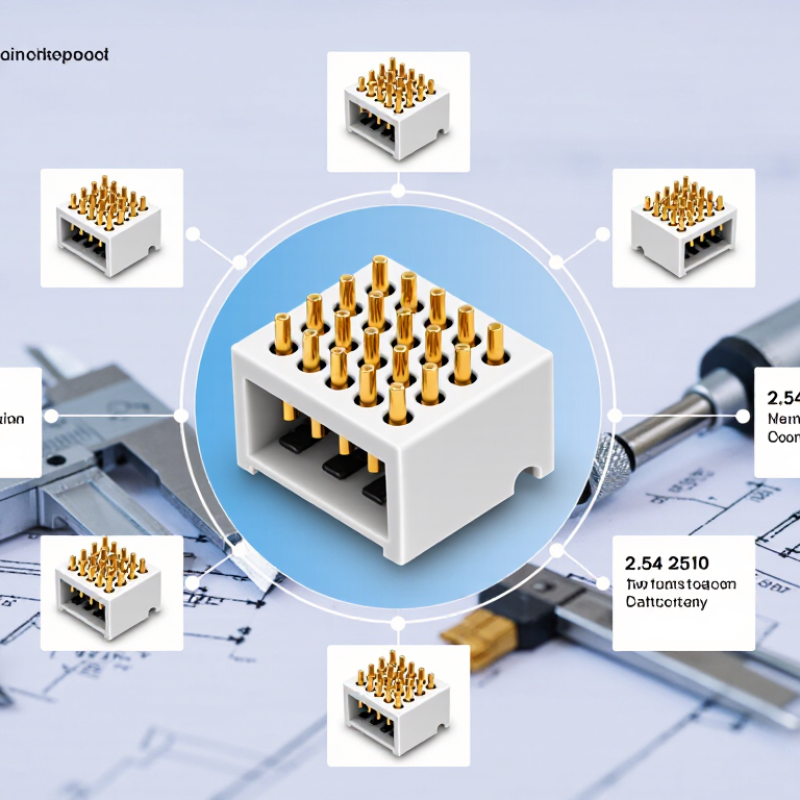
China Top 2510 Connector Manufacturer and Supplier

Choosing a reliable 2510 Connector manufacturer requires more than comparing prices or product photographs. Buyers must examine pitch accuracy, contact plating, insulation material, current ratings, and production consistency. The “2510” designation commonly refers to a 2.54 mm pitch connector family, but specifications may differ among suppliers. That difference matters.

Small details matter.

A connector may look identical on a catalog page. Its terminal retention, solderability, and mating force can still vary greatly. Experienced engineers usually request drawings, samples, inspection reports, and test data before approving volume production. They also check whether the supplier controls tooling, raw materials, assembly, and final inspection internally. These steps help reduce loose contacts, fractured housings, and unstable electrical performance.

Signal-integrity expert Dr. Eric Bogatin has stated, “The signal integrity problem is not a problem with the signal; it is a problem with the interconnect.” His observation applies directly to every 2510 Connector selection. Contact resistance, cable routing, vibration, and repeated mating can influence real-world reliability. A strong supplier should explain these risks clearly, not hide behind impressive claims.

This guide examines China’s leading 2510 Connector manufacturers and suppliers through practical purchasing criteria. It considers manufacturing experience, customization capability, quality systems, response speed, and after-sales support. Certifications can provide useful evidence, but they are not the whole answer. Factory audits and application-specific testing remain valuable.

No supplier is perfect.

Some rankings may change as factories improve, prices shift, or technologies develop. Readers should verify current specifications directly with manufacturers before placing orders. That cautious step may prevent an expensive assumption from becoming a field failure.

China Top 2510 Connector Manufacturer and Supplier

What Defines a Leading Connector Manufacturer and Supplier in China

What Defines a Leading Connector Manufacturer and Supplier in China

A leading connector manufacturer combines engineering discipline with practical factory experience. The process starts with material selection, mold design, and controlled assembly. Copper alloy terminals should maintain stable conductivity after repeated insertion cycles. Housing materials must resist heat, vibration, and moisture in real operating conditions. Details matter.

Reliable suppliers document each production stage, from incoming material checks to final electrical testing. Engineers review contact resistance, pull force, insulation performance, and dimensional tolerance. Automated inspection can detect bent terminals, incomplete crimping, and surface damage. However, automation cannot replace experienced technicians. Human judgment still matters when defects appear unusual.

A capable supplier also provides traceable records, clear technical drawings, and responsive communication. Factory audits should examine calibration logs, worker training, storage conditions, and corrective actions. Delivery performance matters, but rushed production can create hidden quality risks. No supplier is flawless. A missed tolerance or delayed test result should be reported honestly, investigated, and corrected with evidence. This transparency builds practical trust between engineering teams and purchasing departments.

In my view, the strongest Chinese suppliers remain willing to question their own process, even after years of stable production.

China’s Connector Industry: Types, Markets, and Manufacturing Strengths

China Top 2510 Connector Manufacturer and Supplier
China’s connector industry serves electronics, vehicles, energy systems, communication equipment, and industrial automation. Common products include wire-to-board, board-to-board, circular, waterproof, coaxial, and high-speed connectors. Each type answers a different engineering problem. Contact spacing, current capacity, mating cycles, and environmental protection require careful selection.
Manufacturing strength begins with precision stamping and injection molding. Many factories use progressive dies, automated assembly lines, and optical inspection systems. Plating processes may use tin, nickel, or gold, depending on conductivity and corrosion requirements. Reliable suppliers provide dimensional reports, material records, electrical test data, and batch traceability. These details matter when connectors operate inside a hot vehicle, a dusty control cabinet, or a crowded data center.
The market is changing quickly. Electric vehicles demand high-voltage and vibration-resistant connections. Renewable energy projects need durable connectors for outdoor exposure. Data infrastructure requires high-speed signal performance and controlled impedance. Practical supplier evaluations should examine tooling ownership, sample consistency, production capacity, and failure analysis procedures. A low quotation can hide weak plating or unstable molds. That mistake becomes expensive.
Scale is not everything. Smaller production runs still need disciplined controls. Some factories have impressive equipment but incomplete documentation. Buyers should verify, not assume. Even experienced teams can overlook mating-force changes between batches. Clear specifications and repeated testing reduce that risk.

How to Evaluate Connector Manufacturers, Suppliers, and Product Quality

Evaluating connector manufacturers and suppliers begins with evidence, not a polished catalog. Ask for factory certifications, material declarations, inspection plans, and traceability records. A reliable manufacturer should identify resin grades, copper alloys, plating thickness, and production locations. Review its tooling capacity and quality-control process, not only its quoted price. During a factory visit, inspect storage conditions, calibration labels, and sample handling. Clean shelves help, but appearance can still mislead.

Product quality requires measurable tests. Request pre-production samples and compare them with approved drawings. Check dimensions, keying features, terminal retention, contact resistance, and mating force. For cable assemblies, verify crimp height and pull-out strength. Environmental tests may include temperature cycling, humidity exposure, vibration, and salt spray, depending on the application. Ask for test methods and raw results, rather than a simple pass statement. Numbers matter. Confirm whether an independent laboratory performed critical tests.

Supplier reliability also appears after the order leaves the factory. Examine batch labels, change-control procedures, response times, and corrective-action reports. A capable supplier can explain what happens when plating thickness falls below specification. It should also preserve samples for later comparison. No evaluation is perfect. A small supplier may lack impressive presentation but show stronger process discipline. Conversely, a large facility may hide weak traceability behind advanced equipment. I would use a written scorecard, test multiple batches, and reassess performance after several shipments. Some decisions still involve judgment, and that is where careful records become essential.

Key Technologies, Materials, and Customization Services

China Top 2510 Connector Manufacturer and Supplier

Reliable connector production depends on more than catalog size. Engineers should examine contact resistance, insulation strength, mating cycles, and temperature stability. These factors affect signal quality and service life. Experienced manufacturers use stamping, precision molding, plating, and automated inspection to control production variation. Microscopes and electrical testers reveal defects that appearance checks may miss.

Material selection must match the working environment. Copper alloys provide strong conductivity and mechanical resilience. Gold, nickel, tin, and other plating options support different corrosion and wear requirements. Housing materials may include nylon, PBT, or high-temperature engineering plastics. Flame resistance, moisture exposure, vibration, and operating temperature all require careful review. Small details matter.

Customization usually begins with drawings, samples, and application data. A capable supplier can adjust pin layouts, cable lengths, locking structures, seals, and packaging. Prototype testing should include insertion force, pull strength, vibration, and thermal cycling. Early drawings are often incomplete. That is normal, but it creates risk. Engineers should document every change and confirm tolerances before mass production. A connector may fit perfectly in a sample yet fail after repeated mating. Honest technical feedback is more valuable than quick approval. Reliable suppliers also provide traceable inspection records, material certificates, and clear quality controls.

China Top 2510 Connector Manufacturer and Supplier - Key Technologies, Materials, and Customization Services
Connector Category Typical Applications Key Technologies Common Contact Materials Housing Materials Typical Electrical Characteristics Relevant Standards Customization Services Quality and Testing Focus
Wire-to-Board Connectors Consumer electronics, industrial controllers, lighting systems, and compact appliances. SMT assembly Through-hole assembly Board locking Polarization Phosphor bronze or copper alloy with tin, nickel, or gold plating. UL 94 V-0 rated nylon or other engineering thermoplastics. Commonly low-voltage designs with current ratings determined by terminal size, contact resistance, temperature rise, and wire gauge. Applicable product requirements may include IEC 60512 test methods and RoHS or REACH material restrictions. Pin count, pitch, mounting orientation, terminal plating, locking structure, and packaging format. Contact resistance, mating force, retention force, vibration, thermal cycling, and solderability.
Wire-to-Wire Connectors Automotive harnesses, industrial equipment, household appliances, and power distribution assemblies. Crimp termination Positive locking Sealed interfaces Strain relief Stamped copper alloy terminals with tin or gold-plated contact areas. Nylon, polyamide, or other flame-retardant thermoplastics selected for temperature and chemical resistance. Current capacity depends on terminal geometry, conductor cross-section, insulation temperature rating, and allowable temperature rise. IEC 60512 testing is commonly used for connector mechanical and electrical performance evaluation. Wire range, terminal geometry, cavity layout, color coding, sealing plugs, and harness assembly. Crimp height, pull-out force, terminal insertion force, sealing performance, and cross-sectional analysis.
Board-to-Board Connectors Industrial computers, telecommunications equipment, servers, instrumentation, and embedded systems. Fine-pitch contacts High-speed signal integrity Floating structure Blind mating Copper alloy contacts with selective gold plating in the mating area and nickel underplating. High-temperature thermoplastics suitable for lead-free reflow processes. Signal performance is influenced by contact geometry, impedance control, crosstalk, insertion loss, and return loss. IEC 60512 test methods and applicable high-speed interconnect design practices. Pitch, stack height, contact count, terminal length, shielding, guide posts, and right-angle or vertical orientation. Mating durability, coplanarity, signal integrity, temperature cycling, vibration, and dimensional inspection.
Circular Connectors Factory automation, measurement equipment, robotics, medical equipment, and outdoor control systems. Keyed coupling Threaded coupling Push-pull coupling EMI shielding Copper alloy contacts, often plated with nickel, tin, or gold depending on the electrical and environmental requirements. Thermoplastic, metal shell, or hybrid constructions with elastomer seals where required. Available designs range from low-level signal circuits to higher-current power contacts; ratings depend on contact size and thermal conditions. IEC 61076 series specifications may apply to certain industrial circular connector formats. Contact arrangement, shell size, cable exit direction, coupling method, keying, overmolding, and sealing level. Ingress protection, salt spray, mating cycles, cable pull, EMC shielding, insulation resistance, and dielectric withstand.
Automotive Connectors Vehicle body electronics, lighting, powertrain systems, battery systems, and charging equipment. CPA and TPA locks Terminal position assurance Environmental sealing High-voltage interlock High-conductivity copper alloys with tin, silver, or gold plating selected for the application. Heat-resistant polyamide, polybutylene terephthalate, or other automotive-grade engineering polymers. Designs may support low-voltage signal circuits or high-voltage systems, with ratings determined by insulation, terminal size, creepage, and clearance. LV214, USCAR, ISO 19642, and other customer or regional automotive requirements may be specified. Terminal system, cavity count, sealing architecture, HVIL configuration, busbar design, and harness integration. Thermal shock, vibration, fluid exposure, terminal retention, high-voltage insulation, and connector position assurance.
High-Speed Data Connectors Data centers, networking equipment, industrial Ethernet, video systems, and communication modules. Controlled impedance Differential pairs Crosstalk reduction EMI shielding Gold-plated copper alloy contacts with controlled surface finish and stable contact geometry. Low-loss, dimensionally stable thermoplastics selected for high-frequency performance. Performance is evaluated through impedance, insertion loss, return loss, near-end crosstalk, far-end crosstalk, and bit-error behavior. Applicable requirements may include IEC 60512, IEC 60603, TIA, or other interface-specific specifications. Contact geometry, shielding structure, differential-pair arrangement, coding, latch design, and transmission channel length. Network analyzer testing, impedance verification, crosstalk measurement, durability, and electromagnetic compatibility checks.
Power Connectors Battery packs, energy storage systems, industrial machinery, power supplies, and charging infrastructure. High-current terminals Touch protection Busbar integration Thermal management Copper or copper alloy contacts, commonly plated with tin, silver, or other application-specific finishes. Flame-retardant engineering polymers, often supported by barriers, guides, and shrouds for touch protection. Current ratings require evaluation of conductor size, contact resistance, temperature rise, ambient conditions, and duty cycle. IEC 61984, IEC 60664, UL requirements, and application-specific safety specifications may be relevant. Busbar dimensions, cable size, contact arrangement, touch protection, keying, mounting method, and thermal sensors. Temperature rise, dielectric strength, insulation resistance, short-circuit withstand, retention, and mechanical shock.
Waterproof Connectors Outdoor lighting, solar equipment, agricultural machinery, marine electronics, and industrial sensors. Sealing grommets Overmolding Gasket design Corrosion protection Corrosion-resistant copper alloy contacts with tin, nickel, or gold plating. UV-resistant polyamide, polycarbonate, thermoplastic elastomer, or other weather-resistant materials. Electrical ratings depend on connector size, sealing arrangement, conductor type, ambient temperature, and installation conditions. Ingress protection evaluation is commonly aligned with IEC 60529; connector-specific tests may follow IEC 60512. Cable diameter, seal material, locking mechanism, overmold shape, cable exit angle, and environmental protection level. Water ingress, dust exposure, UV aging, salt spray, thermal cycling, cable bending, and insulation resistance.
RF and Coaxial Connectors Wireless communications, test equipment, antennas, navigation systems, and radio-frequency modules. Impedance control Low reflection Shield continuity Precision machining Brass or other copper alloys with nickel, gold, or silver plating according to frequency and durability requirements. PTFE, PE, PFA, or other dielectric materials selected for stable high-frequency performance. Key parameters include characteristic impedance, frequency range, return loss, insertion loss, voltage standing wave ratio, and power handling. IEC 61169 series and interface-specific RF connector standards may apply. Interface type, impedance, cable size, mounting method, termination style, plating, and environmental sealing. Vector network analysis, dimensional inspection, mating durability, leakage, shielding effectiveness, and vibration.
Fiber Optic Connectors Telecommunications, data centers, industrial networks, security systems, and sensing equipment. Precision ferrules End-face polishing Low insertion loss Dust protection Generally uses ceramic, stainless steel, or precision metal components for ferrules and alignment elements. Polymer housings and boots with materials selected for dimensional stability, flame resistance, and environmental durability. Performance is characterized by insertion loss, return loss, alignment accuracy, end-face geometry, and transmission stability. IEC 61754 interface standards and IEC 61300 test procedures are commonly referenced. Fiber type, ferrule format, connector polarity, cable length, boot design, polishing method, and latching structure. End-face inspection, insertion and return loss, tensile strength, vibration, temperature cycling, and repeated mating.
Custom Connector Assemblies Specialized automation, medical instruments, test systems, robotics, renewable energy, and OEM equipment. 3D mechanical design Rapid prototyping Tooling development Cable assembly Selected according to conductivity, corrosion resistance, current load, mating durability, and plating requirements. Material selection may include engineering thermoplastics, elastomers, aluminum alloys, stainless steel, or composite structures. Electrical, mechanical, thermal, environmental, and signal requirements are defined from the end-product application. Applicable IEC, UL, ISO, automotive, medical, or customer-specific specifications are selected during design validation. Low-volume prototypes, private tooling, custom pinouts, overmolding, labeling, harnessing, packaging, and production support. Design verification, first-article inspection, capability studies, reliability testing, traceability, and change control.

Applications, Export Capabilities, and Future Industry Trends

China Top 2510 Connector Manufacturer and Supplier

China’s connector manufacturing sector supports automotive, industrial, telecom, medical, and consumer electronics applications. Manufacturers produce board-to-board, wire-to-wire, waterproof, and high-temperature connectors for demanding environments. In real projects, contact stability matters more than appearance. Engineers check current capacity, mating cycles, insulation materials, and tolerance control before approval.

Export capability now depends on more than factory volume. Reliable suppliers provide traceable inspection records, sample testing, multilingual documentation, and stable packaging for long-distance shipping. They also understand regional certification requirements and changing customs procedures. However, quality can vary between suppliers. A polished catalog does not always prove production consistency. Buyers should request recent test reports, audit production lines, and compare samples from different batches. This extra step may feel slow, but it prevents expensive field failures.

Tips: Define voltage, current, temperature, sealing level, and installation space before requesting quotations. Ask for salt-spray results when connectors face moisture or outdoor exposure. Keep a small sample library for comparison. Future trends will include lighter materials, automated assembly, higher-density layouts, and smarter traceability. Recyclable plastics may become more important. Yet engineers still need to question whether every new material improves durability. Progress is useful only when performance remains measurable.

Article Source:

keep me informed

Subscribe

By clicking SEND means that you agree to our Terms & Conditions, Privacy and Cookie Policies.