Why Choose a Manual Linear Stage for Your Precision Needs?
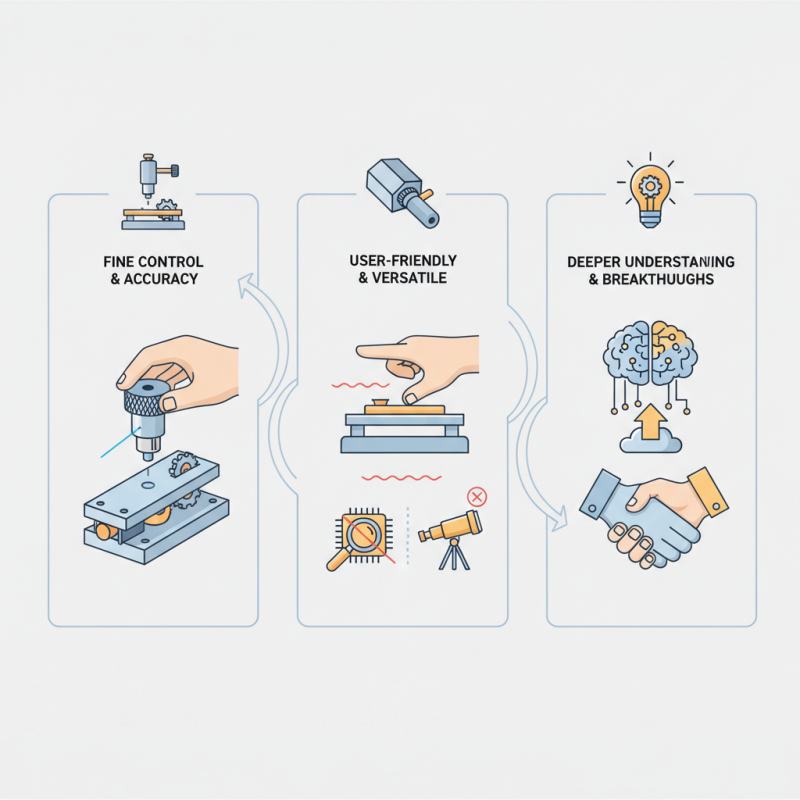
In the world of precision engineering, the choice of equipment can significantly impact results. A Manual Linear Stage emerges as a vital tool for various applications. This device provides fine control and accuracy, essential for tasks requiring meticulous attention.
Manual Linear Stages are user-friendly and versatile. They allow precise positioning with minimal mechanical complexity. This simplicity can lead to errors if users are not careful. The tactile feedback from a manual system can sometimes be misleading. However, this hands-on approach fosters a deeper understanding of the setup, enhancing skills over time.
Choosing a Manual Linear Stage is not without challenges. It requires patience and practice to master its operation. Yet, for many engineers and hobbyists, the rewards are worth the effort. The connection between the user and the equipment can lead to breakthroughs in projects that automated systems may not easily achieve. Thus, understanding the nuances of manual control can elevate precision work to new heights.
Understanding the Basics of Manual Linear Stages in Precision Applications
Manual linear stages are essential tools in precision applications. They allow for delicate control over movement. These stages are often used in laboratories and manufacturing settings. The accuracy they provide can significantly impact results. For example, in microscopy, even slight misalignments can lead to erroneous data. Manual linear stages help mitigate these issues through precise adjustments.
Understanding how these stages work is crucial. They typically feature a sliding rail and a stage plate. Users can hand-crank or move the stage with knobs. This hands-on approach delivers tactile feedback. However, not every operator may achieve perfect alignment on the first try. It takes practice to master the controls. Still, this manual aspect fosters a deeper understanding of the setup.
In precision applications, feedback loops are vital. Improper adjustments can cause frustration. Certain stages require fine-tuning, and users must be patient. Everyone makes mistakes. Reflecting on those errors can lead to improved techniques. Ultimately, the learning curve is part of the journey. Embracing imperfections enhances skill and precision.
Key Advantages of Manual Linear Stages for Precision Movements
Manual linear stages are essential in precision applications. They offer unmatched control for delicate movements. Operators can make fine adjustments easily with their hands. This hands-on approach allows for a level of tactile feedback that automated systems often lack. Users can feel the motion and make real-time adjustments based on their intuition and experience.
These stages excel in environments where precision is critical. For instance, in laboratories, even the slightest misalignment can lead to errors. Manual stages provide a direct connection between the user and the equipment. This connection fosters a deeper understanding of the system. However, they may require significant practice to master. The learning curve can be steep for some, yet the rewards of precision are substantial.
Cost is another factor to consider. Manual stages are often more affordable than their automated counterparts. This makes them accessible for educational institutions and small labs. Despite this advantage, the efficiency of manual operation can be a double-edged sword. It may require more time for repetitive tasks, leading to fatigue. Finding a balance between speed and precision is crucial.
Factors to Consider When Selecting a Manual Linear Stage
When selecting a manual linear stage, several factors are critical to ensure optimal performance. Start with the travel range. It should align with your project's requirements. Too short a range limits your application. A stage with excess travel can waste space and complicate setups.
Next, consider the load capacity. How heavy will your load be? If the stage cannot support the weight, you risk damaging the equipment. Precision is another key factor. The degree of accuracy needed varies across different applications. High precision may require more sophisticated designs, which can increase costs.
Don't overlook the ease of use. A manual linear stage should allow smooth operation without excessive force. Consider the materials and construction quality as well. Inferior materials may lead to wear over time. These imperfections could impact your project’s outcomes.
Reflecting on these factors will help you choose a manual linear stage that meets your specific precision needs.
Applications and Industries that Benefit from Manual Linear Stages
Manual linear stages are essential tools in various applications and industries. They offer precise control for movement along a single axis, making them valuable in engineering and laboratory settings. For example, in microscopy, precise adjustments are crucial for focusing on specific specimens. Scientists often rely on these stages for delicate positioning of samples.
In manufacturing, manual linear stages can aid in the alignment of components during assembly. The hands-on approach allows workers to adjust settings efficiently. This flexibility sometimes leads to better outcomes. However, it can also create inconsistencies. Human error is always a factor when relying on manual adjustments.
Moreover, in the arts, these stages assist artists and photographers in achieving the perfect shot or angle. The tactile experience of operating the stage may offer satisfaction but can also be time-consuming. Sometimes, these delays in manual adjustments can hinder productivity. Despite this, the precision and control they offer remain unmatched, making them a preferred choice for many professionals.
Comparing Manual vs. Automated Linear Stages for Precision Needs
When deciding between manual and automated linear stages, consider the unique advantages of each. Manual stages often offer a tactile experience. Users can feel each adjustment. This can be crucial for tasks requiring precision. A slight twist or turn can make a significant difference in positioning. The simplicity of a manual stage also allows for quick adjustments. No software or complicated controls are needed.
On the other hand, automated stages provide speed. They excel in repetitive tasks where precision must be maintained over time. However, they can be less intuitive. Calibration might be required more often. This could lead to frustrations if misaligned. Users may find automation limiting in some cases. They might yearn for hands-on control.
Manual stages encourage involvement in each movement. They allow for immediate feedback, but this also means potential for human error. Small shakes or miscalculations can affect outcomes. It is vital to balance the benefits and challenges. Reflecting on the specific needs for your projects will guide you towards the right choice.