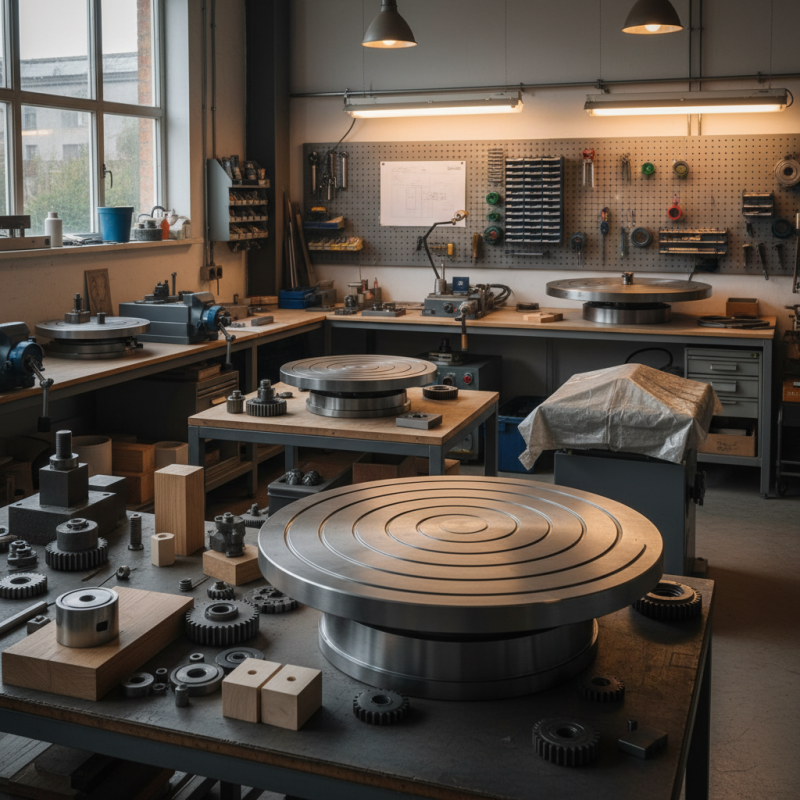
How to Choose the Best Turning Rotating Table for Your Needs?
Choosing the right Turning Rotating Table can significantly enhance your projects. It’s essential to consider various factors. These include your specific needs, workspace, and the materials you plan to use. A suitable table aids in precision, efficiency, and safety.
When evaluating options, think about size and weight capacity. A table that’s too small limits your output. On the other hand, an overly large table may fill your workspace unnecessarily. Pay close attention to the rotation mechanisms as well. They should be smooth and reliable for optimal performance.
Moreover, reflect on your budget. Investing too little may lead to a table that does not meet your needs. However, spending excessively might not guarantee better results. Research reputable brands and read reviews to ensure reliability. The right Turning Rotating Table should balance quality and cost, tailored to your unique requirements.
Understanding the Different Types of Turning Rotating Tables
When choosing a turning rotating table, understanding the types available is crucial. There are vertical and horizontal models, each serving specific needs. Vertical tables are ideal for tasks requiring height adjustments, while horizontal tables are typically more stable for heavy loads. The design choice can significantly impact your workflow efficiency.
Another important aspect is the rotational mechanism. Some tables offer manual rotation, while others provide powered options. Manual tables are often more affordable but may require more effort. Powered tables enhance convenience and speed but can be more complex. Assess your tasks to determine which mechanism suits your processes best.
Quality varies among different models. Materials used and build quality affect durability. Some tables might buckle under heavy use. Examine user reviews for insights. Not all tables will meet expectations, and understanding your actual needs is key. Selecting the right turning rotating table can enhance productivity significantly. Make informed choices based on specific requirements and use-case scenarios to ensure optimal functionality.
Key Features to Consider When Selecting a Rotating Table
When selecting a turning rotating table, consider its stability. A sturdy base is essential for support during operations. Weight capacity is another critical factor. Ensure the table can handle the load you expect to place on it. A table that wobbles or isn't well-balanced can lead to mishaps.
Look into the ease of rotation. Smooth, consistent movement is often preferred. Pay attention to the rotation mechanism as well. Some tables have manual controls, while others feature electric options. Each type serves different needs. Adjustability is also crucial. Different projects may require various heights or angles, so adaptability adds value.
Lastly, examine the table’s size and portability. Is it easy to move around? Compact designs can be beneficial in limited spaces. However, larger tables might serve specific tasks better. Make a list of your requirements before making a choice. This will guide you in evaluating the right features for your needs.
How to Choose the Best Turning Rotating Table for Your Needs? - Key Features to Consider When Selecting a Rotating Table
| Feature | Description | Importance |
| Load Capacity | The maximum weight the table can handle. | High |
| Size & Dimensions | The overall dimensions of the table. | Medium |
| Rotation Speed | The speed at which the table can rotate. | High |
| Material | The materials used in the construction of the table. | Medium |
| Ease of Use | How user-friendly the table is during operation. | High |
| Versatility | The ability to adapt to different tasks and setups. | Medium |
| Stability | The steadiness of the table during use. | High |
| Price | Cost of the rotating table. | Medium |
Assessing the Load Capacity and Stability Requirements
When choosing a turning rotating table, assessing load capacity and stability is crucial. According to industry reports, a rotating table's load capacity must meet specific project requirements. For precision work, a table should withstand at least 1.5 times the expected load. This factor ensures safety during use.
Stability is equally important. A table with a low center of gravity provides better stability during operation. Data indicates that tables designed with wide bases improve overall steadiness. Unexpected vibrations can lead to inaccurate work results. Regular checks on a table's condition can prevent such issues.
However, not all manufacturers disclose the same information. It's essential to request detailed specs for any table you're considering. Be vigilant about load limits and stability features. If specifications seem vague or incomplete, that may be a red flag. Understanding these aspects can empower you to make the best choice for your needs.
Evaluating Precision and Accuracy for Your Specific Applications
When selecting a turning rotating table, precision and accuracy are paramount. High precision is crucial for applications in industries like aerospace, automotive, and medical device manufacturing. According to recent industry reports, a deviation as small as 0.01 mm can impact product performance significantly. Choosing a table that consistently meets or exceeds this standard is essential for maintaining high-quality outputs.
Not all tables are created equal. The design, material, and manufacturing process of a rotating table influence its accuracy. For instance, a table built with high-grade alloys tends to provide better stability. Additionally, tables that have advanced bearing systems can reduce friction and enhance precision. However, some tables may not deliver the promised accuracy, leading to operational inefficiencies. Evaluating user reviews and third-party assessments can help identify reliable options.
Measuring accuracy in real applications requires real-world testing. Simulating your specific use cases will reveal performance discrepancies. A rotating table might perform well under ideal conditions but fail in practical scenarios due to wear and tear. Understanding these nuances is vital. Analyze how the table behaves under stress and consider potential adjustments to improve performance if necessary. Regular calibration and maintenance play a critical role in sustaining the accuracy of your equipment.
Budget Considerations and Value for Money in Rotating Tables
When selecting a turning rotating table, budget considerations are crucial. Reports show that the price range for these tables varies widely. Basic models start at around $100, while advanced options can exceed $500. Understanding the features you need is essential to avoid overspending.
Many users feel overwhelmed by the choices. A good approach is to align your budget with your needs. For instance, if you require high precision, investing in a more expensive option may be worthwhile. However, if your tasks are less demanding, a less expensive table could suffice. Also, remember that maintenance costs are often overlooked. Choosing a durable table can save money long term.
Tips: Compare prices across different retailers. Often, the same model is sold at various prices. Check online reviews for insights on value and performance. Seek out user testimonials about durability and ease of use. This can help you make an informed decision. Balancing cost and quality is essential for value for money.