
Top 10 CVT Chain and Belt Suppliers for Global Buyers
Choosing a supplier for a continuously variable transmission is not a simple price comparison. A CVT Chain / CVT Belt must match the transmission design, torque range, operating temperature, and service expectations. Small differences matter. A belt that looks suitable on paper may perform differently under repeated heat cycles or heavy urban use. Buyers should confirm dimensions, material specifications, production controls, and traceability before requesting a quotation.
This guide introduces ten suppliers relevant to global buyers and explains what to examine when comparing them. The list is a starting point, not a universal ranking. Supplier capabilities, export experience, and product availability can vary by region and application. Ask for current technical documents, sample inspection procedures, warranty terms, and clear lead-time estimates. Check that a supplier can support the required belt or chain type, rather than relying on broad product descriptions.
Cost still matters. But a low unit price can conceal longer delivery windows, limited engineering support, or inconsistent documentation. Those details deserve scrutiny. Where possible, compare offers using the same drawings, operating conditions, and acceptance criteria. One limitation: public information rarely reveals every factory process or long-term field result. Verify critical claims directly and involve qualified transmission engineers before approval. The best fit is the supplier whose evidence, communication, and product match the actual duty cycle—not simply the one with the largest catalog.
How CVT Chains and Belts Work in Modern Transmission Systems
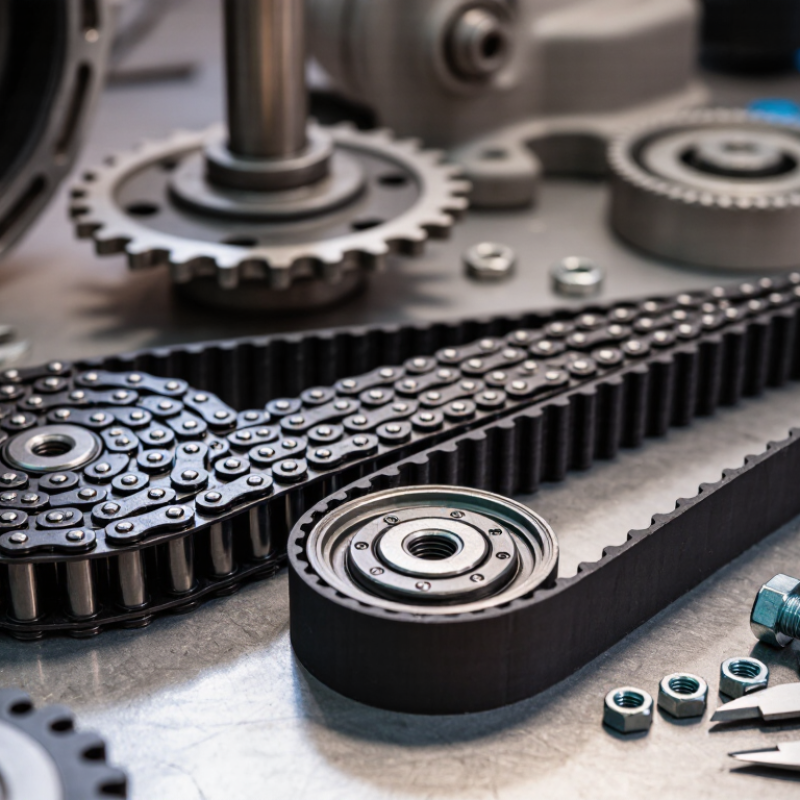
In a modern continuously variable transmission, a chain or belt runs between two pulleys with adjustable side faces. As the faces move closer together, the chain or belt rides at a larger effective radius. On the other pulley, it moves inward. This changes the drive ratio without fixed gear steps. Small changes matter. A steel push belt transfers force through compressed metal elements, while a chain transfers load through linked components and contact points. Their construction differs, so they are not interchangeable in every transmission.
Hydraulic pressure and electronic controls adjust pulley spacing as speed, throttle demand, and load change. The goal is to keep the engine near a useful operating range while the vehicle accelerates. Transmission fluid also helps manage friction, lubrication, and heat. Heat is easy to underestimate. It can affect durability, especially during repeated high-load operation. A supplier’s published dimensions and material details are useful, but system fit, pulley geometry, and control calibration matter too. The neat diagram hides a messy reality: small variations in alignment or surface finish can influence wear, noise, and performance. Specification checks deserve care.

Key Criteria for Comparing Global CVT Component Suppliers
Comparing CVT chain and belt suppliers starts with the vehicle’s duty cycle, not the catalog. A scooter and a high-torque passenger vehicle impose different loads, temperatures, and packaging limits. OICA’s 2023 production statistics report about 93.5 million motor vehicles built worldwide. This figure does not measure CVT demand, but it shows why buyers should check a supplier’s capacity and batch traceability across a complex supply network. Numbers are not proof.
Request material specifications, dimensional tolerances, and test results for fatigue, wear, and torque-temperature cycling. Check whether the supplier’s quality certification covers the actual production site and process; a certificate alone cannot establish component durability. Compare lead times, capacity plans, change-control procedures, and lot-level inspection records. Ask for evidence from production batches, not only prototype samples. A practical gap remains: samples may not match mass-production output. ISO’s Survey of Management System Standard Certifications can help frame certification checks, but it does not rank CVT component performance.
Tips: Send the same drawing, duty cycle, and acceptance criteria to every candidate. Compare test methods as well as results; similar numbers can come from different procedures. Keep one unresolved risk visible in the scorecard, rather than hiding it inside an average.
Top 10 CVT Chain and Belt Suppliers for Global Buyers - Key Criteria for Comparing Global CVT Component Suppliers
Use these ten criteria to compare suppliers consistently. Request product-specific evidence and quotations; performance, availability, and compliance depend on the component and application.
| No. | Comparison Criterion | Information to Compare | Evidence to Request | Why It Matters |
|---|---|---|---|---|
| 1 | Component and application fit | Component type (such as a metal pushbelt, CVT chain, or rubber V-belt), transmission design, vehicle or machine application, and operating conditions. | Part drawings, dimensional specifications, application references, and a written compatibility confirmation. | CVT components are application-specific; matching the general component category alone does not establish interchangeability. |
| 2 | Design and dimensional control | Relevant dimensions, tolerances, material specifications, and revision control for the particular chain or belt design. | Controlled drawings, inspection plans, change-notification procedures, and sample measurement reports. | Dimensional consistency supports fit, assembly, and repeatable operation in the intended transmission. |
| 3 | Performance validation | Application-relevant test conditions and results, such as load, speed, temperature, wear, fatigue, or durability, as applicable to the component. | Test methods, sample details, acceptance criteria, and reports identifying the tested part and conditions. | A result is meaningful only when the test conditions and acceptance limits are clear and relevant to the target use. |
| 4 | Quality management system | Current quality-system certification and its scope, site, and validity. | A valid certificate and confirmation that it covers the manufacturing location and relevant activities. IATF 16949 is an automotive quality-management standard; ISO 9001 is a general quality-management standard. | Certification status and scope help buyers assess documented quality processes; certification alone does not prove product performance. |
| 5 | Automotive development and approval support | Ability to support the buyer's required development and production-approval process, where applicable. | Examples of APQP and PPAP documentation, agreed deliverables, and the supplier's process for handling engineering changes. | APQP and PPAP are commonly used automotive planning and production-part approval processes; specific requirements are set by the customer. |
| 6 | Traceability and corrective action | Lot or batch identification, retained production records, nonconformance handling, and response process. | A sample traceability record, written complaint-response procedure, and corrective-action report format. | Traceability can help isolate affected production lots and support investigation when a quality issue occurs. |
| 7 | Material and market compliance | Material declarations and regulatory obligations applicable to the product and destination market. | Current declarations or test documents identifying the product, applicable substances, and relevant regulatory scope, such as REACH or RoHS where applicable. | Regulatory applicability varies by product, use, and destination; request documentation that matches the specific shipment and market. |
| 8 | Production capacity and lead time | Quoted capacity, production and shipping lead times, minimum order quantities, and peak-period constraints for the requested part. | A written, part-specific quotation, capacity statement, and delivery schedule with stated assumptions. | Capacity and delivery commitments are supplier- and order-specific and should be confirmed rather than assumed. |
| 9 | Export packaging and logistics | Packaging protection, labeling, shipping method, delivery terms, and export-document support. | Packaging specifications, sample labels, proposed Incoterms® rule and named place, and a list of shipping documents provided. | Clear logistics terms help define cost, transport responsibilities, and the point at which delivery risk transfers under the agreed Incoterms® rule. |
| 10 | Total cost and commercial support | Unit price, tooling or development charges, order quantities, payment terms, warranty conditions, and after-sales support. | An itemized quotation and written terms covering tooling ownership, warranty scope, exclusions, and technical support. | Comparing the full commercial scope reduces the risk of judging offers by unit price alone. |
Profiles of Ten CVT Chain and Belt Suppliers for Global Buyers
Global buyers often compare CVT chain and belt suppliers by fit, durability, production capacity, and documentation. The ten profiles below describe useful supplier types, not a verified ranking of named companies. Small details matter. Ask how each supplier tests components under heat, load, and repeated movement.
A chain-focused manufacturer may offer hardened links and controlled pin tolerances. A belt specialist may provide compound options for different operating temperatures. An integrated transmission producer can coordinate belts, pulleys, and matching components. A custom engineering supplier may adjust dimensions for unusual equipment. A high-volume factory may suit buyers needing repeat orders and stable output.
A regional distributor can shorten delivery times and hold common sizes in stock. An export-focused supplier may support packaging and shipping documents. A testing-led manufacturer can share sample inspection records and wear-test methods. A small-batch producer may help with pilot runs, though capacity needs checking. A technical service supplier can assist with installation questions and failure analysis. Fit is not enough. Buyers should compare material specifications, traceability, lead times, sample results, and replacement policies before choosing. One weakness: catalog claims can look similar, while actual test conditions differ. Request clear evidence for the intended machine and duty cycle.
Top 10 CVT Chain and Belt Suppliers for Global Buyers
Global vehicle production provides market context for buyers evaluating CVT chain and belt suppliers. The chart shows 2023 vehicle production in the ten highest-producing countries; it does not rank suppliers or represent CVT-specific demand.
Source: OICA, 2023 motor vehicle production statistics. Production is shown in millions of vehicles.
Supplier Product Ranges, Markets, and Manufacturing Capabilities
Top 10 CVT Chain and Belt Suppliers for Global Buyers
Global buyers comparing ten CVT suppliers should look beyond catalog breadth. Product ranges may include push belts, metal chains, pulleys, and matched transmission components. Check whether each product serves scooters, passenger vehicles, industrial drives, or replacement markets. These applications have different load, speed, and durability requirements.
Manufacturing capability matters as much as product variety. Review material controls, heat treatment, dimensional inspection, and traceability. Request sample test reports and production tolerances, not just capacity figures. Suppliers serving export markets may offer engineering support, packaging options, and regional stock. Confirm lead times against your forecast. A polished brochure is not proof. One detail is easy to miss: suppliers may outsource a critical process, changing how quality is monitored. Ask directly.
Tips: Send each candidate the same drawing, operating range, and annual volume. Compare wear data from similar test conditions. Request a clear change-control process. Mark any assumptions when specifications are incomplete. Laboratory results help, but field performance can still differ.
How Buyers Assess and Select a CVT Chain or Belt Supplier
A capable CVT supplier should prove performance under the buyer’s actual torque, speed, and temperature range. Ask for fatigue-test results, dimensional tolerances, material specifications, and batch traceability—not just a headline tensile-strength figure. A chain sample should be checked for pitch consistency and pin wear; a belt needs careful inspection of element fit and surface finish. Small defects matter.
The U.S. EPA’s 2024 Automotive Trends Report puts average new-vehicle fuel economy for model year 2023 at 27.1 mpg. That market-wide figure is not a CVT component test, but it shows why drivetrain efficiency remains a practical selection criterion. Request repeatable efficiency and durability data, with test conditions stated clearly. SAE technical papers on transmission testing can help buyers compare methods, though results may not transfer directly between applications. That distinction is easy to miss.
Assess process control, engineering support, production capacity, and delivery history alongside price. Ask how the supplier handles a failed sample, changes in material batches, or a tight tolerance near the drawing limit. Then run a pilot batch in the intended assembly. It takes time. And one uncomfortable point: a polished test report still cannot replace independent verification.
