
7 Parcel Sorting System Tips for Global Buyers

Choosing a Parcel Sorting System is not just a conveyor decision. It shapes delivery speed, labor needs, and the quality of tracking data. A line rated for 10,000 parcels per hour may still struggle when cartons vary in size, labels face sideways, or peak-season volume arrives at once. Buyers should compare real operating conditions, not just headline capacity.

Alex Morgan, a fictional composite parcel-automation specialist, offers this guiding line: “A sorter performs only as well as the parcels, data, and workflow around it.” Treat that as a design principle, not a sourced industry quotation. This guide outlines seven practical checks for global buyers, including throughput, parcel range, scanning accuracy, software integration, facility layout, safety, and after-sales support. Ask suppliers to explain how each feature performs under your own operating conditions. Request a test using representative parcels, including soft mailers and scuffed cartons. Small details matter. A missed barcode can slow a lane, while poor access can make routine maintenance harder than expected.

Specifications still leave room for doubt. Forecasts change, and a system sized tightly for today may feel restrictive later. The following tips help buyers ask sharper questions, compare proposals fairly, and identify trade-offs before installation. They are a starting point, not a substitute for site-specific engineering review.
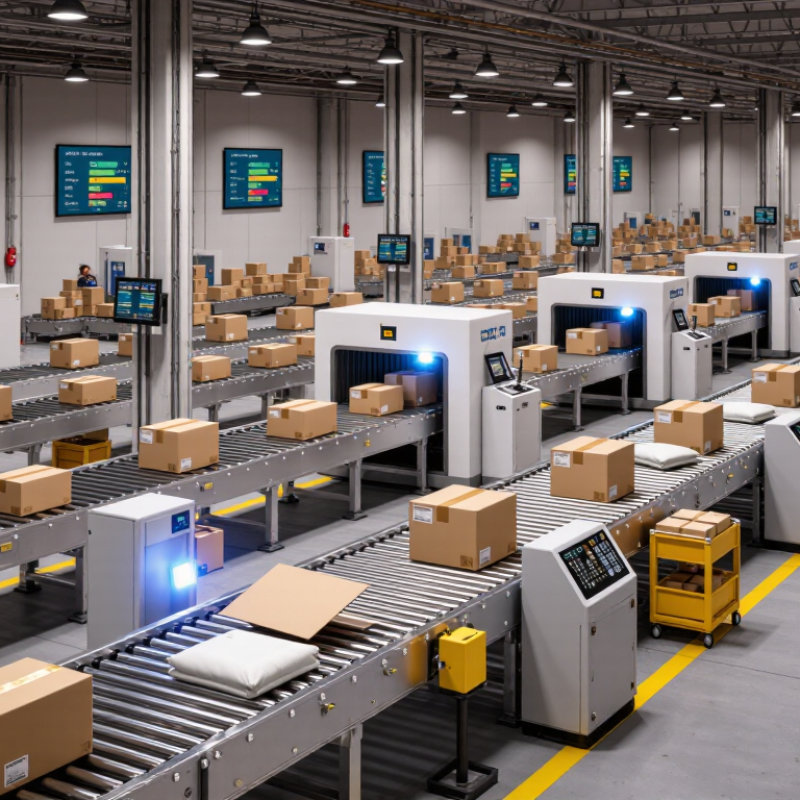
7 Parcel Sorting System Tips for Global Buyers

Define Your Parcel Sorting Requirements and Operating Goals

A parcel sorting system should match the work your facility actually handles, not an idealized forecast. Record daily volume, peak-hour surges, parcel dimensions, weights, and the share of irregular items. Measure these across normal and busy weeks; averages alone can hide a difficult Monday morning. Set clear goals, such as reducing manual handling, improving throughput, or limiting mis-sorts. Choose a few measurable targets. Early estimates are often wrong, so leave room to revise them.

Tip: Map the parcel journey from induction to each destination chute. Note walking distances, queue points, staffing levels, and available floor space. A simple site sketch can expose conflicts before equipment is specified. Small details matter.

Define how success will be checked after installation. Track parcels per hour, missort rates, downtime, and labor needs using consistent measurement periods. Decide who will review these figures and how often. Include seasonal peaks and expected volume growth, but avoid sizing solely for a rare maximum. That can add cost and complexity. Also confirm the data format and reporting access your operations team needs. Some assumptions may change once real parcel data is reviewed; document them instead of treating estimates as facts.

Define Parcel Sorting Requirements and Operating Goals

Estimate the hourly sorting capacity your operation needs at different daily parcel volumes. The peak-capacity figures use a 1.5× planning factor to account for busy periods.

Illustrative planning calculations assume an 8-hour operating shift: average rate = daily parcels ÷ 8; peak rate = average rate × 1.5. Adjust the shift length and peak factor to match your actual parcel profile.

Match System Capacity to Parcel Volume and Facility Layout

A sorting system should match the parcels your facility actually handles, not an optimistic peak forecast. Start with average hourly volume, then check busy periods, seasonal surges, and the share of irregular parcels. A line’s rated speed can be misleading. Uneven arrivals and manual checks often reduce usable throughput. Measure the real mix, including parcel dimensions and how frequently staff must intervene. Small details matter.

Facility layout matters just as much. A compact building may need a shorter conveyor path and carefully placed chutes. A larger site might benefit from parallel lanes and room to expand. Check ceiling height, column spacing, dock locations, pedestrian routes, and access for clearing jams. Watch the handoffs. A fast sorter cannot fix a congested feed area or too few outbound doors. Allow space for maintenance and temporary parcel buildup, even if that looks inefficient on a floor plan. It may be tempting to use every square metre. Simulate peak flows with realistic parcel sizes before committing, and treat the results as a planning guide, not a guarantee. A layout can look excellent on paper, then feel awkward when carts and people share the same aisle.

Compare Sorting Technologies, Accuracy, and Automation Levels

When comparing parcel sorting technologies, start with the shape and mix of parcels, not a headline throughput figure. A sliding-shoe sorter can handle varied carton sizes, while cross-belt and tilt-tray systems offer controlled, high-speed routing. Manual lanes cost less to install but need more floor staff. The right fit depends on peak volume, available space, and how often parcel profiles change. It is easy to overvalue speed.

Accuracy depends on more than the sorter itself. Check how the system reads labels, confirms destinations, and handles damaged or poorly placed barcodes. Vision cameras can help when labels shift, but lighting, dust, and parcel overlap still matter. Ask suppliers to test your own sample parcels, including padded mailers and dark cartons. Measure mis-sorts and unreadable labels separately; one combined accuracy number can hide useful detail.

Automation levels range from assisted scanning to integrated induction, routing, and exception handling. More automation can reduce repetitive handling, but it also adds maintenance needs and failure points. Watch a live demonstration, including what happens when a parcel has no readable label. That part is often less polished. Compare recovery time, operator access, and the clarity of fault alerts. I would also leave room for manual review; perfect data is a hopeful assumption.

7 Parcel Sorting System Tips for Global Buyers - Compare Sorting Technologies, Accuracy, and Automation Levels

Tip Sorting technology Typical automation level Throughput profile Parcel fit Accuracy considerations What buyers should verify
1. Match the system to your daily volume and destination count. Manual or semi-automatic put wall Low; operators scan, place, and confirm parcels, with software support where configured. Low to moderate; capacity depends strongly on staffing, layout, and parcel presentation. Suitable for smaller operations, variable workloads, and orders with a manageable number of destinations. Scanning and operator procedures affect correct-sort performance. Mis-scans, missed scans, and full compartments need defined controls. Ask for a staffing plan, scan-confirmation workflow, compartment-full alerts, and measured results using your parcel mix.
2. Check whether parcels are stable on the conveyor. Pop-up wheel or pop-up belt sorter Medium; conveyor controls divert parcels automatically, while induction and exception handling may remain manual. Moderate; actual capacity depends on parcel spacing, divert locations, and the number of active lanes. Often used for cartons and other reasonably stable items that can travel reliably on a conveyor. Skewed, closely spaced, or unstable parcels can affect identification and diversion. Confirm how no-reads and failed diverts are handled. Test parcel orientation, minimum spacing, divert success, recirculation rules, and exception-lane capacity.
3. Evaluate parcel size variation and required divert flexibility. Narrow-belt sorter Medium to high; automated belts divert items, with the level of automatic induction varying by system design. Moderate to high for suitable parcel profiles; throughput is project-specific and must be confirmed under operating conditions. Can handle a range of cartons and parcels when dimensions, weight, and surface condition fall within the equipment limits. Irregular bases, poor belt contact, and gaps between items can influence sorting performance. Accuracy should be measured end to end. Confirm allowable dimensions and weight, induction spacing, destination capacity, and results from a representative acceptance test.
4. Consider maintenance access as well as sorting speed. Sliding shoe sorter High; a powered conveyor and controlled divert shoes route parcels to designated destinations. Moderate to high in appropriately designed applications; realized throughput depends on feed rate, parcel mix, and layout. Commonly considered for cartons and parcels compatible with the sorter’s carrier, size, and weight limits. Reliable identification, spacing, and correct destination mapping are important. Divert faults and unavailable lanes need monitoring. Review service access, wear components, noise, spare-parts availability, and guaranteed performance at your planned operating rate.
5. Compare flexibility against system complexity. Cross-belt sorter High; individual carriers can discharge parcels to assigned destinations under system control. High potential in large, continuous operations; achievable capacity depends on carrier spacing, induction, and destination layout. Useful where many destinations and sustained parcel flows justify a more complex automated installation. Accurate induction, barcode reading, tracking, and destination control all contribute to a correct sort. Verify each stage, not only the sorter mechanism. Ask for tested performance with your parcel sizes, induction method, recirculation rate, and planned number of destinations.
6. Check that fragile or irregular parcels are supported. Tilt-tray sorter High; trays carry parcels and tilt or discharge them at assigned locations. Moderate to high potential in configured systems; capacity varies with tray spacing, induction, and item handling requirements. Can suit parcels that fit securely on trays; very small, flexible, or unusually shaped items may need special handling. Items must remain stable during transport and discharge. Confirm that the package does not bounce, snag, or land outside its intended destination. Test fragile and irregular items, tray loading rules, discharge behavior, and the process for parcels that cannot be inducted.
7. Treat singulation and scanning as part of the sorting system. Automated singulation and scanning, paired with a compatible sorter Medium to high; sensors and controls separate, identify, and track parcels, but exceptions may require manual review. Depends on the downstream sorter and the rate at which parcels can be separated and read. Valuable where mixed or closely spaced parcels make consistent identification and tracking challenging. Read rate is not the same as correct-sort accuracy. Validate label readability, multiple-label handling, no-read routing, and tracking through discharge. Request definitions for read rate, correct-sort rate, and exception rate, plus a test using real labels, packaging, and operating conditions.

Comparison note: Throughput and accuracy are not universal properties of a technology; both depend on parcel dimensions and condition, induction quality, barcode readability, layout, software, staffing, and operating procedures. Compare suppliers using the same parcel sample and documented test conditions, and request written acceptance criteria for throughput, correct-sort rate, no-read handling, and exceptions.

Check Integration, Safety, and Regulatory Requirements

A parcel sorting system must fit the full operating environment, not just meet a quoted throughput target. Pitney Bowes’ 2023 Parcel Shipping Index reported 161 billion parcels worldwide in 2022, an 8% increase from 2021. That scale makes reliable data exchange essential. Before purchase, confirm how the sorter connects with your warehouse system, carrier software, scanners, and exception lanes. Ask for a live test using your own barcode formats and parcel mix.

Small details matter. Check conveyor height, floor loading, power supply, network protocols, and the space needed to clear jams. Require written performance limits for irregular parcels, unreadable labels, and peak-hour surges. A fast line can still create bottlenecks if its reject lane fills quickly. Test it live.

Safety and compliance need equal attention. Review guarding, emergency stops, noise levels, maintenance access, and safe lockout procedures with local site teams. ISO 13849-1:2023 provides guidance for safety-related control systems, but it does not replace a site-specific risk assessment. Buyers serving the European Union should also check the Machinery Regulation (EU) 2023/1230, which applies from 20 January 2027. Requirements differ by market, so confirm applicable conformity documents before shipment. One detail is easy to miss: operators need clear instructions for clearing a jam, even when the equipment passes formal acceptance tests.

Evaluate Supplier Support, Maintenance, and Total Cost of Ownership

Global buyers should assess a parcel sorting system as an ongoing operation, not a one-time equipment purchase. Ask suppliers for response times, local technician coverage, spare-parts availability, and escalation procedures. Get these commitments in writing. A sorting line may stop because of one worn belt, a sensor fault, or delayed replacement parts. Request references from sites handling similar parcel volumes and shift patterns.

MHI and Deloitte’s 2024 Annual Industry Report found that 55% of respondents planned to increase supply-chain technology investment. That signals growing investment, but not guaranteed savings. Ask suppliers to show how they calculate uptime, throughput, and labor assumptions, then test those figures against your own peak-day data. Check the service plan’s inspection frequency, software update costs, training, and support after commissioning. A polished demo can hide a difficult maintenance routine.

Compare total cost of ownership over a realistic operating period, such as seven years. Include installation, energy, consumables, software fees, spare parts, planned maintenance, and the cost of downtime. Request separate estimates for routine and emergency service. Spreadsheets miss things. For instance, a spare module stored far from the facility may extend a stoppage by hours. Confirm which parts are stocked nearby and how quickly technicians can reach the site. Then compare the supplier’s assumptions with your maintenance team’s experience; their estimates may be imperfect, too.

keep me informed

Subscribe

By clicking SEND means that you agree to our Terms & Conditions, Privacy and Cookie Policies.