
10 Piezo Switch Buying Tips for Global Buyers?
Buying a Piezo Switch is not simply a matter of comparing unit prices. Global buyers must assess electrical ratings, sealing, lifecycle performance, documentation, and regional compliance before approving a supplier. A switch may look identical in a catalog, yet its actuation force, LED behavior, connector, or mounting tolerance can differ significantly.
Market evidence supports this careful approach. Grand View Research’s Piezoelectric Devices Market report identifies growing demand for piezoelectric technology in industrial controls, medical equipment, automotive systems, and consumer electronics. MarketsandMarkets also highlights reliability and miniaturization as important drivers across the broader human-machine interface market. These findings matter because a Piezo Switch often operates where repeated cleaning, vibration, moisture, or limited panel space cannot be ignored.
Standards provide a practical checkpoint. IEC 60529 helps buyers interpret IP protection claims, while IEC 61058-1 supports evaluation of switches used in electrical appliances. UL, CE, UKCA, and other market requirements may apply according to the final product and destination. However, certification should never be assumed from a supplier’s logo alone. Request current test reports, scope details, material declarations, and traceable quality records, preferably from an ISO 9001-certified manufacturer.
Ask for samples.
Test them in the real panel.
Record force, response, sealing, and illumination results. A datasheet rarely shows every production weakness. I have seen purchasing teams focus on a low initial price, then face tooling changes, delayed approvals, or inconsistent tactile feedback. That mistake is avoidable, although no checklist replaces engineering judgment. The ten buying tips ahead help global buyers compare suppliers more objectively and choose a Piezo Switch suited to actual operating conditions.
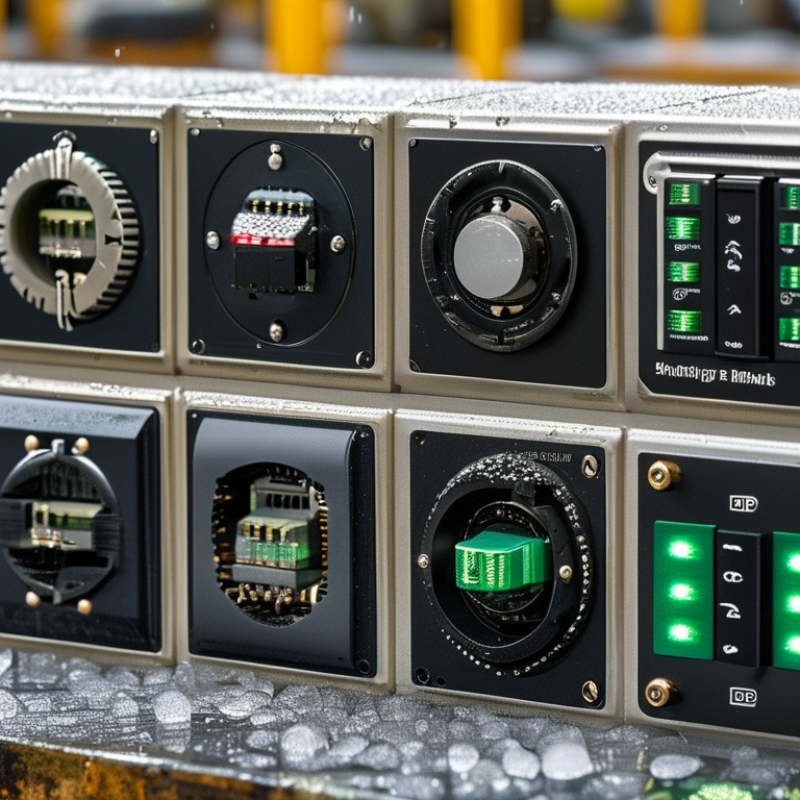
Define Application Needs: Panel Size, Actuation Force, and 5–24 VDC Inputs
Global buyers should define the application before comparing piezo switch prices.
Panel size is not only the visible button diameter. Measure the cutout, rear clearance, bezel height, cable path, and protective cover space. A 16 mm switch may fit the front panel but fail behind it. Leave room for wiring and service access. Small panels need a compact body. Outdoor panels may also require an appropriate IP rating under IEC 60529.
Actuation force directly affects usability and reliability. A light force can help gloved operators, but accidental activation becomes more likely. A higher force may suit industrial machinery, yet it can cause fatigue during repeated operation. Request force data in newtons, along with travel, operating life, and test conditions.
The 2024 Grand View Research industrial automation report estimated the global market at USD 233.2 billion in 2023. This growth increases demand for durable human-machine interfaces, but market growth does not replace application testing. That assumption can fail.
Check the electrical input carefully. A stated 5–24 VDC range should identify tolerance, current draw, polarity, ripple limits, and protection against transients. Confirm whether the switch provides a dry contact, open-collector signal, or powered output. IEC 61000-4-2 ESD testing can reveal weaknesses in real control cabinets.
Bench testing should include the actual cable length, controller, gloves, and enclosure. I still recheck these details. Datasheets often omit the inconvenient installation variable. Testing at both 5 VDC and 24 VDC is safer than trusting one nominal value.

Verify IP65–IP69K Sealing Under IEC 60529 and ISO 20653
When buying piezo switches globally, treat IP markings as test evidence, not marketing language. IEC 60529 defines the IP code for dust and water protection. IP65 resists water jets, while IP66 handles more powerful jets. IP67 covers temporary immersion. IP68 requires a manufacturer-stated immersion depth and duration, so the number alone is incomplete. IP69K addresses high-pressure, high-temperature spray conditions.
Ask for the full laboratory report.
For vehicle applications, check ISO 20653 as well. It adapts protection testing for road vehicles and includes the IPX9K designation. A reliable report should identify the exact switch model, gasket material, test orientation, water temperature, pressure, nozzle distance, and exposure time. Confirm that the tested configuration matches your production design, including the panel thickness and mounting torque.
Small installation details matter. A twisted gasket can create a leak path around the switch. A scratched panel can defeat an otherwise strong seal. Test samples should include cable exits, connectors, and protective caps when supplied. Review salt spray, cleaning chemicals, vibration, and temperature cycling separately; IP testing does not prove resistance to every environment. I have seen buyers accept an IP69K claim without checking the mounting hole tolerance. That was an expensive assumption. Some reports also test a prototype, not the final assembly. Request traceable documents, current revision dates, and independent laboratory accreditation before approving a global purchase.
Compare 1–20 Million Actuation Ratings and Lifetime Test Methods
When comparing piezo switches, treat the actuation rating as test evidence, not a lifetime promise. Ratings may range from 1 million to 20 million cycles. That gap looks decisive. It is not always decisive.
Ask how each cycle was created. A proper test rig controls pressing force, travel, release speed, voltage, and load. Temperature and humidity also matter. A switch tested at room temperature may behave differently inside a hot control panel. Check whether the test used a quick tap or a complete press-and-release cycle. The difference is important. Some suppliers count electrical responses only, while others record mechanical wear, illumination failure, or seal damage. These are not equivalent failure definitions.
For a 1-million-cycle rating, request test logs, sample size, and failure limits. For a 20-million-cycle rating, request the same evidence, not just a larger number. A credible report should identify the test duration, interruption rate, equipment calibration, and rejected samples. It should also explain whether testing was continuous or divided into daily batches. Real operators rarely press a switch at a perfectly steady rhythm. That detail can expose weak assumptions. We once saw a high-cycle estimate lose meaning when gloves, side pressure, and cleaning fluid were excluded. My own buying mistake was trusting the headline rating before reviewing the test conditions. Compare identical methods where possible, then match the result to your actual environment, force, and expected daily cycles.
Check −40°C to +85°C Operation, EMC, and Material Compatibility
For global buyers, a piezo switch must survive more than repeated pressing. Confirm operation from −40°C to +85°C, especially for outdoor panels and transport equipment. Ask for test records, not only catalog claims.
IEC 60068-2-1 and IEC 60068-2-2 define cold and dry-heat testing methods. However, a laboratory cycle is not the same as years beside sunlight, vibration, and cleaning chemicals.
EMC deserves equal attention. IEC 61000-4-2 Level 4 specifies 8 kV contact discharge and 15 kV air discharge. IEC 61000-4-3 also evaluates immunity against radiated fields, reaching 10 V/m at Level 3.
A piezo switch may have no mechanical contacts, but its cable, connector, and controller can still collect interference. Check shielding, grounding, cable length, and enclosure design.
Small details matter.
Material compatibility is easier to underestimate. Compare the faceplate, seal, adhesive, and cable jacket with alcohol, detergent, salt mist, and hydraulic fluids.
ISO 16750 environmental testing is useful for vehicle-related applications, while IEC 60529 helps verify enclosure protection levels. Request chemical-soak results at both temperature extremes.
I would not trust one room-temperature test. It feels convenient, but it can hide swelling or brittle seals. Also review actuation force after thermal cycling.
A switch that passes EMC but feels inconsistent may still fail in real service. Keep certificates traceable to the tested configuration.
Confirm CE, UL, RoHS, REACH, and Global Supply Documentation
10 Piezo Switch Buying Tips for Global Buyers
A compliant piezo switch needs more than a printed CE symbol. CE marking is the manufacturer’s declaration of conformity, not automatically an independent approval. Ask for the EU Declaration of Conformity, test standards, product scope, and revision date. For North American installations, confirm whether the exact switch, enclosure, and wiring method carry the required UL recognition or certification. Do not accept a generic certificate.
RoHS evidence should identify restricted substances, test methods, and material-control procedures. REACH documentation must address SVHC communication duties across the supply chain. The European Chemicals Agency reported 247 entries on its Candidate List in June 2024. That list can change. Check the publication date. Small details matter, especially for metal coatings, adhesives, cables, and molded plastics.
Global supply documents should include lot traceability, country of origin, safety data where relevant, quality certificates, inspection records, and change-notification rules. Request samples from the same production route. A laboratory report from another model proves little. Keep one file per part number. In practice, suppliers sometimes provide incomplete declarations, and buyers sometimes overlook firmware or cable changes. That is uncomfortable, but realistic. Recheck documents before every major order.
Sources: European Chemicals Agency, Candidate List, 2024; European Commission, RoHS Directive 2011/65/EU.
