
7 Tips for Choosing the Best Sock Making Machine
Choosing the right Sock Making Machine affects product quality, production speed, labor costs, and long-term business stability. A machine may look impressive in a showroom, yet perform differently during continuous production. Needle arrangement, cylinder diameter, computer controls, and compatibility with different yarns deserve careful examination.
These seven practical tips focus on the details that often influence daily operations. Check the machine’s output range, stitch accuracy, energy consumption, maintenance requirements, and available technical support. Ask suppliers for clear specifications, sample socks, warranty terms, and references from comparable factories. A reliable manufacturer should explain limitations, not only advertise maximum speed.
Small details matter.
For example, uneven ribbing may appear after several hours of operation, especially when yarn tension changes. Operators also need training, accessible spare parts, and safe working procedures. A lower purchase price can become expensive when repairs interrupt delivery schedules. Still, no buying guide can predict every factory condition. Yarn quality, operator experience, and local service access may change the final result. That uncertainty deserves honest consideration.
The best choice balances performance with practical control. Review each option against your production volume, target sock designs, budget, and expansion plans. Where possible, test the machine with your own yarn and patterns before signing an agreement. Careful evaluation cannot remove every risk, but it can prevent costly assumptions and support a more dependable investment.
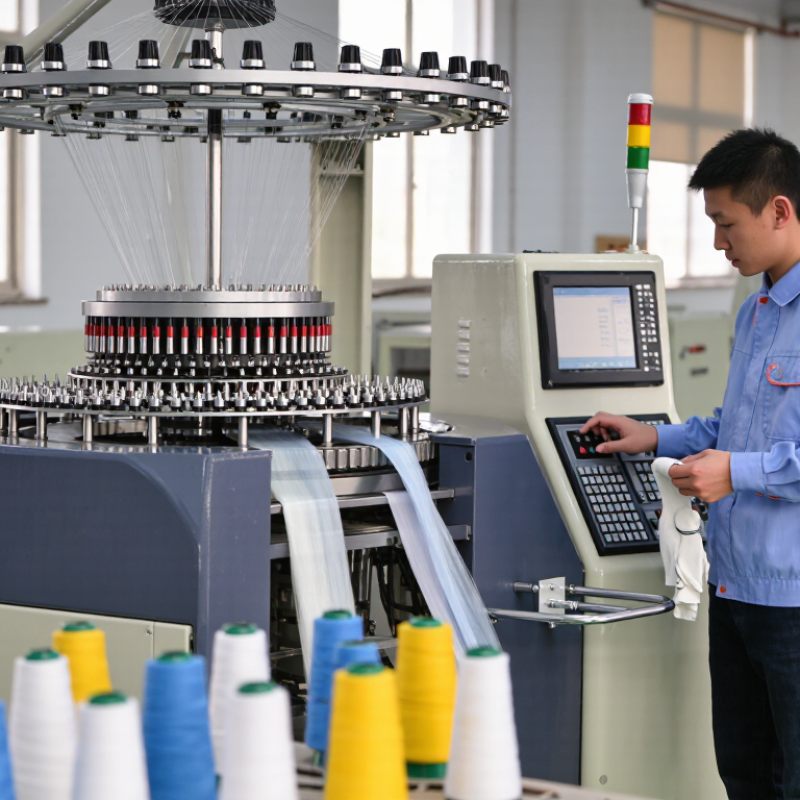
Define Your Sock Production Goals and Required Machine Type
Choosing the best sock making machine starts with a clear production goal, not a catalog comparison. Decide what you will make, how many pairs you need, and who will buy them. A small workshop may need flexible equipment for custom sizes and seasonal designs. A factory usually values output, repeatability, and stable running costs. Write down your expected weekly volume. Then test that estimate against real orders, not optimistic guesses. This step sounds basic. It prevents expensive mismatches.
Your sock type determines the required machine type. Crew socks, compression socks, athletic socks, and patterned products may require different cylinder sizes, needle arrangements, and control functions. Check the yarn range, sock diameter, stitch density, and finishing requirements before contacting a supplier. If you plan to add terry cushioning or intricate patterns, confirm that the machine supports these functions directly. Production experience shows that versatility does not always mean efficiency. A machine may handle many styles, yet changeovers can consume hours. Ask for sample runs using your actual yarn and designs.
Consider your operators and workspace as part of the decision. Measure doorways, power capacity, ventilation, and floor space before delivery. Review training time, maintenance access, spare-part availability, and technical support. These details affect uptime more than a polished specification sheet. I would also leave room for uncertainty. Forecasts change, and buyers may request unexpected products. Still, excessive capacity can strain cash flow and leave skilled equipment idle. Compare realistic production scenarios before choosing a machine type that fits your workflow.

Compare Machine Capacity, Speed, and Sock Quality
Choosing a sock making machine starts with measurable output, not showroom claims. Compare needle capacity, cylinder size, and the number of feeders. A 144-needle machine may suit fine dress socks, while heavier sports socks often need a different setup. ITMF’s 2023 International Textile Machinery Shipment Statistics recorded more than 80,000 large circular knitting machines shipped worldwide, showing strong investment in automated knitting capacity.
Speed needs careful testing. Ask for production data using your yarn, pattern, and sock length. A machine rated at 350 revolutions per minute may slow considerably with terry loops, elastic plating, or complex designs. Check socks produced per hour, changeover time, and daily uptime. Small delays matter. A ten-minute adjustment repeated six times can remove a full production hour.
Quality is more than appearance. Inspect toe closure, welt recovery, stitch density, and size consistency after washing. ISO 6330 provides standardized domestic washing and drying procedures, useful for comparing samples fairly. Request at least 100 test pairs, then measure defects and dimensional change. Do not trust one perfect sample. I have seen fast machines produce uneven toes when yarn tension drifted slightly. That detail is easy to miss. Review the control system, spare-part access, operator training, and maintenance records. The cheapest machine may become expensive when needles, sensors, or technicians are unavailable. Choose the capacity you can actually supervise.
7 Tips for Choosing the Best Sock Making Machine
Compare machine capacity, operating speed, and sock quality before selecting equipment. The chart uses representative benchmark values for medium-weight socks; actual results vary with yarn, sock design, operator skill, and machine settings.
How to read the chart: Higher daily capacity and speed can improve productivity, while a higher first-pass quality rate indicates fewer socks requiring rework or inspection.
Evaluate Automation, Controls, and Ease of Operation
Tip 1: Check what the machine automates. On a sock line, automatic yarn feeding and fault detection can reduce repetitive adjustments, but they do not eliminate setup work. Ask for a live demonstration using your yarn and target sock pattern. Watch how quickly an operator can change needles, correct a dropped stitch, and restart production. Small delays add up.
Deloitte’s 2022 Smart Factory study found that 86% of surveyed manufacturers expected smart factory solutions to drive competitiveness within five years. That broad finding supports automation investment, but it does not prove that every automated feature pays off in hosiery. Measure actual changeover time and defect rates before deciding.
Tip 2: Test the controls with the people who will use them. Clear screens, labeled settings, and accessible fault messages matter when an operator is troubleshooting a heel or toe at a noisy machine. Request a trial run, then have a less-experienced operator complete routine tasks without coaching. Can they locate the stitch settings? Can they recover from a feed interruption? Keep it practical. Compare recipe storage, alarm history, and access to production data, not just touchscreen size.
Tip 3: Inspect daily operation. Check whether guards open easily for cleaning, whether lubrication points are reachable, and whether maintenance instructions are readable at the machine. I would not assume a slick interface means simple upkeep; that is an easy mistake. Record operator feedback after several shifts, since a short showroom test can miss awkward controls and tiring repeated motions.
Check Material Compatibility, Maintenance, and Technical Support
7 Tips for Choosing the Best Sock Making Machine
Choosing a sock making machine starts with the yarn, not the machine’s appearance. Check whether it handles cotton, wool, nylon, and blended fibers consistently. Ask for sample production using your actual yarn. This reveals tension problems early. Confirm the machine’s needle range and gauge settings. Fine socks require different settings from thick winter styles. Review output speed, but do not trust speed alone. A fast machine can create more waste when tension control is poor.
Maintenance affects production more than many buyers expect. Inspect access to needles, cylinders, feeders, and lubrication points. Cleaning should be practical, not a daily struggle. Ask how often technicians recommend replacing common wear parts. Check whether the control system records errors clearly. Simple alerts save valuable time. I once focused too much on output capacity and underestimated cleaning time. That mistake made the machine less efficient than expected.
Technical support should be tested before purchase. Request installation guidance, operator training, troubleshooting documents, and remote assistance. Ask about response times during weekends and holidays. Spare parts availability also matters. A small feeder problem can stop an entire production line. Speak with experienced users when possible. Their comments may reveal issues hidden during demonstrations. Written service terms are essential, although they may not cover every real-world situation. Leave room for careful questions and honest doubts.
7 Tips for Choosing the Best Sock Making Machine - Check Material Compatibility, Maintenance, and Technical Support
| Tip | What to Check | Practical Questions | Why It Matters |
|---|---|---|---|
| 1. Match the machine to your sock styles | Confirm the machine can produce your planned range, such as crew, ankle, athletic, or dress socks, including the required size range and construction details. | Can it make the heel, toe, cuff, and patterns your product requires? Which parts or settings are needed for each style? | Machine capability varies by model and configuration; a machine suited to one product may not support every sock design. |
| 2. Check material compatibility | Ask about the yarn types and yarn counts the machine is designed to handle, including cotton, wool, nylon, polyester, and elastane blends. Verify feeder and tensioning options for your yarns. | Can you test our actual yarns? Are there limits related to yarn thickness, elasticity, friction, or feed tension? | Yarn behavior affects feeding, stitch formation, fabric appearance, and the likelihood of machine stops. Compatibility should be confirmed with production trials. |
| 3. Compare gauge and needle configuration | Review the machine's gauge, needle count, cylinder diameter, and available configurations against the fabric density and size range you need. | Which configuration is recommended for our yarn and product? How difficult is it to change needles or cylinders? | These specifications influence the fabrics and sizes a machine can produce; no single configuration is ideal for every product. |
| 4. Evaluate output realistically | Request output estimates for your specific sock design, including setup, changeover, inspection, and downstream linking or finishing time. | Is the quoted rate a theoretical maximum or a demonstrated production result? What assumptions were used? | Actual production depends on design complexity, yarn, machine settings, operator experience, downtime, and finishing operations. |
| 5. Review maintenance requirements | Check the recommended cleaning, lubrication, inspection, and replacement schedule for needles and other wear parts. Ask whether routine tasks are accessible to operators. | Which tasks are performed daily, weekly, or at planned service intervals? Which spare parts should be kept on site? | Regular care helps limit avoidable wear and unplanned downtime. The exact schedule depends on the machine and operating conditions. |
| 6. Verify technical support and training | Confirm commissioning, operator training, troubleshooting resources, service availability, language options, and support hours before purchase. | Who provides support, how are urgent issues handled, and what remote or on-site assistance is available? | Timely training and troubleshooting can help operators resolve setup issues and reduce extended interruptions. |
| 7. Calculate total ownership cost | Include the purchase price, installation, electrical and air requirements, tooling, spare parts, training, maintenance, and any required linking or finishing equipment. | What is included in the quotation? Are utilities, delivery, commissioning, software, and initial spare parts priced separately? | A complete cost comparison makes it easier to assess the investment beyond the machine's initial price. |
Review Total Cost, Energy Use, and Long-Term Value
A sock making machine’s purchase price is only the first line on the cost sheet. Add installation, needles, routine maintenance, operator training, and likely downtime. Then estimate electricity use from the machine’s rated power, hours per shift, and local tariff. The U.S. Energy Information Administration reported an average industrial electricity price of about 8.14 cents per kilowatt-hour in 2023; actual rates vary by location and contract. Treat that figure as a reference, not a factory quote. Small differences add up over long shifts.
Energy deserves a closer look because motors and drives do much of the work. The U.S. Department of Energy’s motor-systems guidance estimates that motor-driven systems use about 54% of U.S. manufacturing electricity. This is an industry-wide benchmark, not a measurement of sock machines. Ask suppliers for measured consumption under comparable production settings, and check whether idle time is included. Then compare annual energy and maintenance costs against expected output, usable machine life, and spare-part availability. A cheaper machine may cost more if it stops often. It’s easy to miss that. I would also leave room for uncertainty: actual output can change with yarn, pattern complexity, and operator skill. A spreadsheet helps, but it cannot predict every jam or repair.
