Top 10 Concrete Batching Plant Manufacturers Worldwide
The global market for Concrete Batching plants is changing quickly. Contractors now expect accurate dosing, faster cycles, lower emissions, and dependable after-sales support. A plant must perform beside busy highways, in dusty quarries, and under demanding weather conditions. Small design choices often matter.
Dr. David J. Darwin, a respected concrete researcher and former American Concrete Institute president, said, “Concrete is the most widely used construction material in the world.” His observation explains why batching equipment deserves careful evaluation. Reliable manufacturers influence mixture consistency, project schedules, worker safety, and material waste. This guide examines ten leading manufacturers worldwide, including Liebherr, Schwing Stetter, Ammann, ELKON, MEKA, CON-E-CO, Vince Hagan, Euromecc, SANY, and Zoomlion. The selection considers equipment range, production capacity, automation, component quality, service coverage, and documented industry experience.
No ranking is perfect. Market data changes. Regional support can also vary widely. A technically impressive plant may disappoint if spare parts arrive slowly or local technicians lack training. That weakness is easy to overlook. Buyers should inspect weighing systems, moisture sensors, mixer design, dust filters, control software, and cleaning access. They should also compare lifecycle costs, not only the purchase price. A low-cost machine can become expensive through fuel use, downtime, and frequent repairs. These manufacturers do not serve identical projects. Some focus on mobile plants, while others specialize in large stationary systems. Readers should therefore treat this list as a practical starting point, not a final verdict. Personal site conditions still decide the best choice.
How Concrete Batching Plants Work and What Manufacturers Provide
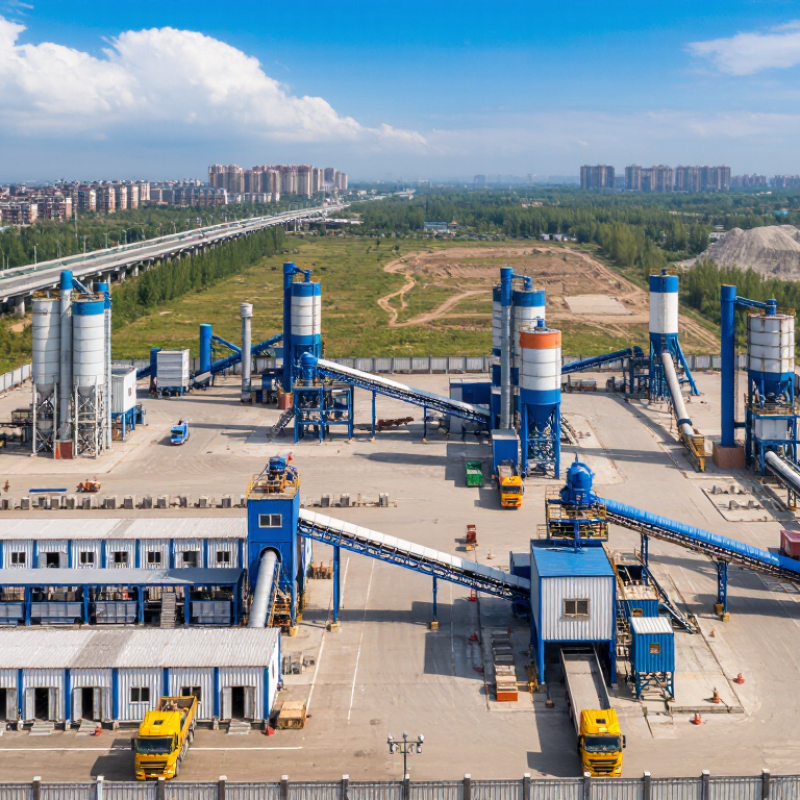
A concrete batching plant combines cement, aggregates, water, and admixtures in controlled proportions. Large bins hold sand and stone, while silos protect cement from moisture. Load cells measure each material before a computer-controlled sequence starts. Gates open, conveyors move, and mixers blend the batch until its texture becomes uniform. Timing matters. Even a small moisture change in sand can alter workability and strength.
Manufacturers typically supply plant design, storage bins, weighing systems, mixers, control software, and commissioning support. They may configure compact mobile units for changing sites or stationary plants for high daily output. A reliable design includes emergency stops, guarded moving parts, dust control, and access for cleaning. Operators also need manuals, training, spare-part guidance, and practical maintenance schedules. Performance depends on more than equipment. Foundation quality, aggregate grading, water accuracy, and operator discipline all influence results.
In field use, impressive automation cannot rescue poor calibration. A scale drifting by a few kilograms may create inconsistent batches across a long pour. I have found that simple checks often reveal more than a polished dashboard: inspect buildup, verify moisture probes, and compare ticket weights. Manufacturers should document tolerances clearly and explain what the system cannot detect. That honesty helps engineers select capacity, mixer type, and control features based on actual production conditions. Some projects still overbuy.
Criteria for Evaluating Global Batching Plant Manufacturers
Choosing among the top 10 concrete batching plant manufacturers worldwide requires more than comparing production capacity. Start with verified experience in projects resembling yours. A supplier serving coastal megaprojects may not understand high-altitude sites or severe winter conditions. Ask for documented installations, operating years, and references you can contact directly. Proof matters.
Technical evaluation should cover mixing quality, weighing accuracy, cycle time, dust control, and maintenance access. Inspect the mixer discharge area, not only the showroom model. Look for reinforced frames, protected sensors, and easy access to wear parts. Software should record batches clearly and support local reporting requirements. Small interface problems become expensive during night shifts.
Reliability depends on more than equipment. Assess factory testing, spare-parts availability, technician response times, training, and warranty terms. Request realistic delivery schedules, including customs and installation delays. A low quotation can hide weak after-sales support. I have found that promised performance is often less useful than measured performance from a running plant. No scorecard is perfect. Weather, operator skill, and aggregate moisture can change results. Leave room for these variables, and question any supplier offering flawless figures without test conditions.
Top 10 Concrete Batching Plant Manufacturers Worldwide
Criteria for Evaluating Global Batching Plant Manufacturers
This evaluation framework uses normalized procurement weights commonly applied when comparing concrete batching plant manufacturers. Technical reliability and automation receive the highest weighting, followed by production capacity, after-sales support, environmental performance, and customization capability.
The percentages represent evaluation priorities rather than the performance or market share of any individual company.
Profiles of the Top 10 Concrete Batching Plant Manufacturers
Profiles of the Top 10 Concrete Batching Plant Manufacturers
The top ten manufacturers are assessed through plant capacity, automation, service coverage, and parts availability. Their portfolios commonly include stationary, mobile, and compact batching systems. The best profiles show clear production rates, mixer sizes, control accuracy, and commissioning records. Vague claims are less useful. Buyers need evidence from comparable projects.
Several leaders focus on modular plants for urban construction. Others specialise in high-output systems for roads, bridges, and precast yards. Energy-efficient drives, sealed conveyors, and dust-control equipment now influence purchasing decisions. The Global Cement and Concrete Association reports that the industry produces about 14 billion cubic metres of concrete annually. That scale makes reliability more than a marketing phrase.
Maintenance support separates strong manufacturers from merely visible suppliers. A practical profile should examine response times, technician training, software updates, and local inventory. The International Energy Agency identifies cement production as responsible for roughly 7% of global energy-related carbon dioxide emissions. Therefore, lower material waste and accurate water dosing deserve equal attention. Some rankings remain imperfect because private sales data is unavailable. That limitation should be disclosed. A glossy factory image proves little. Field performance matters more.
Key Technologies and Product Ranges Across the Industry
Top 10 Concrete Batching Plant Manufacturers Worldwide
Leading concrete batching plant manufacturers now compete through automation, modular design, and measurable process control. Their product ranges commonly include stationary, mobile, compact, and high-capacity plants. Stationary systems suit major infrastructure sites, where twin-shaft mixers deliver consistent output. Mobile units use folding frames, integrated bins, and shorter setup periods. No plant fits every site.
Modern control systems connect moisture sensors, load cells, and automated dosing software. Moisture compensation can adjust water levels when aggregates arrive wet after rainfall. This protects the designed water-cement ratio and reduces batch variation. Remote monitoring also records alarms, production data, and maintenance intervals. Yet sensors require calibration. Poor calibration can make advanced automation misleading.
Manufacturers increasingly offer recycled aggregate handling, dust suppression, and low-emission drive systems. Some plants support cement silos with multiple compartments, while others provide separate admixture lines for demanding mix designs. Twin-shaft mixers often serve high-volume work; planetary mixers may suit precast production and specialized formulations. Field evaluations should examine access roads, foundation loads, spare-part availability, and operator training. A cheaper quotation can become expensive when cleaning takes longer than expected. Specifications still need independent verification.