
Top 10 Multi Hole Drilling Machines for Global Buyers

Choosing a Multi Hole Drilling Machine is less about counting spindles than matching the machine to real production. A cabinet shop may need evenly spaced holes across long panels, while a furniture plant may prioritize fast changeovers between batches. Feed accuracy, spindle layout, workpiece clamping, and service access all matter. Small differences show up on the shop floor.

The International Federation of Robotics’ World Robotics 2024 report recorded about 4.28 million industrial robots operating in factories worldwide in 2023, a 10% increase from 2022. This is not a drilling-machine sales figure. It does show how automation is reshaping manufacturing, where repeatability and integration increasingly matter. Taiichi Ohno’s often-cited principle, “Without standards, there can be no improvement,” offers a useful lens: buyers should compare measurable output, setup time, and hole-position consistency, not just headline speed.

Still, a catalog rarely tells the whole story. Ask for a trial using your panel material, thickness, and hole pattern. Watch the operator load a panel, change a setting, and clear a finished part. These details reveal practical strengths—and awkward compromises—that specifications may miss. The following selection of ten machines is intended as a starting point for global buyers. Compare each model against your throughput, support needs, and factory layout; no single machine fits every line.
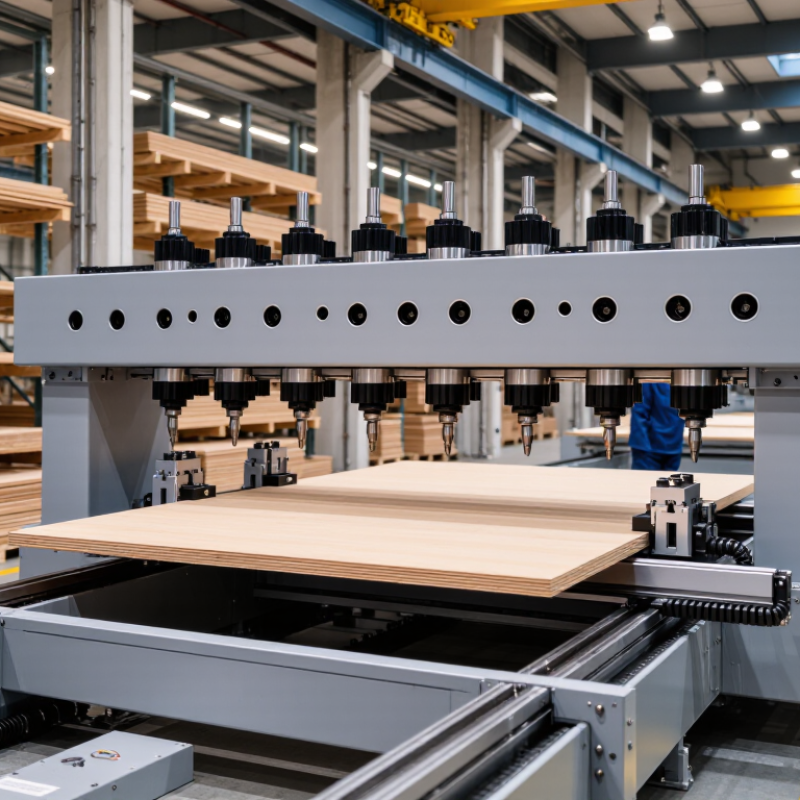
Top 10 Multi Hole Drilling Machines for Global Buyers

Understanding Multi-Hole Drilling Machines and Their Main Types

Understanding Multi-Hole Drilling Machines and Their Main Types

A multi-hole drilling machine creates several holes in one setup, helping shops repeat a defined hole pattern across many parts. The term covers different layouts, not one universal design. Some machines use a multi-spindle head, where several drills work at once. Others use gang drilling: separate drilling heads sit in a row, and the workpiece moves between stations. That arrangement can suit parts needing different hole sizes or operations. Fast, but setup matters.

CNC multi-head machines use programmed movement to position drilling units or the workpiece. They can handle changing patterns with less manual repositioning, though programming and fixturing still require care. Dedicated machines are often built around one component or hole layout, such as a panel with evenly spaced mounting holes. They may be highly productive, but less adaptable when designs change.

Choosing a type starts with the part. Check hole spacing, diameter, material, production volume, and required accuracy. A steel plate may need a rigid fixture and controlled feed; a thin panel can shift or distort under pressure. Look closely at chip clearance and spindle spacing, too. A tidy drawing does not guarantee easy machining. Operators sometimes discover that a clamp blocks a drill only after the first setup, so a test piece is worth the time.

Key Criteria for Evaluating Machines for Global Buyers

A multi hole drilling machine should be judged by the holes it produces, not just its spindle count. Ask for spindle runout, repeatability, hole-position tolerance, and test results using your material and drill sizes. ISO 230-2 offers methods for testing positioning accuracy and repeatability in numerically controlled axes; it does not, by itself, prove drilling quality. Request a sample plate with measured hole spacing. Check whether the fixture can hold your longest panels without vibration. Small movement matters.

Global buyers should also compare usable workpiece dimensions, electrical requirements, compressed-air demand, guarding, and local service access. The International Federation of Robotics’ World Robotics 2024 report recorded 4,281,585 industrial robots operating worldwide in 2023, up 10% from 2022. That figure points to a growing automation base, but it does not guarantee a drilling line will integrate smoothly. Confirm communication protocols and material-handling interfaces before purchase. Run a production trial at realistic feed rates, then inspect chip evacuation and tool wear after a full shift. A polished demonstration may miss this. I would also budget for operator training and spare tooling; these costs are easy to underestimate, especially when technical support is far away.

Top 10 Multi-Hole Drilling Machines: Features and Capabilities

Multi-hole drilling machines are judged by hole position, cycle consistency, and changeover time—not spindle count alone. A useful specification lists spindle spacing, drilling depth, feed control, and fixture capacity. Adjustable heads can handle varied patterns, while fixed-head designs may suit stable, high-volume parts. Setup matters. A poorly supported workpiece can shift under cutting force, leaving holes misaligned.

The International Federation of Robotics’ World Robotics 2024 report recorded 541,302 industrial robot installations worldwide in 2023; about 70% were in Asia. For automated cells, assess loading access, guarding, and machine-to-robot signals alongside drilling performance. These features enable integration, but do not guarantee faster production.

The Deloitte and Manufacturing Institute 2024 study estimated that U.S. manufacturing may need 3.8 million workers by 2033, with 1.9 million positions potentially unfilled. This makes simple controls and repeatable setup valuable, though automation still requires skilled maintenance.

For steel, check spindle torque, coolant delivery, and chip evacuation; for aluminum, prioritize stable feed and clean hole edges. Ask suppliers to run representative material and tooling, then measure hole location and cycle time. Not just a demo. A short trial may miss tool wear, awkward changeovers, or operator reach problems. Multi-spindle machines can reduce cycle time, but a rigid layout may limit flexibility when product designs change.

Comparing Performance, Capacity, and Production Applications

Comparing the top ten multi-hole drilling machines requires more than counting spindles. Buyers should check hole spacing, drilling depth, spindle speed, and torque against the actual workpiece. A machine handling thin aluminum panels may struggle with thick steel plates. Look closely at fixture access, too. Tight spacing can make loading awkward and slow a line.

Production figures offer useful context, but they do not predict a machine’s cycle time. The International Federation of Robotics’ World Robotics 2023 report recorded 553,052 industrial robot installations worldwide in 2022; its 2024 report recorded 541,302 in 2023. These totals indicate substantial automation activity, not drilling-machine sales. For buyers, the practical question is whether a multi-spindle setup can integrate with existing handling and inspection steps. Small details matter. A few seconds saved per panel can add up across a shift, yet published cycle times may omit tool changes, chip clearing, and operator handling. Ask suppliers to demonstrate the target material, hole pattern, and fixture—not just a sample cycle. Real production is messier.

Top 10 Multi Hole Drilling Machines for Global Buyers - Comparing Performance, Capacity, and Production Applications

The ranges below are indicative of common machine configurations, not guaranteed specifications. Actual drilling capacity and output depend on material, hole depth, tooling, fixture design, and machine options.

# Machine Configuration Typical Spindle / Head Capacity Typical Drilling Range Production Performance Common Applications Key Selection Point
1 Fixed-Pitch Multi-Spindle Drill 2–64 spindles, depending on head design Commonly about Ø3–30 mm in metalworking configurations Drills several holes simultaneously in a repeatable pattern; well suited to recurring jobs. Flanges, plates, brackets, and components with consistent hole spacing Best for stable hole patterns; changing pitch usually requires head or tooling adjustment.
2 Variable-Pitch Multi-Spindle Drill Typically 2–20 adjustable spindles Often about Ø3–25 mm, subject to spindle and material limits Can machine multiple holes in one cycle while accommodating different layouts between setups. Short-run parts, panels, fittings, and varied hole patterns Check adjustment range, minimum spindle spacing, and setup time.
3 CNC Multi-Spindle Drilling Center Commonly 4–16 controlled drilling positions or spindles Often about Ø2–20 mm; configuration dependent Automates programmed positioning and repeatable multi-hole operations; cycle time varies with travel and tool changes. Machined plates, housings, automotive parts, and mixed-pattern components Compare axis travel, programming capability, tool management, and workholding.
4 Vertical Multi-Spindle Drill Usually 2–64 spindles across different head sizes Commonly about Ø3–30 mm in metalworking use Vertical feed supports batch drilling from above; simultaneous hole count depends on the head layout. Flat workpieces, castings, fixtures, and components with top-facing holes Allow for chip clearance, clamping access, and workpiece loading.
5 Horizontal Multi-Spindle Drill Typically 2–32 spindles per drilling head or station Often about Ø3–25 mm, depending on material and spindle power Processes side-facing holes in one or more directions; can be integrated into transfer or assembly lines. Frames, blocks, profiles, and parts requiring side drilling Confirm access to the drilling face and the required fixture orientation.
6 Opposed-Side Multi-Spindle Drilling Machine Multiple heads, often 2–24 spindles per side Commonly about Ø3–20 mm in typical metalworking setups Drills from opposing faces in the same clamping cycle, reducing repositioning for suitable parts. Blocks, structural components, and parts with aligned or opposing holes Evaluate alignment requirements, clamping rigidity, and chip evacuation on both sides.
7 Gang Drilling Machine Often 4–8 separate drilling heads arranged in sequence Commonly about Ø3–16 mm, depending on the spindle units Operators can perform successive drilling or related operations without repeatedly changing tools at one spindle. Small and medium batches requiring several drilling steps Consider operator workflow, station spacing, and whether heads run independently.
8 Multi-Station Drilling Line Several stations; total spindle count is engineered for the part Typically designed around the required hole sizes and part geometry Combines operations across stations and is suited to continuous, high-volume production; output depends on line balance. Repeat-production components with several drilling operations Assess automation, changeover strategy, maintenance access, and bottleneck cycle time.
9 Woodworking Multi-Boring Machine Commonly configured with 21 or more boring spindles Often uses small-diameter bits, roughly Ø3–10 mm; many systems use 32 mm hole spacing Bores multiple furniture holes in one clamping operation; throughput depends on loading and panel handling. Cabinet sides, shelves, furniture panels, and hardware mounting patterns Check panel size, boring direction, row spacing, and required 32 mm system compatibility.
10 Tube and Profile Multi-Hole Drilling Station One or more heads; spindle quantity is matched to the hole pattern Hole range is highly dependent on tube wall, profile shape, and tooling Purpose-built fixtures support repeatable hole patterns on long or shaped stock; automatic feeding can reduce handling. Rails, frames, furniture tubes, and structural or industrial profiles Verify profile support, rotation control, length capacity, and internal chip management.

Global Purchasing Factors: Standards, Service, and Total Cost

For global buyers, a multi hole drilling machine should be assessed against the work it will actually perform. Send suppliers sample materials, hole patterns, and required tolerances, then request a test run. Check that the quoted capacity matches your stock thickness and production pace. A machine that drills accurately in a demonstration may behave differently with your material. Ask for measured results, not just a catalog figure. Small details matter.

Confirm which safety and electrical standards apply at the installation site, and request relevant declarations, manuals, and inspection records. Requirements can vary by destination and machine configuration, so have a qualified local professional review the documentation. Service matters just as much. Ask about technician availability, remote troubleshooting, training, spare-parts lead times, and support in your working language. A clear response-time commitment is more useful than a vague promise of assistance.

Compare total cost, not only the purchase price. Include freight, import charges, installation, tooling, operator training, energy use, and expected maintenance. Ask for a recommended spare-parts list and prices for wear items such as drill bits and clamps. Estimate the cost of downtime if a critical component takes weeks to arrive. The cheapest offer may still be the wrong fit. Some costs are hard to predict, so record your assumptions and revisit them before approval.

keep me informed

Subscribe

By clicking SEND means that you agree to our Terms & Conditions, Privacy and Cookie Policies.