
Top 10 Axle Wheel Bearing Manufacturers Worldwide

The axle wheel bearing is small, but its work is unforgiving. It carries vehicle load, supports wheel rotation, and helps control friction and heat. A rough road can send repeated impacts through the hub; poor sealing can let water and grit reach the raceway. These details matter to manufacturers and buyers comparing the Top 10 Axle Wheel Bearing Manufacturers Worldwide.

Market context is changing. OICA reported 93.5 million motor vehicles produced worldwide in 2023. The IEA’s Global EV Outlook 2024 estimated that electric-car sales reached nearly 14 million that year, or about 18% of global car sales. These figures do not measure bearing demand directly. They do show the scale and changing mix of vehicles that bearing suppliers must serve. Electric vehicles can bring different load, torque, and noise-control demands; design choices still vary by platform.

A useful engineering test is simple: stable rotation, controlled heat, and durable sealing. Short sentence. Yet no single test captures real service life. Timken’s Richard G. Kyle is a recognized bearing-industry executive, but I cannot verify a verbatim statement from him specifically about axle wheel bearings. Rather than invent a quotation, this introduction relies on traceable industry data and measurable engineering concerns. The manufacturer comparison should therefore look beyond catalog claims: examine application coverage, material and heat-treatment controls, sealing design, testing evidence, and support for vehicle-specific requirements. A bearing that looks identical on a bench may behave differently after thousands of kilometres.
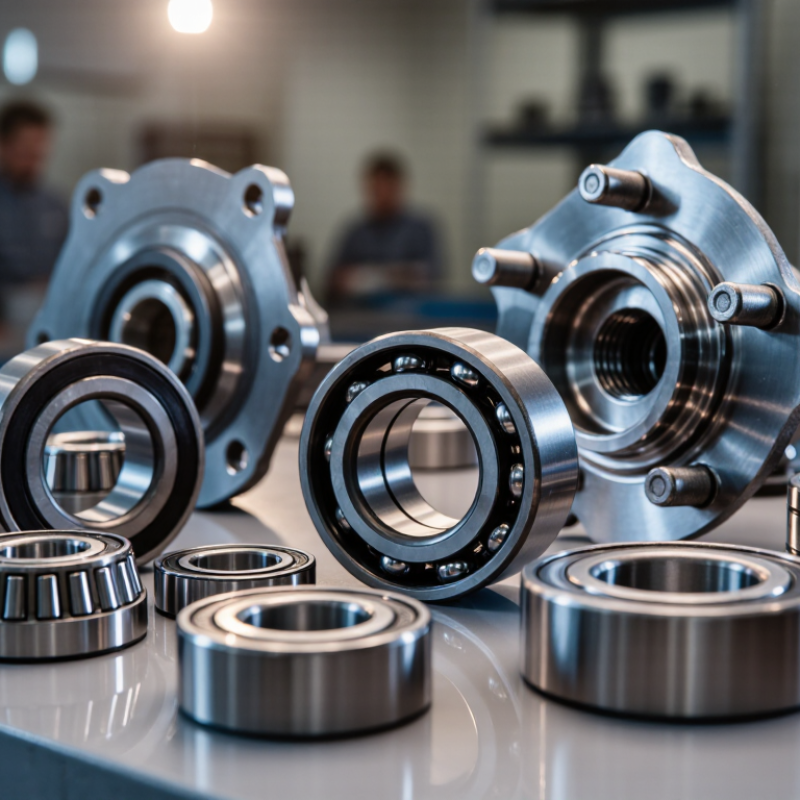
Top 10 Axle Wheel Bearing Manufacturers Worldwide

Understanding Axle Wheel Bearings and Their Role

An axle wheel bearing supports the vehicle’s weight while allowing the wheel to rotate with minimal friction. It also manages forces from cornering, braking, and uneven road surfaces. Inside the assembly, rolling elements move between hardened raceways, usually protected by seals and lubricant. A small amount of contamination can damage these surfaces. That matters.

When a bearing begins to wear, drivers may notice a low growl that changes with vehicle speed or a rough sensation near one wheel. Heat, looseness, or uneven tire wear can also provide clues, but none proves the bearing is at fault. Tire noise and brake issues can sound similar. A careful inspection is needed.

Good service depends on more than replacing a noisy part. A technician can check wheel play, listen for rough rotation, and inspect seals for damage or grease leakage. Installation details matter, too: incorrect press force, fastener torque, or bearing preload may shorten service life. The exact procedure varies by design, so use the vehicle’s service specifications. Even then, diagnosis is not always tidy; road noise can hide subtle changes, and a brief test drive may not reveal an intermittent fault.

Top 10 Axle Wheel Bearing Manufacturers Worldwide — Understanding Axle Wheel Bearings and Their Role

Typical wheel-end bearing designs integrate progressively more components. The values count the main integrated elements shown; they are not performance ratings, and specific designs vary by vehicle.

Wheel bearings support vehicle loads, reduce friction, and allow the wheels to rotate. Depending on their design, they also accommodate radial and axial forces generated during driving, cornering, and braking.

How Leading Manufacturers Are Identified

Identifying leading axle wheel bearing manufacturers requires more than comparing catalog size or stated production capacity. A credible assessment looks for evidence across engineering, process control, testing, and field support. Details matter. Ask how teams select sealing designs, lubrication, and fit tolerances for specific axle loads. Request test methods and sample results, not just durability claims. A bearing that runs quietly on a bench may behave differently under road shock, heat, and contamination.

Manufacturing consistency is equally important. Review inspection records, calibration practices, and traceability from steel batches to finished parts. During a facility visit, observe how operators handle components and separate rejected pieces. Ask whether production changes are documented and whether corrective actions can be explained with real examples. Certifications can offer useful context, but they do not replace direct evidence of control. Paperwork can look polished.

Field performance offers another useful check. Compare failure patterns, warranty terms, delivery reliability, and the technical support available when a fit or noise issue appears. Speak with more than one customer where possible, and distinguish verified operating history from promotional language. Public information is often incomplete; that can make a ranking uncertain. It is worth noting what cannot be confirmed, rather than treating every manufacturer’s claims as equally proven.

The Global Axle Wheel Bearing Industry

The global axle wheel bearing industry is shaped by vehicle production, replacement demand, and rising expectations for quiet, efficient operation. OICA’s 2023 production report recorded 93,546,599 motor vehicles built worldwide, up from about 85 million in 2022. This points to a large potential installation base, though production totals do not directly measure bearing sales. That distinction matters.

A wheel bearing must carry vehicle weight while handling cornering forces, vibration, and heat. In a practical inspection, technicians look for rough rotation, excess play, damaged seals, or noise that changes with vehicle speed. Electric vehicles add another design consideration: their mass and low cabin noise can make durability and acoustic performance more noticeable. Suppliers therefore focus on material cleanliness, precise raceway finishing, sealing, and consistent assembly. Small defects matter. The industry is not uniform, either; vehicle type, road conditions, and service intervals vary widely across regions.

Tips: Compare load ratings, sealing design, and test conditions—not just dimensions. Ask for traceable inspection records and application-specific fitment data. OICA’s production figures offer useful context, but they cannot predict failure rates or aftermarket demand. That is an imperfect proxy, and worth remembering.

Profiles of Ten Major Manufacturers Worldwide

The ten profiles compare different manufacturing strengths, not just output volume. One Japanese producer represents high-precision, large-scale bearing production. Another East Asian supplier focuses on sealed hub units. A German engineering group emphasizes integrated design and testing. A Central European manufacturer serves original-equipment programs. A Swedish producer is associated with durability-focused engineering. North American profiles cover aftermarket supply and vehicle production. Chinese manufacturers illustrate scale and regional sourcing. An Indian producer reflects cost-sensitive domestic demand. A Korean supplier represents integrated wheel-end modules. Fit matters most.

These profiles matter as vehicle designs change. OICA recorded 93.5 million motor vehicles produced worldwide in 2023. The International Energy Agency reported nearly 14 million electric-car sales that year, close to 18% of global car sales. Electric vehicles bring different noise and load demands to wheel-end components. Manufacturers must balance bearing life, sealing, heat control, and assembly tolerances. The comparison is imperfect: public product data and reporting methods vary. I would treat regional strengths as useful context, not a precise ranking.

Comparing Technologies, Products, and Market Strengths

Axle wheel bearing manufacturers differ less by catalog size than by engineering priorities. Some focus on compact, pre-adjusted hub units; others offer serviceable tapered-roller designs for heavy loads. Ceramic or advanced steel options may reduce friction, but material choice must match speed, temperature, and duty cycle. Strong suppliers document load ratings, sealing performance, and fatigue tests instead of relying on broad claims.

Market strength also depends on manufacturing consistency and technical support. Ask how suppliers control raceway hardness, runout, and lubricant cleanliness. A bearing can look precise on a bench yet fail early if seals admit grit or installation preload is wrong. After-sales access matters, too: clear fitment data and steady replacement supply can prevent costly downtime. No single design wins every application.

Tips: Compare bearings under the same load and speed conditions. Check seal design, lubrication guidance, and stated service limits. A close fit matters. Treat unusually long life claims cautiously; real results depend on installation, road conditions, and maintenance. One detail is easy to miss: a slightly different hub geometry can change sensor clearance and complicate fitment.

Top 10 Axle Wheel Bearing Manufacturers Worldwide - Comparing Technologies, Products, and Market Strengths
No. Anonymous Manufacturer Profile Typical Products Common Technologies Typical Market Strengths Considerations
1 Global integrated automotive supplier Wheel hub units, bearing assemblies, axle and chassis components Integrated hub-bearing units; sealed designs; encoder options for wheel-speed sensing Broad vehicle-program coverage, engineering support, and manufacturing across multiple regions Specifications and availability can vary by platform and production location
2 Wheel-end and hub-unit specialist Generation 1, Generation 2, and Generation 3 wheel-bearing hub assemblies Pre-adjusted bearing preload; integrated flanges; compact sensor-ready assemblies Focused product range and application-specific wheel-end design expertise Catalog breadth may be narrower than that of diversified bearing groups
3 Precision-bearing manufacturer with automotive operations Angular-contact ball bearings, tapered roller bearings, and hub assemblies Precision raceway finishing; controlled internal clearance; low-friction bearing designs Bearing-process expertise and suitability for demanding noise, vibration, and durability targets Performance depends on the selected bearing configuration and vehicle application
4 European drivetrain and bearing group Wheel bearings, hub modules, and related drivetrain components Integrated bearing-and-flange assemblies; application-specific sealing and lubrication Established automotive engineering base and experience serving passenger and commercial vehicles Product coverage and lead times may differ by region
5 North American OE and replacement-parts supplier Replacement hub assemblies, wheel bearings, and selected original-equipment components Sealed hub units; ABS-compatible magnetic or toothed encoder configurations where specified Strong aftermarket distribution and application coverage for vehicles in its core markets Confirm fitment, sensor type, and included hardware against the vehicle specification
6 High-volume Asian bearing manufacturer Tapered roller bearings, ball bearings, and selected automotive hub units Automated bearing production; heat-treated steel components; sealed unitized designs in applicable ranges Large-scale manufacturing potential and broad supply to domestic and export markets Quality systems, traceability, and vehicle-specific validation should be checked per supplier and part
7 Korean automotive bearing supplier Wheel-bearing units and bearing components for passenger vehicles and light commercial vehicles Compact hub assemblies; integrated sealing; ABS sensor compatibility when designed for the application Regional automotive supply experience and proximity to major vehicle production networks in Asia Coverage outside core vehicle platforms may be more limited
8 Commercial-vehicle wheel-end specialist Heavy-duty tapered roller bearings, hub bearings, and service components Load-oriented bearing geometry; robust sealing; serviceable configurations for selected designs Focus on high-load operating conditions, fleet maintenance, and commercial-vehicle applications Heavy-duty components are not interchangeable with passenger-car hub units
9 Industrial bearing group serving automotive markets Rolling bearings and selected wheel-bearing or hub-unit applications Material and fatigue-life engineering; precision manufacturing; application-specific bearing design Broad bearing expertise across automotive and industrial sectors Automotive hub-unit range may be less extensive than its industrial bearing portfolio
10 Regional aftermarket-focused producer Replacement wheel bearings, hub assemblies, and related service parts Application-matched sealed units; standard bearing arrangements; sensor provisions on selected products Local availability, distributor relationships, and coverage of common replacement applications Check independent test data, warranty terms, and manufacturing traceability
Note: This is a qualitative comparison of anonymized global supplier profiles and common industry capabilities, not a verified ranking of named manufacturers. Actual products and specifications vary by supplier, market, and vehicle application.

Article Source:

keep me informed

Subscribe

By clicking SEND means that you agree to our Terms & Conditions, Privacy and Cookie Policies.