
China Top Ceramic Knife Gate Valve Manufacturers?

Selecting a China-based manufacturer for a Ceramic Knif Gate Valve requires more than comparing price lists. These valves are commonly considered for abrasive slurry, mineral processing, ash handling, and other services where particles can wear sealing surfaces. Actual suitability depends on the medium, pressure, temperature, and operating cycle. A product photograph cannot confirm those details.

Industry context helps explain the demand. World Steel Association’s World Steel in Figures 2024 reports that global crude steel production reached about 1.89 billion tonnes in 2023. Steelmaking and related material-handling operations use equipment exposed to abrasive solids and demanding process conditions. This figure does not measure valve demand, but it illustrates the scale of industries where wear resistance matters. Ceramic components may help in suitable applications, though they are not automatically the best choice for every line.

This guide examines Chinese manufacturers through practical criteria: ceramic composition, gate and seat design, body materials, pressure ratings, test documentation, and after-sales support. Ask for drawings and application-specific references. Look closely at how a supplier describes leakage limits and replacement parts. Details matter.

Rankings can mislead. Public product claims are not always independently verified, and comparable test data may be limited. That gap deserves attention. Buyers should confirm specifications directly with manufacturers and assess whether the proposed valve matches the actual slurry—not just a catalogue description.
China Top Ceramic Knife Gate Valve Manufacturers?

What Is a Ceramic Knife Gate Valve?

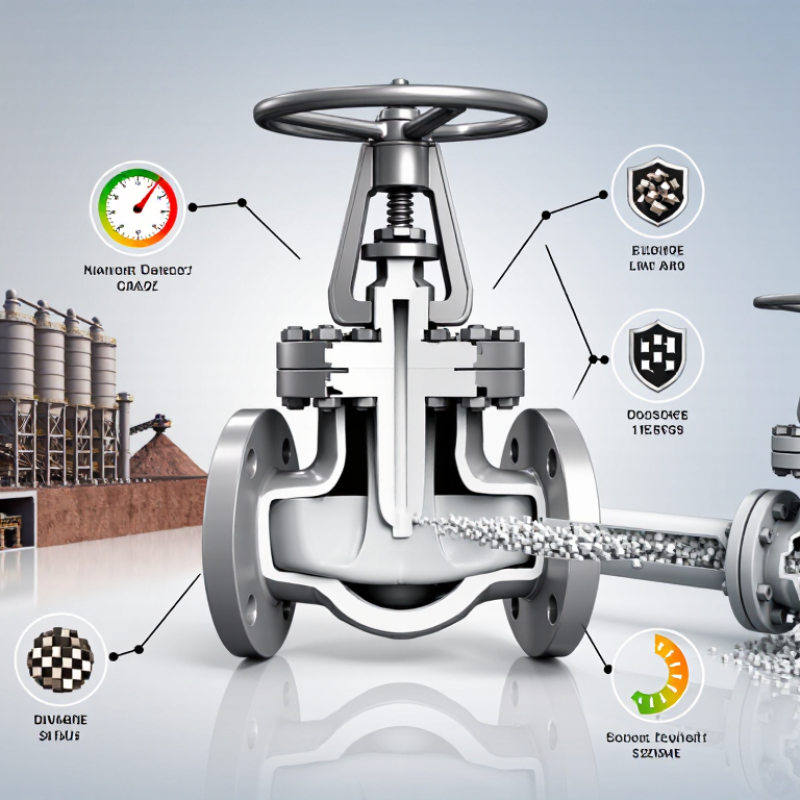
A ceramic knife gate valve is an isolation valve designed to shut off flow in abrasive, solids-heavy pipelines. It uses a sliding gate to stop or release material. Ceramic liners or seat surfaces help protect areas exposed to wear from particles such as sand, ash, or mineral slurry. The gate itself may use other materials, depending on the design. These valves are generally intended for on-off service, not precise flow control.

Tips: Check the media, particle size, pressure, temperature, and operating frequency before selecting a valve. Ask for details about ceramic placement and replacement parts. Small design differences matter.

Ceramic can resist abrasion, but it is hard and relatively brittle. Sudden impact or temperature changes may cause damage, so it is not automatically the right choice for every line. I would not choose a valve by hardness alone. Confirm that its materials suit the actual process, and review maintenance access before installation. A valve that handles abrasive slurry well may still perform poorly if solids build up around the gate. Testing under representative conditions can reveal issues that a specification sheet misses.

How Ceramic Materials Improve Valve Performance

China Top Ceramic Knife Gate Valve Manufacturers?

How Ceramic Materials Improve Valve Performance

Ceramic components can improve a knife gate valve’s resistance to abrasive wear. In slurry service, hard particles may scrape conventional metal surfaces during each cycle. A ceramic liner or seat can help protect critical contact areas. This may reduce wear and support more consistent shutoff over time. Small details matter. Ceramic performance depends on the material grade, valve design, and operating conditions—not the label alone.

Tips: Match the ceramic grade to the process fluid and particle size. Check operating temperature, pressure, and expected flow rate. Confirm that the actuator provides enough force for the chosen valve configuration. Ask how the ceramic parts are fitted and supported.

Ceramics are hard, but they can be brittle. Sudden impact, uneven loading, or thermal shock may cause damage. That trade-off deserves attention, especially where solids can strike the valve during startup. A careful selection process should consider both abrasion resistance and the risk of mechanical stress. No material is perfect. Review maintenance access and inspect wear-prone areas at sensible intervals, since even a durable valve can be poorly matched to its service.

China’s Ceramic Knife Gate Valve Manufacturing Landscape

China’s ceramic knife gate valve manufacturing landscape combines broad valve-making capacity with specialist ceramic processing. Suppliers serve abrasive slurry duties in mining, mineral processing, power generation, and wastewater plants. Ceramic wear surfaces can reduce erosion, but performance depends on more than the lining. Body geometry, gate alignment, seat design, and actuator sizing matter too.

Production may involve metal casting or fabrication, ceramic forming and sintering, precision grinding, and final assembly. Buyers can ask how ceramic parts are checked for cracks, dimensional tolerances, and secure retention. They should also compare pressure, temperature, cycle, and media data with real operating conditions. A sample test report helps. So does a clear maintenance plan.

The market is not uniform. Some factories focus on standard sizes; others work from drawings or address high-solids services. It varies. Customization can help, though it may extend lead times and complicate replacement planning. A common weakness in product comparisons is too much emphasis on ceramic hardness. Hardness alone cannot prevent chipping from impact or poor installation. I would treat wear claims cautiously unless test conditions are stated. Not always easy to verify. Ask about spare parts, inspection access, and support during commissioning; these details can shape long-term reliability.

Key Factors for Evaluating Chinese Manufacturers

China Top Ceramic Knife Gate Valve Manufacturers?
Key Factors for Evaluating Chinese Manufacturers

The wider industrial-valve market is growing, but market size alone cannot identify a reliable supplier. MarketsandMarkets estimated the market at USD 76.2 billion in 2023, with a projected 4.2% annual growth rate through 2028. This is broad industry context, not a forecast for ceramic knife gate valves. For buyers, the useful question is whether a manufacturer can show repeatable performance under the actual slurry, pressure, and temperature conditions.

Ask for material certificates, dimensional inspection records, and test reports linked to the valve’s serial number. Check ceramic composition and hardness, body and gate materials, seal design, and the stated leakage class. Request references for similar abrasive services, then confirm spare-part availability and lead times in writing. A polished brochure is not proof. In my experience, overlooked details such as packing access can complicate maintenance later. No supplier is flawless; evaluate how clearly it documents limits and corrective actions.

Tips: Send the same operating data to each supplier, including solids content, particle size, pressure, and cycle frequency. Compare like with like. Ask for a witnessed inspection or a sample test plan, and clarify acceptance criteria before ordering. If test conditions differ from your process, the comparison may mislead.

China Top Ceramic Knife Gate Valve Manufacturers? – Key Factors for Evaluating Chinese Manufacturers

Use this comparison checklist to evaluate suppliers. It is not a manufacturer ranking; valve suitability depends on the process conditions, design, materials, and documented test results.

Evaluation Factor What to Check Useful Evidence to Request
Ceramic Material and Grade Identify the ceramic used in the wear surfaces, such as alumina or zirconia, and confirm its grade, composition, and location in the valve. Ceramic properties vary by material and formulation. Material data sheet, ceramic grade and composition, drawings showing ceramic-lined or ceramic-trimmed areas, and incoming-material inspection records.
Process Compatibility Check that the valve design is suitable for the actual medium, solids content, particle size, concentration, flow direction, and operating cycle. Abrasive slurries can cause different wear patterns depending on these conditions. A written application review using the process data, recommended installation orientation, and documented limitations for the proposed configuration.
Pressure and Temperature Rating Confirm the rated pressure and temperature for the complete valve assembly, including body, liner or trim, packing, seals, and end connections. Ratings can change with materials and size. A model- and size-specific technical datasheet, pressure-temperature limits, and design documentation for the exact configuration quoted.
Body and Wetted-Part Materials Review the body material and the materials of the gate, stem, fasteners, packing, and seals. Select materials for the medium’s chemical and operating conditions rather than relying on a general product description. Bill of materials, material certificates where required, material grades, and confirmation of which parts contact the process fluid.
Seat and Shut-Off Performance Clarify the required leakage performance and whether the valve is intended for bidirectional or one-way sealing. Knife gate valve seat designs differ, and shut-off capability depends on the design and service conditions. Seat-design drawing, stated leakage acceptance criteria, and test procedure and results for the supplied size and configuration.
Design and Dimensional Standards Verify the applicable design, end-connection, face-to-face, and inspection requirements for the project. MSS SP-81 covers stainless-steel, non-rising-stem knife gate valves; confirm its applicability to the proposed valve. A standards-compliance matrix, dimensional drawing, flange details, and written identification of any deviations or project-specific requirements.
Inspection and Pressure Testing Confirm which inspections and tests are included, their acceptance criteria, and whether the test arrangement represents the final valve configuration. API 598 is a valve inspection and testing standard; applicability should be agreed for the product and purchase specification. Inspection and test plan, pressure-test records, inspection reports, and traceability linking results to the valve’s serial or order number.
Actuation and Operating Torque Check manual or powered operation, required operating torque or thrust, available utilities, control signals, and fail position where relevant. Actuator sizing should account for actual service conditions. Actuator sizing calculation, interface dimensions, operating data, wiring or pneumatic details, and confirmation of the specified open and closed positions.
Manufacturing Quality Control Assess controls for machining, ceramic installation, assembly, inspection, and nonconforming parts. A quality-system certificate is useful but does not replace product-specific inspection records. Quality-system certificates with scope and validity dates, inspection procedures, calibration records, and sample production or final-inspection reports.
Traceability and Documentation Check that the delivered valve can be matched to its materials, tests, drawings, and purchase order. Confirm document language and format before production. Nameplate details, serial or batch traceability, approved drawings, operating and maintenance instructions, and an agreed document index.
Service Life and Maintenance Compare expected wear-part replacement, access for inspection, maintenance requirements, and the supplier’s experience with similar operating conditions. Service life should not be assumed from ceramic content alone. Relevant application references, recommended inspection intervals, replacement-part list, maintenance instructions, and clearly stated warranty conditions.
Commercial and Delivery Terms Compare the complete scope, including accessories, testing, documentation, packaging, delivery schedule, spare parts, and after-sales support. A low initial price may exclude important items. Itemized quotation, confirmed manufacturing and shipping schedule, packaging specification, spare-parts quotation, and written warranty and support terms.

Applications and Considerations for Selecting a Supplier

Ceramic knife gate valves are used where abrasive slurries can quickly wear conventional sealing surfaces. Typical duties include mineral processing, tailings lines, and cement handling. The US Geological Survey’s Mineral Commodity Summaries 2024 estimated global cement production at 4.1 billion tonnes in 2023, illustrating the scale of material processing where wear-resistant equipment matters. That figure does not prove a ceramic valve is suitable for every cement line. Details matter.

When evaluating a supplier in China, match the valve design to the actual medium. Share particle size, solids concentration, operating pressure, temperature, and cycling frequency. Ask for ceramic composition, liner thickness, gate and seat tolerances, and documented leakage and endurance test results. Request references for similar service, not merely general product certificates. A valve that handles fine slurry may struggle with large, sharp particles.

Review maintenance access, actuator sizing, flushing arrangements, and replacement-part availability before comparing quotations. Ask how the supplier controls ceramic cracking during manufacture and assembly. If possible, inspect a sample or arrange a witnessed test using representative conditions. Test results can still differ from field performance. That is the uncomfortable part: supplier data often cannot reproduce every upset condition in a plant. A technically complete selection may take longer, but it can reveal mismatches before installation.

Ceramic Materials for Knife Gate Valve Selection

Typical Mohs hardness values for common technical ceramics

Silicon carbide, alumina, and zirconia are used in wear-resistant valve components. Hardness values are typical approximations; actual properties vary by grade and manufacturing process. When evaluating a supplier, confirm the ceramic grade and its suitability for the process fluid, temperature, pressure, and abrasion conditions.

keep me informed

Subscribe

By clicking SEND means that you agree to our Terms & Conditions, Privacy and Cookie Policies.