
Who Are China Top Marine Steering Cylinders Manufacturers?

China has become an important sourcing base for marine hydraulic equipment, but choosing a dependable manufacturer requires more than comparing prices. This article examines China’s top Marine Steering Cylinders manufacturers through practical, verifiable criteria. These include cylinder materials, pressure ratings, sealing systems, machining accuracy, corrosion resistance, and after-sales support. A polished website is not enough.

Marine steering cylinders work under demanding conditions. Saltwater reaches fittings. Hydraulic oil heats during long passages. A small seal failure can leave a vessel difficult to control. Nigel Calder, a respected marine systems author, has stated, “A steering system is only as reliable as its weakest component.” That principle guides this review.

The evaluation considers factory experience, production capacity, quality-control procedures, testing records, and compliance with recognized marine standards. It also looks at whether manufacturers can provide drawings, installation guidance, replacement seals, and consistent lead times. These details matter to boatbuilders, distributors, repair yards, and vessel owners.

Some companies may offer excellent prototypes but weaker batch consistency. Others may have strong machining capabilities but limited international service. That difference is easy to miss.

No ranking can answer every buyer’s needs. A cylinder for a small fishing boat should not be judged like one for a high-speed yacht or commercial vessel. Readers should verify specifications independently, request technical documents, and test compatibility before purchase. This article aims to narrow the field honestly, while recognizing that even experienced buyers can overlook a critical fitting, seal material, or mounting dimension.
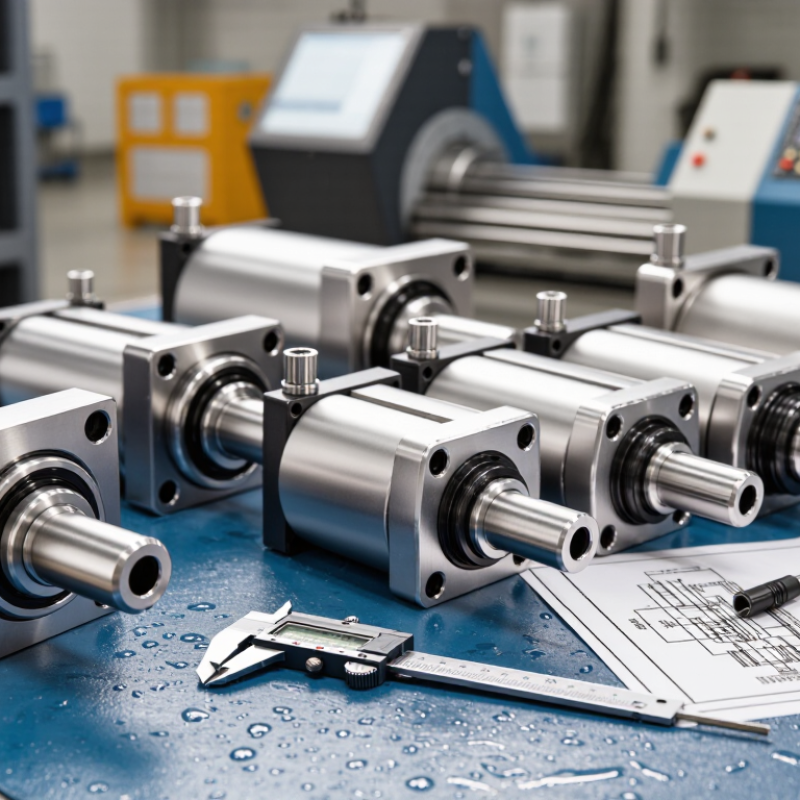
Who Are China Top Marine Steering Cylinders Manufacturers?

What Are Marine Steering Cylinders and How Do They Work?

What Are Marine Steering Cylinders and How Do They Work?

Marine steering cylinders are hydraulic actuators that move a vessel’s rudder. They convert helm pressure into controlled mechanical force. Most systems use a double-acting cylinder for movement in both directions. Inside, a piston slides through a sealed barrel. The piston rod connects to the rudder arm or steering tiller. Simple mechanism. Critical function.

When the helmsman turns the wheel, the helm pump sends hydraulic fluid through one hose. Pressure pushes the piston and extends the rod. Fluid from the opposite chamber returns through another hose. As the piston travels, the rudder turns and changes the boat’s direction. Correct alignment keeps steering smooth. Excessive play can create delayed response. Not every vessel responds identically. Hull design, rudder size, and loading conditions all matter.

Selection should consider cylinder force, stroke length, operating pressure, and available mounting space. Engineers also check hose routing and compatibility with marine hydraulic fluid. Corrosion-resistant materials are important in salty, wet environments. Routine inspection matters. Look for leaks, damaged seals, bent rods, and loose fittings. Air in the circuit can make the wheel feel soft or uneven. Bleeding the system requires care and clean equipment. A small leak may become a steering problem quickly. The system appears simple, but real installations are rarely perfect. Even experienced technicians can overlook trapped air or slight misalignment. That detail deserves another check.

Which Chinese Manufacturers Produce Marine Steering Cylinders?

Chinese manufacturers produce marine steering cylinders through several specialized routes. Some focus on hydraulic cylinders, while others build complete marine steering assemblies. Experienced factories usually control tube honing, piston machining, seal installation, and pressure testing in-house. This improves consistency around the rod surface and gland, where small defects can cause leaks.

A reliable supplier should explain material grades, coating methods, seal compatibility, and working pressure clearly. Stainless steel rods, corrosion-resistant coatings, and marine-grade seals matter in saltwater environments. Ask for dimensional drawings, test records, inspection procedures, and traceable batch information. Factory visits or live production videos can reveal more than polished catalogs. A confident sales answer is not enough.

Tips: Check cylinder alignment, mounting dimensions, emergency steering needs, and replacement seal availability before ordering. Request samples or a pilot batch for unusual vessels. Confirm testing under realistic pressure and temperature conditions. Do not judge quality by price alone. Cheap can become expensive.

My own caution is simple: a manufacturer may meet the drawing yet miss the vessel’s operating habits. Tidal water, vibration, and long idle periods can expose weaknesses later. Discuss those details with engineers, not only purchasing staff. Reliable producers welcome technical questions and admit design limits when they exist.

How Do China’s Leading Manufacturers Compare?

China’s leading marine steering cylinder manufacturers differ less by appearance than by engineering discipline. A polished housing means little without controlled tolerances, tested seals, and traceable materials. Experienced buyers compare bore diameter, stroke length, working pressure, mounting dimensions, and rod protection. These details decide whether steering remains smooth after months of saltwater exposure.

Manufacturers with strong technical teams usually offer drawings, sample approval, and pressure-test records before production. Their workshops may use CNC machining, controlled welding, and corrosion-resistant surface treatments. Ask how they inspect chrome thickness and seal grooves. Small errors can create leakage or uneven rudder movement.

Custom support also separates serious suppliers from simple catalog sellers. Leading factories can adjust port positions, thread types, and cylinder lengths for different vessels. Communication matters. Slow replies often become costly production mistakes. Still, no manufacturer is perfect. Some suppliers report impressive testing but provide limited field evidence. Others offer excellent machining yet struggle with documentation or delivery consistency. Buyers should request inspection photos, dimensional reports, material certificates, and clear warranty terms. A practical comparison should include total service quality, not only the lowest quotation. One overlooked detail can affect an entire steering system.

Who Are China Top Marine Steering Cylinders Manufacturers? - How Do China’s Leading Manufacturers Compare?

This neutral comparison framework shows the main factors buyers should use when evaluating Chinese marine steering cylinder manufacturers. The percentages represent suggested purchasing priorities, not audited company-level performance.

Corrosion protection, pressure capability, sealing reliability, marine certification, customization, and delivery performance are commonly assessed when selecting hydraulic steering-cylinder suppliers for marine applications.

What Standards Guide Marine Steering Cylinder Quality?

Marine steering cylinder quality depends on more than smooth movement at the dock. It must remain reliable under vibration, salt spray, pressure changes, and repeated steering loads. ISO 8848 and ISO 10592 provide useful guidance for small-craft steering systems and hydraulic performance. Classification rules may add requirements for materials, testing, and installation.

A dependable manufacturer should document pressure testing, fatigue testing, seal inspection, and corrosion protection. Cylinders should use marine-grade materials, protected rod surfaces, and seals compatible with the specified hydraulic fluid. Each unit needs traceable records, including batch numbers, test pressure, leakage results, and dimensional checks. Field inspections often find small issues first, such as uneven rod polishing or fittings that slowly loosen. These details matter. A certificate alone can mislead when testing conditions remain unclear.

Tips: Ask for the exact standard edition and test method. Confirm working pressure, burst pressure, stroke length, and operating temperature. Inspect mounting alignment before installation. Even a strong cylinder can fail early when side loads reach the rod. Saltwater exposure also needs a maintenance schedule, not just a protective coating. Some suppliers may provide impressive documents but weak after-sales guidance; that deserves careful review.

How Can Buyers Select a Reliable Chinese Manufacturer?

Choosing a reliable Chinese marine steering cylinder manufacturer requires more than comparing prices. Buyers should examine engineering ability, production controls, and after-sales support. Ask how the cylinder handles saltwater exposure, vibration, pressure changes, and limited installation space.

Request drawings, material specifications, seal details, and pressure-test records before placing an order. Confirm the rod material, surface treatment, tube thickness, mounting dimensions, and expected service life. A capable manufacturer should explain its testing process clearly. Ask for sample inspection reports. Pictures are not enough.

A factory audit can reveal important details. Check machining equipment, welding procedures, cleanliness, calibration records, and final inspection areas. Traceable batch numbers are valuable when defects appear months later. Communication also matters; unclear answers during sampling may become costly delays after production begins. Discuss tolerances, packaging, spare seals, warranty terms, and delivery responsibilities in writing.

Do not rely only on certificates. Verify whether the documents match the actual factory and product. Request a pre-shipment inspection, especially for custom cylinders. A small pilot order can expose problems with leakage, alignment, or coating adhesion. This step may feel slower, but rushing procurement often creates larger expenses. Even experienced buyers can overlook installation variations. Leave room for technical review, and ask the manufacturer to identify possible weaknesses before full production.

Who Are China Top Marine Steering Cylinders Manufacturers? - How Can Buyers Select a Reliable Chinese Manufacturer?

A practical, brand-neutral evaluation table for comparing qualified Chinese marine steering-cylinder manufacturers

Evaluation Dimension Reliable Manufacturer Indicators Recommended Buyer Evidence Risk Level
Marine Industry Experience Demonstrated experience producing hydraulic steering cylinders for boats, workboats, yachts, or other marine applications. Application records, product drawings, inspection reports, and references for comparable marine projects. Low when verified
Cylinder Configuration Ability to supply single-acting or double-acting cylinders, depending on the steering-system design. Approved technical drawing showing bore diameter, rod diameter, stroke length, mounting style, and port configuration. Medium
Material Selection Use of corrosion-resistant materials or protective treatments suitable for saltwater exposure, such as stainless-steel components, plated rods, or marine-grade coatings. Material certificates, surface-treatment specifications, coating records, and salt-spray or corrosion-test results where applicable. Medium
Pressure Rating Published working pressure, proof pressure, and burst-pressure values that match the steering system and hydraulic circuit. Pressure-test reports for each production batch or shipment, with test pressure and holding time clearly recorded. High if unverified
Dimensional Accuracy Consistent machining tolerances for piston rods, cylinder bores, mounting points, ports, and sealing grooves. Dimensional inspection records, calibrated measuring equipment, and a controlled drawing-revision process. Medium
Seal and Wiper Performance Selection of seals compatible with the hydraulic fluid, operating temperature, pressure, and marine environment. Seal material specification, compatibility statement, leakage-test results, and replacement-seal availability. High if unverified
Quality Management Documented quality procedures covering incoming materials, machining, assembly, pressure testing, final inspection, and traceability. Current quality-management certificate, inspection plan, nonconformity procedure, and sample inspection records. Low when verified
Customization Capability Ability to modify stroke, bore, rod diameter, mounting brackets, port threads, fittings, coatings, and packaging without compromising specifications. Engineering-change process, sample approval procedure, and a prototype or pre-production inspection report. Medium
Testing and Validation Testing includes dimensional inspection, leakage testing, pressure testing, functional cycling, and visual inspection of surface protection. Factory test plan, calibrated equipment list, test certificates, and agreed acceptance criteria before shipment. High if absent
Production Capacity Sufficient machining, assembly, testing, and subcontractor-control capacity to meet the required batch size and delivery schedule. Production lead-time estimate, capacity statement, manufacturing-flow chart, and evidence of material availability. Medium
Traceability Each cylinder can be linked to its material batch, production date, inspection results, and shipment records. Serial-number system, batch records, material certificates, and final inspection documentation. Low when verified
Standards and Documentation Technical documents clearly state dimensions, pressure limits, materials, connection details, installation requirements, and maintenance instructions. Signed drawings, datasheets, operating instructions, inspection certificates, and compliance documents relevant to the vessel project. Medium
After-Sales Support Clear warranty terms, technical response procedures, spare-seal availability, and support for installation or troubleshooting. Written warranty, response-time commitment, spare-parts list, and documented complaint-handling process. Medium
Total Cost of Ownership Evaluation includes purchase price, tooling, freight, installation, spare parts, maintenance, downtime risk, and expected service life—not price alone. Compare at least three technically equivalent quotations using the same drawings, materials, testing requirements, and delivery terms. High if price-only
Buyer Selection Rule: Prioritize verified pressure performance, corrosion resistance, dimensional control, traceability, and after-sales support. Request a technical drawing and sample inspection before placing a large production order.
keep me informed

Subscribe

By clicking SEND means that you agree to our Terms & Conditions, Privacy and Cookie Policies.