
Best Palletizing Machine Suppliers in China

Choosing among the best palletizing machine suppliers in China starts with your production line, not a catalog photo. A suitable Palletizing Machine should match the products, target speed, pallet size, and available floor space. A line handling 20-kilogram bags has different needs from one stacking small cartons. Details matter.

When comparing suppliers, ask for clear specifications, layout drawings, and examples of comparable installations. Check how the proposed system handles product changes, pallet patterns, safety guarding, and integration with conveyors or wrapping equipment. Request a live or recorded test using products similar to yours. It can reveal unstable stacks, awkward changeovers, or practical issues that polished brochures may not show. Ask who provides installation, operator training, spare parts, and remote support after delivery. Confirm these responsibilities in writing.

Price matters, but it rarely tells the whole story. Compare cycle-time assumptions, included equipment, warranty terms, and service response expectations on the same basis. If possible, speak with existing customers and inspect a working installation. Their experience may expose details a sales presentation misses. No supplier is perfect. Even a capable machine can require adjustments when carton strength, product weight, or factory conditions differ from the initial specification. A careful selection process helps buyers judge suppliers on evidence, not promises, and choose equipment that fits real operating needs.
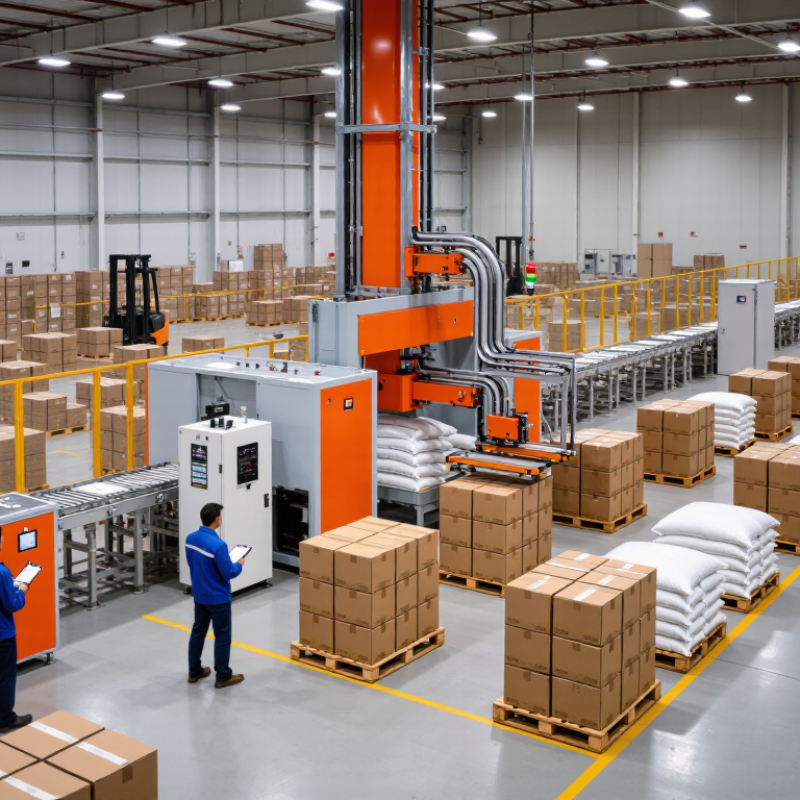
Best Palletizing Machine Suppliers in China

How Palletizing Machines Support End-of-Line Operations

At the end of a packaging line, palletizing machines turn a steady stream of cases into stable, forklift-ready loads. They reduce repetitive lifting and help keep cartons moving when upstream packing runs continuously.

The International Federation of Robotics reported 541,302 industrial robot installations worldwide in 2023, with 70% in Asia. That figure covers all industrial robot applications, not palletizers alone, but it reflects the scale of regional automation investment.

A well-matched system coordinates case infeed, layer formation, pallet supply, and discharge. Sensors check carton position, while recipes set row patterns, layer counts, and slip-sheet timing. The practical benefit is fewer manual touches and more repeatable stacks, especially with mixed case sizes.

Small details matter. Floor space, pallet quality, and changeover frequency can disrupt performance as much as rated speed.

When comparing suppliers, ask for sustained throughput with your actual case dimensions and product weights, not just peak cycles. Confirm how the machine handles skewed cartons, empty pallets, safety stops, and jam recovery.

A clean demonstration can hide messy shifts. Plan for jams. Maximum speed is not dependable output; site trials and clear service-response targets matter. Compact layouts may also make cleaning and maintenance access more difficult.

The Main Types of Palletizing Machines Made in China

Chinese palletizing machines generally fall into four groups: conventional layer, robotic-arm, gantry, and collaborative systems. A layer palletizer arranges full rows of cartons, then places each layer onto a pallet. It suits stable products and repeatable patterns. You can almost picture the steady rhythm: cartons arrive, align, and rise in neat tiers.

Robotic-arm palletizers handle mixed case sizes and changing pallet patterns. Gantry systems move loads across a wider overhead work area, which can help with heavier products or multiple pallet positions. Collaborative units fit compact lines and lighter tasks, though their speed and payload limits need careful checking. The categories sometimes overlap. That can make supplier comparisons less tidy than a brochure suggests.

Automation demand provides useful context. The International Federation of Robotics reported 541,302 industrial robots installed worldwide in 2023, with China accounting for 276,288 installations in its World Robotics 2024 report. Those figures cover industrial robots broadly, not palletizers alone. For a practical comparison, ask suppliers for cycle rates using your actual carton dimensions, pallet pattern, and layer count. A small change in carton friction can disrupt stacking. It is easy to overlook. Check changeover time, floor space, and service access too; these details often matter as much as headline speed.

Best Palletizing Machine Suppliers in China – The Main Types of Palletizing Machines Made in China

This chart compares indicative throughput ranges for common palletizer types. Actual rates depend on case size, load pattern, product handling requirements, and line configuration; confirm specifications for each application.

How to Evaluate Chinese Palletizing Machine Suppliers

How to Evaluate Chinese Palletizing Machine Suppliers

China’s scale makes supplier evaluation especially important. The International Federation of Robotics reported 276,288 industrial robot installations in China in 2023, about 51% of global installations. This indicates a substantial automation ecosystem, not that every palletizing system will suit your line. Details matter. Ask suppliers to test your actual cartons, bags, or trays, rather than relying only on demonstration footage.

Compare the quoted cycle rate with your real product mix, pallet dimensions, and shift pattern. Request a factory acceptance test using representative loads, then record throughput, placement accuracy, changeover time, and fault recovery.

The PMMI report 2023 State of the Industry describes continued investment in packaging automation, but production needs still differ widely between plants. Ask for operating references with similar loads and line speeds. Check whether service staff, common spare parts, and clear electrical drawings will be available after installation.

Review the safety design, control-system documentation, and operator training plan before signing. Ask how performance is measured, and request sample maintenance and downtime logs where possible. A polished brochure is not evidence of stable operation. I would still leave room for doubt: a short test cannot reveal every issue that appears after months of daily use. Insist on agreed acceptance criteria and a written response-time commitment.

Leading Palletizing Machine Suppliers in China

Leading palletizing machine suppliers in China are best judged by engineering depth, not catalog size. A capable supplier should explain how its system handles carton dimensions, bag surface, pallet pattern, and daily SKU changes. Ask to see a live cycle with your actual load. Watch the gripper release, layer alignment, and pallet exchange. Small details matter.

The International Federation of Robotics reported 541,302 industrial robot installations worldwide in 2023, with 276,288 in China. That was about 51% of global installations, according to World Robotics 2024. These figures describe industrial robots overall, not palletizers alone. Still, they show why China’s automation supply base is substantial. Buyers should check whether a supplier can integrate robots, conveyors, safety sensors, and pallet handling into one stable line.

Request cycle-time data under real operating conditions, plus references from factories with similar products. Review changeover time, access to spare parts, remote troubleshooting, and operator training. A polished demonstration may hide awkward changeovers. I would not treat any single metric as a perfect scorecard. Ask for acceptance criteria in writing, then verify them during a production trial.

Best Palletizing Machine Suppliers in China - Leading Palletizing Machine Suppliers in China

Supplier-neutral overview of common palletizing machine offerings and practical points to verify when evaluating suppliers in China. Actual specifications depend on the machine model, product, packaging, and line configuration.

Machine Type Typical Use Common Configuration Key Supplier Details to Confirm Typical Integration Needs
Robotic palletizer Flexible handling of cases, bags, cartons, and other unit loads. Industrial robot, gripper or tool changer, pallet station, and safety enclosure. Robot payload and reach, gripping method, cycle-time assumptions, and supported pallet patterns. Infeed conveyor, pallet dispenser or manual pallet loading, guarding, and line controls.
Conventional layer palletizer High-volume stacking of uniform cases or bags in programmed layer patterns. Product alignment, layer-forming section, transfer mechanism, and pallet lift or discharge. Rated throughput for the specified product, changeover method, maximum load, and available pattern options. Consistent product infeed, pallet handling, downstream conveying, and access for maintenance.
Gantry palletizer Palletizing heavier or varied loads where overhead movement and a defined work area are suitable. Overhead gantry axes, lifting tool, pallet positions, and control system. Rated load, working envelope, positioning accuracy, and behavior during the proposed operating cycle. Adequate floor and overhead clearance, stable foundations, guarding, and coordinated conveyor controls.
Low-level palletizer Applications where products are formed into layers near floor level before transfer to a pallet. Layer-forming equipment, transfer unit, pallet station, and discharge conveyor. Product and package compatibility, pallet dimensions, layout footprint, and changeover requirements. Floor space for pallet exchange, operator access, upstream accumulation, and finished-pallet removal.
Bag palletizing system Stacking filled bags, often with layer shaping or bag flattening to improve load stability. Bag infeed, flattening or shaping section, layer-forming unit, and pallet transfer. Bag material and dimensions supported, sealing orientation, layer stability, and tested product samples. Bagging-machine interface, dust management where needed, pallet supply, and stretch wrapping if required.
Integrated palletizing line Facilities seeking a coordinated system from product infeed through pallet discharge. Palletizer plus conveyors and optional pallet dispensing, slip-sheet placement, or wrapping equipment. Scope of supply, line-level capacity, control-system responsibilities, commissioning, and service terms. Site layout, electrical and air utilities, upstream and downstream signals, and safety-system coordination.

Note: Throughput, payload, dimensions, and compatibility are model- and application-specific. Request a written specification and a product-based acceptance test before purchase.

How to Choose a Supplier for Your Production Needs

Best Palletizing Machine Suppliers in China

Choosing a palletizing machine supplier starts with your production data, not a catalogue. Record each carton’s dimensions, weight, surface, and daily volume. Then confirm the required rate during peak shifts, including pauses for infeed and changeovers. Small details matter. A line handling soft bags needs different gripping and compression tests than one stacking rigid cartons.

IFR’s World Robotics 2024 report recorded 276,288 industrial robot installations in China in 2023, about 51% of the global total. This indicates a substantial automation ecosystem, but it does not prove any supplier can meet your line’s needs. Ask shortlisted suppliers to run your actual products through a factory acceptance test. Run the actual cartons. Check stack stability, recovery after a jam, pallet change time, and recipe changes for different patterns. Request cycle-time data with the test conditions stated, plus a clear list of included conveyors, guarding, and controls. Confirm who handles installation, operator training, and spare parts, and get realistic response times in writing. A polished demonstration can hide awkward carton variation; insist on testing the least predictable product too. No checklist catches every surprise, so keep a contingency allowance for integration and commissioning.

keep me informed

Subscribe

By clicking SEND means that you agree to our Terms & Conditions, Privacy and Cookie Policies.