
What Is a UL Listed Three Phase Pad Mounted Transformer?
A UL Listed Three Phase Pad Mounted Transformer is more than a weatherproof cabinet beside a parking lot. It is a tested electrical assembly designed to meet applicable UL requirements for its listed construction. For commercial projects, that distinction matters. The transformer may serve a retail center, office campus, or light industrial facility, where dependable power supports lighting, HVAC, elevators, and equipment.
This guide uses an illustrative expert voice, not a sourced quotation. Electrical engineer “Maya Chen” puts the practical question this way: “Check the listing, then check the installation.” The point is simple. A UL mark does not replace proper system design, installation, or maintenance. Buyers should confirm the nameplate, voltage ratings, kVA capacity, impedance, enclosure features, and listing details against project documents. Small mismatches can create expensive delays.
The keyword Ul Listed Three Phase Pad Mounted Transformer For Commercial describes a product category, not a one-size-fits-all solution. Site conditions matter. A transformer near a loading bay faces different access and protection needs than one beside a landscaped walkway. Ask the manufacturer for listing documentation and clear equipment data. Then have qualified electrical professionals review the application. One detail is easy to overlook: a neat cabinet does not guarantee a suitable installation. This overview explains what the UL listing means, what to verify, and where careful review still matters.
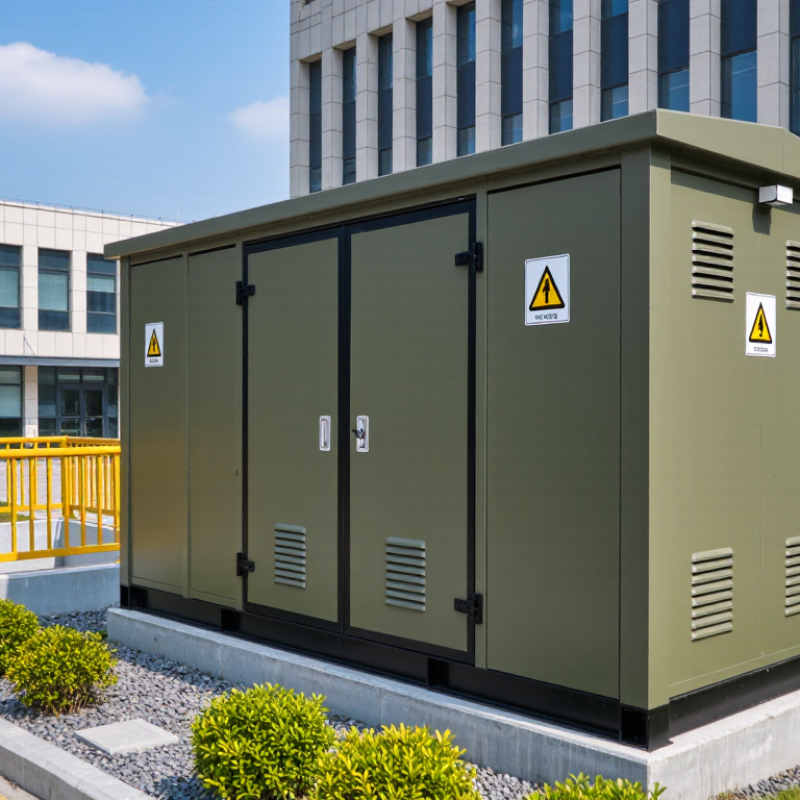
Definition and Purpose of a UL Listed Three-Phase Pad-Mounted Transformer
A UL Listed three-phase pad-mounted transformer is an outdoor, ground-level unit that changes medium-voltage electricity into lower-voltage power for buildings or equipment. Its locked metal cabinet protects energized components, while the three-phase design serves larger, balanced electrical loads. UL Listing indicates that the specific product design was evaluated against applicable safety requirements and is subject to factory follow-up inspections. It does not certify the entire electrical installation.
In practice, the transformer sits on a concrete pad near the service area. Utility-side cables enter a compartment, and lower-voltage connections leave through a separate section. The exact voltage, kVA rating, grounding arrangement, and enclosure matter; a listed unit can still be unsuitable for a particular site. The nameplate is essential. So are clearances and access for maintenance.
Efficiency has practical consequences. The U.S. Department of Energy’s 2024 distribution-transformer analysis estimates that these transformers account for roughly 61 billion kilowatt-hours of annual energy losses nationwide. That figure covers a broad equipment category, not one pad-mounted unit. A UL mark addresses evaluated product safety, not operating efficiency or installation quality. It helps establish a baseline, but it is not the whole story.

What Is a UL Listed Three-Phase Pad-Mounted Transformer?
A UL Listed three-phase pad-mounted transformer is an outdoor, ground-level transformer whose safety has been evaluated against applicable requirements. It typically steps medium-voltage utility power down for distribution to buildings or equipment.
Illustrative example: a 13.2 kV primary and 0.48 kV secondary (480 V), both line-to-line. Actual voltage ratings vary by utility and installation. UL listing concerns product safety evaluation; it does not mean every transformer uses these voltages.
Key Components and Enclosure Design
What Is a UL Listed Three Phase Pad Mounted Transformer?
Key Components and Enclosure Design
A three-phase pad-mounted transformer contains a core-and-coil assembly inside a grounded metal tank. High- and low-voltage bushings connect the unit to underground cables. Depending on its design, the unit may also include fuses or switches, pressure-relief devices, fluid-level gauges, and temperature indicators. These parts sit behind separate high- and low-voltage compartments. Clear barriers and labeling help technicians distinguish the two sides during inspection.
The enclosure does more than hide electrical components. Its doors, hinges, locks, seams, and cable openings help limit unauthorized access and protect against weather and physical damage. IEEE C57.12.28 sets enclosure-integrity requirements for pad-mounted equipment. Details matter: a poorly sealed cable opening can admit water, while a corroded latch can compromise access control. The U.S. Department of Energy’s distribution-transformer analysis estimated roughly 60 million units in service nationwide, underscoring how widely such equipment supports local power delivery.
A UL Listed marking applies to the evaluated product and its documented scope; it does not mean every field condition is covered. Check the listing record, voltage and kVA ratings, compartment arrangement, and installation instructions. Look closely at door clearance, grounding points, and the concrete pad’s drainage. Small site details are easy to overlook. That deserves a second look. The enclosure may appear robust, yet maintenance access can still be awkward.
How Three-Phase Power Is Transformed and Distributed
A UL Listed three-phase pad-mounted transformer sits in a grounded metal cabinet at ground level. It lowers incoming medium-voltage power to levels used by nearby buildings and equipment. Inside, primary and secondary windings surround a steel core. Alternating current in the primary creates a changing magnetic field, which induces voltage in the secondary. That is the basic principle.
Three phases work together to deliver steady power to motors, HVAC systems, and commercial panels. On the secondary side, conductors carry the transformed electricity through underground cables to distribution points. Technicians connect those cables through insulated bushings, while protective components help limit damage from certain electrical faults. The exact arrangement depends on the transformer’s design and the site’s load. A diagram may look tidy; real demand shifts throughout the day.
Proper distribution also depends on balanced phase loading, sound connections, and suitable grounding. Not perfectly balanced, every site will be. That deserves attention during design and maintenance. The cabinet protects energized parts from routine outdoor exposure, but it does not make the equipment harmless to approach or service. A UL Listing indicates evaluation against applicable safety requirements for the listed product; installation still needs correct clearances, connections, and ongoing inspection. Dust, moisture, and loose terminations can matter more than a drawing suggests.
What Is a UL Listed Three Phase Pad Mounted Transformer? - How Three-Phase Power Is Transformed and Distributed
| Topic | Description | Illustrative example or check |
|---|---|---|
| What it is | A three-phase distribution transformer installed in a ground-level, lockable enclosure on a concrete pad. It changes voltage between a utility or facility supply and downstream distribution equipment. | Often used for commercial, industrial, and multi-building distribution systems. |
| Meaning of UL Listed | The specific product has been evaluated by UL against applicable safety requirements for its intended use. A listing applies to the evaluated construction and conditions; it is not a blanket approval of every transformer of the same general type. | Check the product label, model identification, ratings, and certification information for the exact unit. |
| Three-phase operation | The transformer transfers energy between three-phase windings and normally supplies a three-phase output. It changes voltage; it does not convert a three-phase supply into a single-phase supply. | The winding connection determines available line-to-line and, where a neutral is provided, line-to-neutral voltages. |
| Voltage transformation | Primary and secondary voltage ratings are selected for the supply and loads. The actual ratio and available configurations vary by unit and application. | An illustrative configuration is 13.2 kV primary to 480Y/277 V secondary; confirm all ratings on the nameplate. |
| Common secondary systems | Common three-phase secondary configurations include grounded-wye systems, which can provide a neutral, and delta systems, whose available grounding and voltage arrangements depend on the design. | Examples include 208Y/120 V and 480Y/277 V; these are examples, not universal ratings. |
| Distribution path | Power typically arrives through medium-voltage cables, passes through the transformer windings, and leaves through low-voltage connections for switchgear, panels, or other distribution equipment. | Switching, protection, grounding, and cable arrangements depend on the installation design. |
| Enclosure and installation | The cabinet is designed for outdoor, ground-level installation and restricts access to energized parts. Required clearances, pad design, and access provisions are determined by applicable codes and utility or project requirements. | Follow the unit’s installation instructions and applicable electrical and fire-safety requirements. |
| Insulation and cooling | Pad-mounted distribution transformers may use liquid insulation and cooling or a dry-type design. The construction affects installation, maintenance, and application requirements. | Verify the insulating medium and any environmental or containment requirements for the specific installation. |
| Key nameplate data | The nameplate identifies the unit’s electrical ratings and connection details needed for selection and safe integration. | Review kVA, primary and secondary voltage, phase, frequency, winding connection, impedance, temperature rise, and applicable rating information. |
| Selection and safety | Correct selection requires matching the supply, load, fault-duty requirements, connection, environment, and installation constraints. Installation and servicing should be performed by qualified personnel. | Consult the unit documentation, applicable codes, and the authority having jurisdiction. |
What UL Listing Covers and Why It Matters
A UL Listed three-phase pad-mounted transformer has been evaluated by an independent safety organization against applicable requirements for its design and intended use. The review can cover construction, electrical insulation, protective features, markings, and tests for safety-related risks. Follow-up checks help confirm that production units continue to match the evaluated design. The exact scope depends on the transformer and its certification records.
That detail matters.
A nameplate alone does not tell the whole story. Check that the model, voltage ratings, winding arrangement, and listed options match the equipment being specified. For an outdoor pad-mounted unit, the enclosure and accessible compartments are part of the safety picture, too. Not every modification is covered.
A listing also does not confirm that a transformer suits a site’s load, fault levels, or installation requirements. A qualified engineer should review those separately.
In practice, compare the nameplate with the submittal documents and ask the supplier to clarify any mismatch. Certification is useful evidence, not a substitute for careful selection.
It can feel reassuringly complete, but it answers a narrower question: whether the identified product meets its applicable safety requirements.
Common Applications and Installation Considerations
UL-listed three-phase pad-mounted transformers commonly serve shopping centers, apartment blocks, factories, and outdoor charging facilities. They step medium-voltage power down for building distribution, with grounded metal enclosures that help protect energized components from routine outdoor exposure. A UL listing indicates evaluation against applicable safety requirements; it does not replace site-specific engineering or inspection.
Installation starts with the load schedule and utility’s service requirements. Choose a level, adequately rated concrete pad, then preserve working space and cable access shown in the manufacturer’s drawings. Check conduit entry points before the pour. Moving buried conduits later is expensive. The site also needs effective grounding, drainage, and protection from vehicle impacts. Keep doors accessible, and confirm phase rotation before connecting downstream equipment. A layout that works on paper may still fail when a wall blocks a cable bend.
Procurement affects project timing, too. The U.S. Department of Energy’s 2022 supply-chain assessment reported distribution-transformer lead times rising from about 3–6 months to 12–30 months amid demand and manufacturing constraints. That matters. Confirm availability early, and verify that the proposed voltage, impedance, enclosure rating, and connection arrangement match the utility design. One detail is easy to overlook: spare space around the pad can make future maintenance much safer.
