
What Is a Peripheral Driving Thickener?

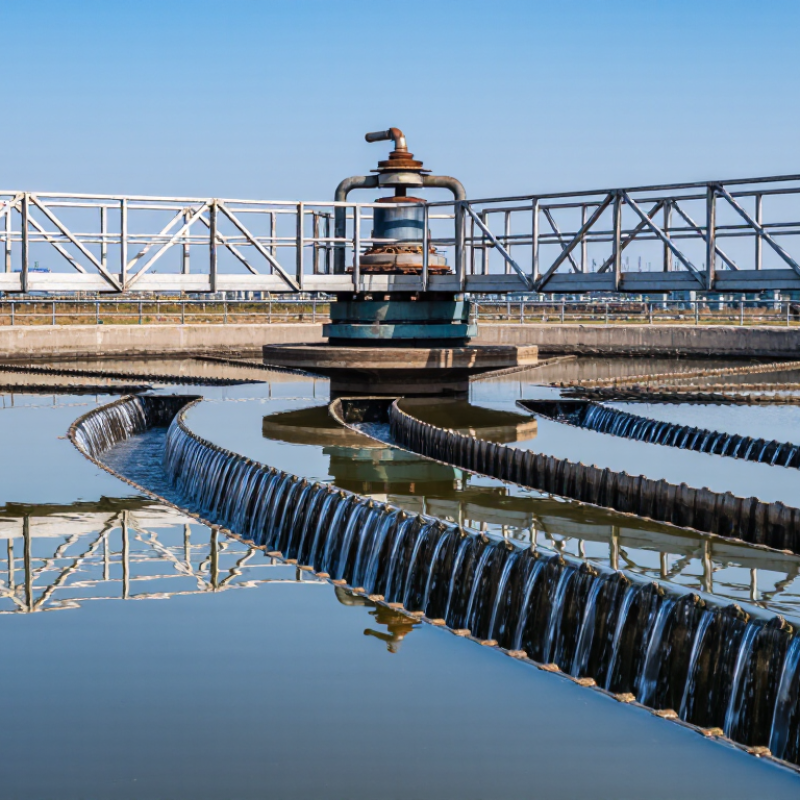
A Peripheral Driving Thickener is a large settling vessel designed to separate solids from liquid in mineral processing and wastewater treatment. Unlike a center-driven unit, its rake mechanism receives torque from a drive assembly positioned around the tank’s outer edge. Picture a slow-moving steel bridge circling a broad concrete basin. Rake arms guide settled solids toward the underflow outlet, while clarified water rises toward the overflow launder.

This arrangement becomes valuable when tanks require large diameters, high torque, and stable operation under changing solids loads. Metso’s minerals processing guidance emphasizes torque monitoring, bed-level control, and reliable underflow pumping as key thickener performance factors. These details matter. A thickener can look calm while its lower bed becomes dangerously compacted. The Global Water Intelligence Global Water Market 2024 report also highlights rising industrial pressure to recover water and reduce freshwater dependence. That pressure supports wider adoption of efficient solid-liquid separation equipment. The United Nations World Water Development Report 2024 states that agriculture accounts for roughly 70% of global freshwater withdrawals, reinforcing the importance of water recovery across industrial supply chains.

However, choosing a Peripheral Driving Thickener should not depend on diameter alone. Ore type, particle size, flocculant selection, feed variability, rake torque, and underflow density can change the result. Wills’ Mineral Processing Technology notes that settling behavior depends strongly on particle characteristics and process conditions. Site testing remains essential. No design is universally best. Operating data may also be incomplete, especially during seasonal changes or unstable feed campaigns. A credible specification therefore combines pilot testing, torque calculations, maintenance access, and verified supplier experience. The equipment is powerful, but its success depends on disciplined control.
What Is a Peripheral Driving Thickener?

Definition and Basic Function of a Peripheral Driving Thickener

What Is a Peripheral Driving Thickener?

Definition and Basic Function of a Peripheral Driving Thickener

A peripheral driving thickener is a circular tank used to separate solids from liquid. Its drive mechanism operates along the tank’s outer edge. A rotating bridge supports scraper arms beneath the surface. These arms move settled sludge toward a central discharge point. Clarified liquid rises and leaves through an overflow weir.

During operation, wastewater enters the tank and slows down. Heavier particles settle by gravity. Scraper blades gently collect the thickened solids without disturbing the sludge blanket. The underflow becomes denser and easier to pump. Operators commonly check torque, sludge depth, overflow clarity, and drive alignment. These measurements help identify changing process conditions. Small alignment errors matter.

The thickener’s basic function is volume reduction. It can lower water content before dewatering or further treatment. Performance depends on feed concentration, settling speed, and hydraulic loading. Excessive flow may carry solids into the overflow. Insufficient movement can create uneven sludge buildup. Field technicians also watch for abnormal vibration near the perimeter. Weather and sludge age can alter settling behavior. Design calculations guide operation, but real conditions sometimes disagree. Careful observation remains necessary.

Main Components and Their Roles in Thickening Operations

A peripheral driving thickener is a circular settling machine used to separate water from mineral slurry. Its drive mechanism sits around the tank’s outer edge. This arrangement transfers torque through a large-diameter structure, helping support the rake system during continuous operation.

The feedwell controls slurry entry and reduces turbulence. A well-designed feedwell allows heavier particles to settle instead of circulating near the surface. The tank body provides residence time, while the inclined floor guides concentrated solids toward the central underflow outlet. Rake arms then move settled material slowly across the floor. Scraper blades matter here. Small alignment errors can create dead zones, uneven loading, or excessive torque.

The peripheral drive unit supplies rotation through a ring gear, pinions, motors, and a gearbox. Torque monitoring can reveal rising bed resistance before a blockage becomes serious. The underflow pump removes thickened solids, while overflow launders collect clarified water around the rim. Operators should inspect torque trends, bed depth, flocculant dosage, and overflow clarity together.

The United Nations World Water Development Report 2024 notes that agriculture represents about 70% of global freshwater withdrawals. This pressure makes process-water recovery increasingly important in mining operations. The U.S. Geological Survey reported global copper mine production near 22 million metric tons in 2023, illustrating the scale of slurry handling behind modern metal supply. Still, higher underflow density is not always better. Excessive density may increase torque, impair pumping, and reduce stability. Field data should guide adjustments, not assumptions.

What Is a Peripheral Driving Thickener? - Main Components and Their Roles in Thickening Operations

Component or Data Dimension Typical Construction or Operating Data Primary Role in Thickening Key Design or Operating Considerations
Thickener Tank Circular steel or concrete tank with a shallow conical or sloped floor; industrial diameters commonly range from several metres to more than 100 metres. Provides the settling volume in which suspended solids separate from water by gravity. Tank diameter, depth, feed solids concentration, particle settling rate, and required overflow clarity determine the effective capacity.
Peripheral Drive Mechanism Drive location: tank rim
Usually consists of a motor, gearbox, pinion, and wheel or rail arrangement.
Moves the bridge or rotating structure around the tank perimeter while transmitting torque to the rake assembly. Peripheral driving is well suited to large-diameter tanks because the drive load is distributed around the circumference rather than concentrated at a central shaft.
Rotating Bridge or Traveling Structure Steel bridge, truss, or support frame spanning the tank and connected to the peripheral drive. Supports and transports the rake arms, feedwell components, scraper equipment, and access platforms. Structural stiffness, wheel alignment, corrosion protection, and safe access are important for reliable continuous operation.
Rake Arms and Rake Blades Radial arms fitted with inclined blades or pickets; rotational speed is commonly slow, often measured in revolutions per hour rather than revolutions per minute. Gently gathers settled solids toward the central underflow discharge point and releases trapped water from the sludge bed. Excessive speed can disturb the settled bed and increase torque demand; insufficient movement may allow solids accumulation or uneven bed formation.
Feedwell Central cylindrical or flocculation-style chamber positioned below the feed inlet. Receives incoming slurry and dissipates its momentum before distributing the feed into the settling zone. A well-designed feedwell reduces turbulence, protects flocs from shear, and promotes even radial flow across the tank.
Feed Pipe and Inlet Assembly Pipework that introduces dilute slurry to the central feedwell, often with a submerged or controlled-discharge arrangement. Transfers process slurry into the thickener while limiting short-circuiting and surface disturbance. Feed flow rate, inlet velocity, pipe diameter, and elevation should be selected to avoid excessive turbulence and air entrainment.
Flocculant Addition System May include polymer preparation, aging, dilution, metering pumps, and injection points upstream of or within the feedwell. Promotes particle agglomeration, increasing effective settling velocity and improving solids capture. Polymer type and dose depend on ore or process chemistry, particle size, pH, temperature, and feed solids concentration. Overdosing can increase cost and may impair performance.
Settling Zone Relatively quiescent tank volume between the feedwell and the clarified-water surface. Allows flocculated solids to settle while clarified liquid rises toward the overflow launder. Hydraulic loading, solids flux, particle settling characteristics, and short-circuiting control the required area and performance.
Sludge Bed Concentrated layer of settled solids accumulated above the tank floor. Provides compression and drainage, increasing underflow solids concentration beyond the concentration achieved by free settling alone. Bed depth and density must be controlled. Excessive bed buildup can cause high rake torque, bogging, or unstable underflow discharge.
Underflow Cone and Discharge Pipe Central floor cone connected to an underflow outlet, pump, or controlled discharge valve. Collects and removes thickened solids from the tank. Underflow withdrawal should be matched to solids feed and bed inventory. Poor control may cause dilution, blockage, or excessive bed accumulation.
Overflow Launder Peripheral channel, often fitted with a serrated or notched weir for level control. Collects clarified water evenly around the tank perimeter and directs it to the overflow outlet. Levelness, weir loading, launder cleanliness, and hydraulic balance influence overflow clarity and reduce localized carryover.
Torque Measurement and Protection Torque sensor, overload relay, shear pin, hydraulic protection, or automatic lift mechanism, depending on the design. Detects increasing resistance from dense sludge, solids accumulation, or mechanical problems. High torque should trigger an operator response or automatic protective action before structural or drive-system damage occurs.
Drive Speed Very low rotational speed selected to move settled solids without resuspending them; the exact value depends on tank diameter and rake design. Balances solids transport, bed disturbance, torque demand, and residence time. Drive speed should be evaluated together with rake geometry, solids characteristics, underflow rate, and flocculant performance rather than treated as an isolated setting.
Overflow Solids Concentration Normally targeted to remain low relative to the feed, although the actual value depends on feed characteristics and process requirements. Indicates the effectiveness of particle capture and clarification. Rising overflow solids may indicate excessive hydraulic loading, inadequate flocculation, feedwell turbulence, short-circuiting, or an overloaded solids bed.
Underflow Solids Concentration Varies widely by material and process; commonly controlled through bed inventory, rake operation, dilution-water management, and pumping rate. Represents the concentration of thickened solids leaving the unit. Higher concentration can reduce downstream water load, but excessively dense underflow may increase pumping difficulty and rake torque.
Note: Actual dimensions, throughput, torque limits, rotational speed, polymer dosage, and solids concentrations must be established through process testing and site-specific design. The values and ranges shown are general engineering guidance rather than guaranteed operating specifications.

How the Peripheral Drive Mechanism Works Step by Step

What Is a Peripheral Driving Thickener?

A peripheral drive thickener uses a motor and gearbox mounted near the tank rim. The drive wheel travels around the circular track. This rotation moves the bridge and connected rake assembly across the tank floor.

The mechanism works step by step. First, influent enters a central feedwell, which reduces turbulence. Solids then settle through the quieter water zone. Next, the rotating rake slowly moves settled sludge toward the central hopper. Surface skimmers guide floating scum toward a collection point. The thickened sludge exits through an underflow pipe. In many designs, rake speeds remain near 0.02–0.05 revolutions per minute, according to wastewater equipment design guidance from the Water Environment Federation and U.S. EPA references.

Torque matters.

If sludge builds up, resistance rises at the drive wheel. A torque limiter or overload sensor can stop the motor before structural damage occurs. Industry design data commonly places gravity thickener solids loading around 25–50 kg/m²·day, depending on sludge type and target concentration. Actual results vary sharply with temperature, polymer use, and feed consistency. That is the difficult part.

Operators should check motor current, bridge alignment, rake clearance, and underflow density during each shift.

A clean-looking surface does not prove good thickening. Sometimes, the rake moves normally while the solids blanket remains unstable.

Field experience shows that small changes in feed rate can affect performance more than expected. The design may be sound, but operation still needs careful adjustment.

Common Industrial Applications and Suitable Materials

A peripheral driving thickener uses a drive mechanism mounted around the tank rim. This arrangement rotates rake arms slowly through the settling sludge. It is common in large tanks because the load spreads around the perimeter. Operators can inspect the drive more easily than a central mechanism in some layouts.

The main industrial applications include mineral processing, tailings recovery, and wastewater treatment. These thickeners handle ore slurries, coal residues, process water, and activated sludge. In mining plants, they increase underflow density before filtration or water reuse. In wastewater facilities, they concentrate biological or chemical sludge before dewatering. Chemical plants may use them for neutralization solids and fine precipitates. Food processing can also require thickening, but hygiene and material compatibility become more demanding.

Material selection needs careful attention. Carbon steel suits many outdoor tanks when a properly maintained coating system controls corrosion. Stainless steel is often preferred for corrosive liquids, hygienic areas, or frequent washdown. Fiberglass-reinforced plastic can work in selected chemical environments, though temperature and impact resistance require verification. The rake arms may need abrasion-resistant steel when handling coarse mineral particles. Polymer-lined surfaces can reduce wear in highly aggressive service.

No choice is perfect. A material resistant to corrosion may still suffer from abrasion. Fine particles may settle slowly and overload the rake mechanism. Engineers should check solids concentration, particle size, pH, temperature, chloride content, and torque demand before approval. Field experience shows that poor feed distribution can cause problems even with a correctly sized thickener. That detail is easy to underestimate.

What Is a Peripheral Driving Thickener?

Common industrial applications and suitable materials

A peripheral driving thickener is a circular sedimentation unit whose rake mechanism is driven around the tank perimeter. It separates settled solids from clarified liquid and is widely used in mineral processing, industrial wastewater treatment, municipal sludge handling, and chemical processing. The chart shows representative underflow solids targets commonly used for preliminary design; actual values depend on feed characteristics, polymer selection, residence time, and equipment configuration.

Carbon steel with protective coatings is often selected for general service, while stainless steel, rubber-lined steel, fiberglass-reinforced plastic, or other corrosion-resistant materials may be suitable for acidic, abrasive, or chemically aggressive streams.

Key Advantages, Limitations, and Maintenance Requirements

A peripheral driving thickener is a circular gravity tank that concentrates suspended solids before further treatment. Its rake assembly moves around the tank edge, while slowly guiding settled sludge toward a central outlet. Feed usually enters through a central well, allowing solids to settle with limited turbulence. The peripheral drive can distribute mechanical load effectively across large tanks.

Its main advantage is gentle, continuous thickening with relatively low operating energy. A well-adjusted rake reduces sludge bridging and helps maintain a stable solids blanket. The system can also handle substantial flow rates and offers clear access around the tank perimeter. However, performance depends heavily on feed consistency. Sudden hydraulic surges, excessive grit, or poor chemical conditioning may produce cloudy overflow and weak underflow. Large installations also need considerable space. The drive may struggle when compacted sludge creates high torque.

Maintenance should include routine checks of the perimeter track, traction wheels, gearbox, bearings, and torque protection devices. Operators should inspect scraper blades for wear and confirm that the central sludge discharge remains open. Lubrication intervals must follow actual duty conditions, not just a calendar. That is an easy detail to overlook. Sampling the feed, overflow, and underflow can reveal problems before equipment damage occurs. Corrosion deserves close attention near wet, chemically active zones. In my experience, vibration and rising drive torque often provide earlier warnings than visual inspections. Still, readings alone can mislead; they should be compared with operating history and direct field observations.

keep me informed

Subscribe

By clicking SEND means that you agree to our Terms & Conditions, Privacy and Cookie Policies.