
5 Tips for Choosing the Right BFV Valve?
Choosing the right bfv valve involves more than matching pipe size. The valve must suit the fluid, pressure, temperature, flow direction, and operating frequency. A valve used in clean water service may fail quickly in abrasive wastewater. Small details matter, including the disc material, seat design, shaft construction, and connection type.
This guide presents five practical tips for making a dependable selection. It considers application conditions, pressure ratings, material compatibility, actuation needs, and maintenance access. A clear datasheet should confirm every critical specification. Look for recognized testing, traceable manufacturing records, and supplier support from experienced valve specialists. These details improve confidence when the valve operates in a crowded pump room or a remote treatment facility.
Avoid assumptions.
A common mistake is choosing by price alone. Low initial cost may hide frequent seal replacement, difficult operation, or poor corrosion resistance. Field experience also shows that incorrect sizing can create unstable flow and unnecessary wear. The best choice balances purchase cost, service life, energy use, and repair time. Still, no selection process is perfect. Site conditions can change, and an apparently suitable valve may need review after commissioning. Checking actual operating data remains essential. With careful comparison and honest evaluation, these five tips can help engineers, contractors, and maintenance teams select a bfv valve that performs reliably in real-world service.
Understanding BFV Valves and Their Intended Applications
5 Tips for Choosing the Right BFV Valve?
Understanding BFV Valves and Their Intended Applications
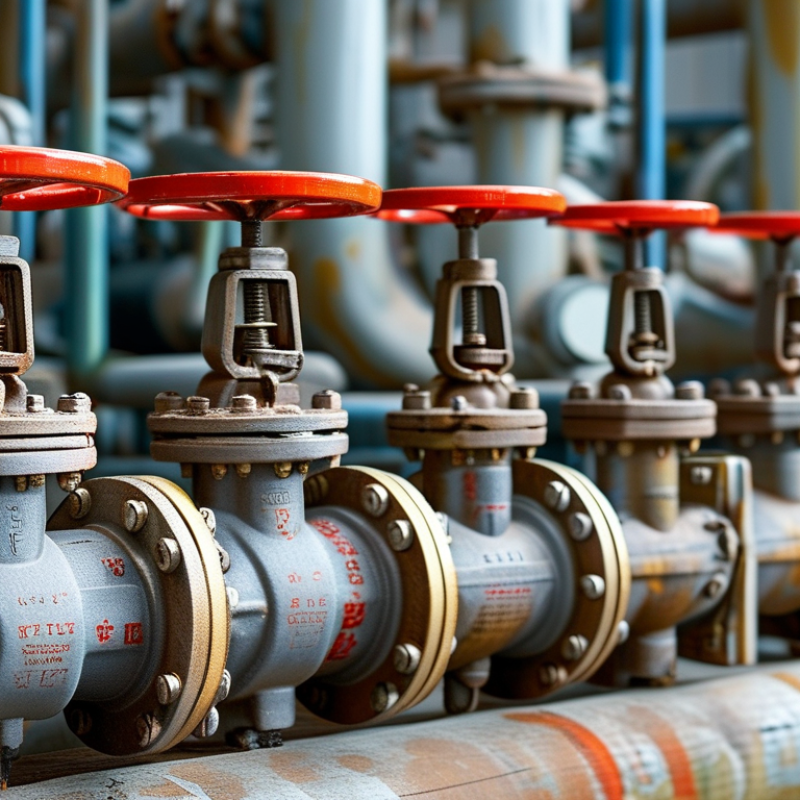
A BFV, or butterfly valve, uses a rotating disc to control flow. Its compact body suits water lines, cooling circuits, air systems, and many low-pressure services. The disc turns inside the pipe, so nearby equipment needs enough clearance. Do not select a valve by diameter alone. Check the medium. Clean water, air, chemicals, and abrasive slurry require different materials and sealing designs.
Identify the fluid, temperature, pressure, and expected flow rate before comparing models. Then verify the pressure rating against recognized piping standards and project specifications. Check the installation envelope, including flange spacing and handle or actuator access. Consider actuation carefully. Manual operation may suit a small isolation line, while frequent cycling may require a powered actuator. Finally, confirm whether the valve should throttle flow or provide isolation. Not every BFV performs both tasks equally well.
During maintenance reviews, I have seen leakage blamed on the valve when incorrect alignment caused the real problem. Pipe strain, damaged flange faces, and poor disc clearance can all shorten service life. Ask for material certificates, test records, and clear installation instructions. This is where judgment remains imperfect. A valve that looks suitable on paper may struggle with solids, rapid cycling, or unstable pressure. Leave room for inspection, cleaning, and future replacement. Small details matter.
5 Tips for Choosing the Right BFV Valve: Understanding BFV Valves and Their Intended Applications
How to read this chart: The temperature ranges show typical continuous-service limits for common butterfly-valve seat materials. EPDM is widely used for water, wastewater, and HVAC applications; NBR is suitable for many oil and fuel services; PTFE offers broad chemical resistance and a wider temperature range; and FKM is commonly selected for higher-temperature or hydrocarbon-related applications.
Before selecting a BFV valve, confirm the media compatibility, operating temperature, pressure rating, valve size, connection standard, actuator requirements, and applicable safety or fire-protection standards. Actual limits vary by valve design and manufacturer.
Matching Valve Materials to the Process Fluid and Environment
5 Tips for Choosing the Right BFV Valve
Start with the fluid. A BFV handling clean water may fail quickly with brine, solvents, slurry, or oxygen-rich service. Check chemical compatibility for the body, disc, stem, seat, and fasteners. Temperature changes everything. A seat material suitable at 20°C may harden, swell, or lose sealing performance at 120°C.
The environment matters just as much. Outdoor valves face ultraviolet exposure, rain, salt spray, and freezing cycles. In coastal plants, choose corrosion-resistant materials and verify the coating system, not only the valve body. The NACE IMPACT study estimated global corrosion costs at US$2.5 trillion annually, equal to about 3.4% of global GDP. That figure makes material selection difficult to dismiss. It also does not predict your exact failure mode.
Match the valve to pressure, flow velocity, and operating frequency. Abrasive particles can erode a soft seat, while dry gas may demand different sealing characteristics. Review the manufacturer’s chemical-resistance data against actual concentration, temperature, and cleaning chemicals. Do not guess. A neat selection table can still mislead when the process fluctuates. The U.S. Department of Energy reports that industrial systems can lose 20–30% of compressed-air output through leaks; poor valve sealing can contribute to similar maintenance waste in pneumatic services. I would also question unusually cheap materials. They may pass commissioning, then create avoidable shutdowns. Document the assumptions, and revisit them when the process changes.
5 Tips for Choosing the Right BFV Valve? - Matching Valve Materials to the Process Fluid and Environment
| Tip | Process Fluid or Environment | Recommended BFV Material Combination | Material and Service Considerations | Key Selection Checks |
|---|---|---|---|---|
| 1 | Municipal water, treated water, and general water service | Ductile iron or carbon steel body; stainless steel or coated ductile iron disc; EPDM seat. | EPDM is commonly suitable for water but is generally not recommended for petroleum-based oils or hydrocarbon service. Verify that all wetted materials comply with the applicable potable-water requirements when required. | Confirm pressure class, water temperature, lining or coating compatibility, corrosion protection, and potable-water approval requirements. |
| 2 | Seawater, brackish water, and chloride-containing environments | Ductile iron body with protective coating; duplex stainless steel, super-austenitic stainless steel, or suitably corrosion-resistant alloy trim; EPDM or another seawater-compatible seat. | Chlorides can cause pitting and crevice corrosion in susceptible stainless steels. Coatings require proper surface preparation and may need inspection or renewal in severe exposure. | Evaluate chloride concentration, temperature, flow velocity, galvanic couples, external marine exposure, and the corrosion resistance of the disc, shaft, fasteners, and seat-retaining parts. |
| 3 | Oils, fuels, and hydrocarbon-containing fluids | Carbon steel or stainless steel body; stainless steel disc and shaft; NBR or FKM seat selected according to fluid composition and temperature. | EPDM generally has poor resistance to mineral oils and many hydrocarbons. NBR is widely used for petroleum-based fluids, while FKM can provide higher temperature and chemical resistance but may not suit every chemical or low-temperature condition. | Check aromatic content, additives, operating temperature, fire-safe requirements, permeation risk, pressure rating, and applicable hazardous-area or fuel-system standards. |
| 4 | Acids, alkalis, salts, and other corrosive chemicals | Fully lined valve with a chemically compatible elastomer or fluoropolymer liner; stainless steel, alloy, or lined disc and shaft as required by the chemical duty. | There is no universal chemical-service material. Compatibility changes with concentration, temperature, impurities, pressure, and exposure time. Some fluoropolymers resist many chemicals but have temperature, creep, and mechanical limitations. | Obtain a detailed chemical composition and concentration range, then verify body, liner, disc, shaft, seat, and gasket compatibility using manufacturer data and recognized chemical-resistance references. |
| 5 | High-temperature service, abrasive slurry, or outdoor installation | For elevated temperature, use a metal-seated or high-temperature seat design with suitable stainless or alloy trim. For abrasive slurry, consider a reinforced elastomer or abrasion-resistant lined design. For outdoor service, use a corrosion-resistant coating and sealed actuator components. | Standard elastomer seats have temperature limits and may degrade, harden, or lose sealing force when overheated. Abrasive solids can erode the disc edge and seat; high flow velocity can accelerate wear. Outdoor UV, humidity, salt spray, and freeze conditions affect both valve and actuator. | Confirm maximum and minimum temperature, solids size and concentration, pressure drop, flow velocity, cycling frequency, thermal expansion, actuator enclosure rating, drainage, insulation, and maintenance access. |
Selecting the Proper Valve Size, Pressure Rating, and Connection
5 Tips for Choosing the Right BFV Valve?
Selecting the Proper Valve Size, Pressure Rating, and Connection
Start with actual flow, not the existing pipe diameter. A correctly sized BFV should meet flow demand without excessive pressure loss. The U.S. Department of Energy reports that pumping systems can consume 25–50% of industrial facility electricity. Poor valve sizing can increase this waste. Measure flow, operating temperature, fluid density, and acceptable velocity. Do not guess.
Check pressure and temperature together. A valve rated for high pressure at room temperature may have a lower rating at elevated temperatures. Compare the pressure-temperature chart with ASME B16.34 requirements. For isolation service, verify the maximum differential pressure during closure. Field teams often overlook this point. Small errors matter.
Match the connection carefully. Wafer, lug, and flanged designs may share the same nominal size, but their bolt patterns and face-to-face dimensions differ. ISO 5752 provides dimensional references, while API 609 addresses butterfly valve design and testing. Confirm flange standard, gasket type, bolt length, and actuator clearance before ordering. A 2024 industrial maintenance survey found that installation errors remain a frequent cause of early valve leakage. That finding deserves attention, although survey methods vary. For throttling duty, review torque, cavitation risk, and control range rather than choosing by price alone. A practical review of site records can reveal more than a catalogue.
Choosing Between Manual, Electric, and Pneumatic Actuation
5 Tips for Choosing the Right BFV Valve
Tip 1: Match the actuator to the operating frequency. Manual actuation suits small valves and occasional adjustments. It offers simple control, low maintenance, and no power requirement. However, turning a large valve by hand can become slow and tiring. Tip 2: Consider electric actuation when remote control, repeatable positioning, or scheduled operation matters. Check the available voltage, duty cycle, enclosure rating, and fail position. An electric actuator may appear convenient, but poor sizing can cause overheating or weak movement.
Tip 3: Choose pneumatic actuation for fast cycling and demanding industrial environments. Compressed air can move a BFV valve quickly and reliably. It also performs well where electrical equipment needs separation from the process area. Yet pneumatic systems require clean, stable air and suitable accessories. Without them, response can become inconsistent. Tip 4: Review the valve’s torque requirements across the full stroke. Disc friction, pressure differences, and seat material can change the required output. A small safety margin helps, but excessive oversizing may reduce control accuracy and increase cost.
Tip 5: Think about maintenance before installation. Leave enough room for actuator removal, inspection, and manual override access. I have seen technically correct selections become awkward in real plants. That detail is easy to miss. Compare operating noise, control signals, emergency behavior, and future automation plans. The best choice is not always the fastest actuator; it should fit the people, process, and site conditions.
Evaluating Standards, Maintenance Needs, and Long-Term Cost
5 Tips for Choosing the Right BFV Valve
Start with the standard, not the catalog price. For water service, verify API 609 or EN 593 design requirements. Confirm pressure class, temperature range, flange pattern, and shutoff rating. ISO 5208 testing can help validate seat leakage performance before installation. Documentation matters. Request test records, material certificates, and actuator sizing calculations. These details reduce uncertainty when service conditions change.
Maintenance needs should be measured in access hours, not promises. Inspect the disc edge, stem, seat, and fasteners for deposits or corrosion. Record operating torque and cycle frequency. The U.S. Department of Energy’s Operations & Maintenance Best Practices Guide reports that preventive maintenance can cost 12–18% less than reactive maintenance. That figure is not guaranteed for every BFV installation. Abrasive slurry, frequent cycling, and poor alignment can erase it quickly. Leave room for failure.
Long-term cost includes energy, downtime, spare parts, labor, and disposal. Compare the valve, actuator, controls, and five-year service plan together. NIST Handbook 135 recommends evaluating acquisition, operation, maintenance, and replacement costs through life-cycle costing. A cheaper seat may need earlier replacement. An oversized actuator may waste energy. I would challenge any quote that hides cycle assumptions. Real projects rarely behave perfectly. Use conservative duty data, then revisit the selection after commissioning.
Related Posts
-
Top 10 Tips for Choosing the Right PTFE Valve for Your Applications
-
Understanding the Functionality of Ball Check Valves in Fluid Control Systems
-
Understanding the Importance of Air Valve Types in Industrial Applications
-
Top 10 Benefits of Using Plug Valves in Industrial Applications?
-
Understanding Lockable Ball Valves: Key Features and Industry Insights Shaping Fluid Control Systems
-
2025 Top 10 PTFE Valves for Chemical Processing with 30 Percent Improved Durability