2026 Best Diaphragm Valve Types for Global Buyers?
Choosing the best diaphragm valve in 2026 is not simply a matter of comparing prices. Global buyers must match valve design with media purity, pressure, temperature, cycling frequency, and maintenance access. A valve handling sterile water behaves differently from one controlling abrasive slurry. Small details matter, including elastomer compatibility, actuator response, dead-leg design, and drainability.
Recent reports from Grand View Research and MarketsandMarkets indicate continued investment in industrial valves, water infrastructure, pharmaceuticals, food processing, and semiconductor manufacturing. The United Nations World Water Development Report 2024 also highlights rising pressure on water quality and supply systems. These trends support stronger demand for reliable flow-control equipment. However, market forecasts vary by definition, region, and application. That limitation deserves attention.
This guide compares the leading diaphragm valve types for global buyers, including weir, straight-through, lined, plastic, and automated designs. It also considers practical standards such as ISO 9001 quality systems, ASME BPE principles, and hygienic process requirements. Experience from plant maintenance shows that material selection often matters more than the body style. A chemically resistant diaphragm can prevent leakage, contamination, and unplanned shutdowns.
No single type wins every plant.
A neat specification sheet can still hide weak cycle life, difficult spare-part sourcing, or poor local support. Therefore, the best diaphragm valve should be judged through total operating cost, documented testing, supplier traceability, and field service capability. This comparison aims to provide a clear, evidence-informed starting point, while acknowledging that final selection requires application-specific engineering review.
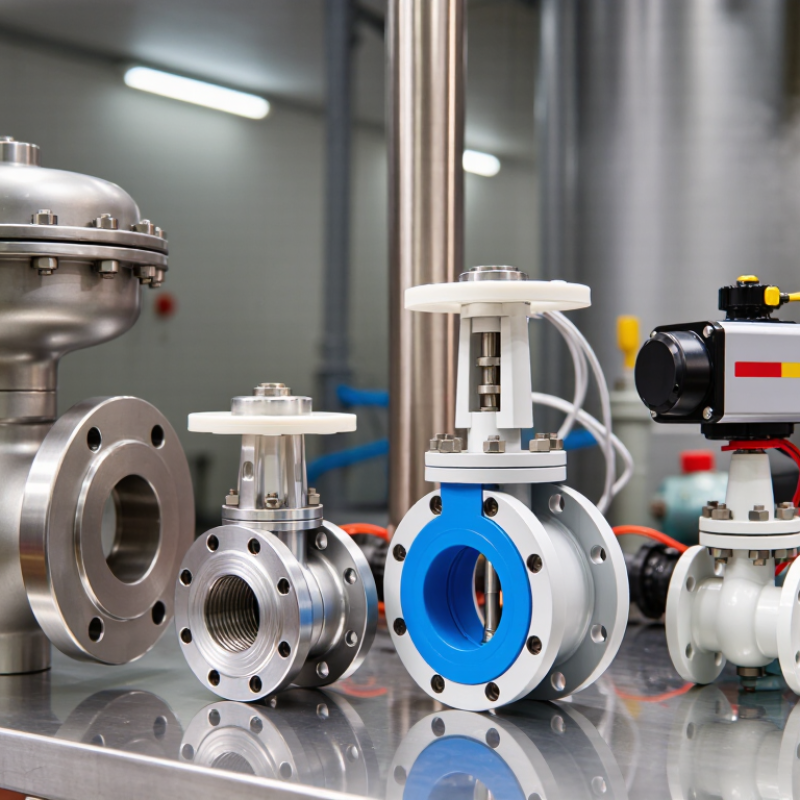
Diaphragm Valve Architecture: Weir, Straight-Through, and Aseptic Types
For global buyers in 2026, diaphragm valve selection starts with architecture, not price.
MarketsandMarkets’ 2024 Industrial Valves Market report projects growth from about USD 78 billion in 2024 to USD 100 billion by 2029. That expansion reflects tighter process control across water, chemicals, food, and life sciences. Yet the “best” valve depends on fluid behavior, cleaning methods, pressure, and maintenance access.
Weir diaphragm valves remain practical for corrosive liquids and slurry service.
Their raised saddle supports reliable shutoff, while the diaphragm isolates the actuator from the process fluid. They suit moderate flow duties, but the weir can create turbulence and retain residue.
Straight-through valves reduce flow resistance with a nearly unobstructed passage.
This geometry helps viscous fluids, solids, and frequent draining. However, the diaphragm may experience greater flexing. Field experience suggests that cycle life is often underestimated.
Aseptic diaphragm valves use smoother internal contours, minimized dead legs, and hygienic diaphragm materials.
These features support clean-in-place and sterilize-in-place routines. The 2024 Grand View Research report on aseptic processing identifies pharmaceutical and biotechnology production as major growth drivers, reflecting stronger demand for contamination control.
In practice, surface finish, drainability, and validated materials matter as much as valve geometry.
Documentation is not decoration.
Buyers should request pressure-cycle data, leakage testing, elastomer compatibility, and cleaning validation records.
Not always. A lower-cost valve can become expensive when replacement requires extended shutdowns.
The weak point is often the specification, not the valve.
Lining and Diaphragm Materials: PTFE, EPDM, and FKM Selection Rules
2026 Best Diaphragm Valve Types for Global Buyers?
Lining and Diaphragm Materials: PTFE, EPDM, and FKM Selection Rules
Selecting a diaphragm valve starts with the fluid, temperature, pressure, and cycling frequency. A valve may survive chemically, yet fail mechanically after repeated opening and closing. The lining contacts the process fluid, while the diaphragm protects the actuator and seals the valve chamber. These materials must work together.
PTFE lining suits aggressive acids, solvents, and high-purity services. It offers broad chemical resistance and low surface adhesion. However, PTFE diaphragms can require careful support during flexing. Inspect the pressure rating and flex-cycle data. Do not assume chemical resistance guarantees long service life.
EPDM diaphragms perform well with water, steam, dilute acids, and alkaline solutions. They are usually unsuitable for oils, fuels, and many hydrocarbon fluids. FKM handles oils, fuels, and numerous solvents effectively. It can perform poorly with hot water, steam, strong acids, and strong alkalis. Check the actual concentration and temperature.
Small details matter. A supplier’s compatibility chart is useful, but not final proof. Request test data, batch traceability, and temperature limits. Field inspections often find a mismatch between the lining and diaphragm material. That mistake is easy to make. Review vacuum conditions, abrasive particles, pressure shocks, and cleaning chemicals before approving the valve.
2026 Best Diaphragm Valve Types for Global Buyers? - Lining and Diaphragm Materials: PTFE, EPDM, and FKM Selection Rules
| Valve Type | Recommended Lining | Diaphragm Material | Indicative Temperature Range* | Best-Suited Media | Main Advantages | Important Limitations | Selection Rule for Buyers |
|---|---|---|---|---|---|---|---|
| Weir-Type Diaphragm Valve | PTFE, PFA, or unlined corrosion-resistant body | PTFE for aggressive chemicals; EPDM for water-based service | Typically approximately -20°C to 150–180°C, depending on construction | Acids, alkalis, slurries, ultrapure water, and general chemical fluids | Good shut-off, strong throttling capability, protected body cavity, and low maintenance | The weir can restrict flow and may retain solids in some slurry services | Choose this default design when control, tight shut-off, and moderate flow capacity are all required |
| Straight-Through Diaphragm Valve | PTFE, rubber-lined, or abrasion-resistant lining | EPDM for aqueous slurries; PTFE for corrosive slurries | Typically approximately -40°C to 120–150°C, depending on diaphragm and lining | Slurries, viscous fluids, fluids containing suspended solids, and abrasive media | Reduced flow obstruction, lower tendency to plug, and better solids passage | Usually less suitable than a weir valve for precise throttling at low flow | Select when solids handling and minimum flow restriction are more important than fine control |
| Sanitary Weir Valve | Polished stainless-steel wetted body; PTFE or EPDM diaphragm | EPDM for water and many food fluids; PTFE for chemical or high-purity duty | EPDM commonly around -40°C to 150°C; PTFE commonly around -20°C to 150–180°C | Pharmaceutical water, biotechnology fluids, food products, and clean utilities | Drainable geometry, cleanable flow path, and low contamination risk when properly specified | Requires appropriate surface finish, hygienic connections, and validated cleaning procedures | Confirm hygienic design, surface finish, dead-leg control, and cleaning or sterilization conditions |
| PTFE-Lined Diaphragm Valve | PTFE or PFA | PTFE diaphragm, sometimes supported by an elastomer backing | Often approximately -20°C to 150–180°C; confirm the exact valve design | Strong mineral acids, many solvents, oxidizing chemicals, and highly corrosive process fluids | Very broad chemical resistance, low permeability, and good protection of the body | PTFE has lower elasticity than elastomers and may require careful actuation and cycling control | Choose PTFE when chemical compatibility is the primary risk; verify temperature, pressure, and flex-life limits |
| EPDM Diaphragm Valve | Unlined corrosion-resistant body, rubber lining, or compatible thermoplastic lining | EPDM | Commonly approximately -40°C to 150°C; steam limits depend on formulation and duty cycle | Water, hot water, dilute acids, dilute alkalis, glycol solutions, and many polar fluids | Excellent flexibility, good resistance to hot water and steam in suitable grades, and economical operation | Poor compatibility with many mineral oils, fuels, hydrocarbons, and some non-polar solvents | Select EPDM for water-based media and steam-related service only after checking the exact chemical and temperature profile |
| FKM Diaphragm Valve | Compatible metal body, PTFE lining, or other chemically suitable lining | FKM | Commonly approximately -20°C to 150–200°C, depending on compound and pressure | Mineral oils, fuels, lubricants, many hydrocarbons, and some concentrated chemicals | Good high-temperature performance and strong resistance to oils and hydrocarbon-based fluids | Generally unsuitable for hot water, steam, strong alkalis, and some polar solvents such as ketones | Choose FKM for oil or fuel service; do not substitute it for EPDM in hot-water or steam applications |
| Air-Operated Diaphragm Valve | Selected according to wetted-media compatibility: PTFE, PFA, rubber, or unlined metal | PTFE, EPDM, or FKM based on the process fluid | Controlled by the diaphragm, lining, actuator, and ambient conditions | Automated chemical dosing, water treatment, process skids, and hazardous-area applications | Fast automation, fail-open or fail-closed options, and no electric actuator at the valve | Requires clean instrument air, correct actuator sizing, and suitable control accessories | Specify air pressure, failure position, cycling frequency, response time, and required control accuracy |
| Manual Diaphragm Valve | PTFE, PFA, rubber lining, or corrosion-resistant unlined body | EPDM, PTFE, or FKM according to the media | Determined by the selected diaphragm, lining, pressure class, and ambient temperature | Isolation service, laboratory systems, utility lines, and low-to-moderate cycling duties | Simple installation, low control-system complexity, and easy visual position checking | Not suitable where remote operation, automatic fail position, or frequent cycling is essential | Use for accessible valves with straightforward isolation requirements and limited automation needs |
| High-Cycle Process Valve | PTFE, PFA, or application-specific elastomer lining | Reinforced PTFE or high-cycle EPDM, subject to manufacturer validation | Normally limited by flex fatigue, pressure, and process temperature rather than lining alone | Repeated dosing, automated batching, filtration systems, and cyclic process lines | Designed for repeated actuation and reduced unplanned diaphragm replacement | Actual cycle life varies significantly with stroke, pressure differential, temperature, and media | Request validated cycle-life data under conditions matching the intended service |
Hygienic Compliance: ASME BPE Ra ≤0.51 µm and 3-A 62-02 Criteria
For global buyers, hygienic diaphragm valves should be judged against documented surface quality, not catalog appearance. ASME BPE specifies an internal surface finish of Ra ≤0.51 µm for critical product-contact applications. At this level, a polished diaphragm valve should show no visible pits, grinding lines, or trapped residue around the weir. Surface readings should come from calibrated instruments, with traceable inspection records.
3-A Sanitary Standard 62-02 adds practical requirements for cleanability, drainability, materials, and product-contact design. The valve should avoid dead legs and permit complete drainage in its installed position.
According to the 2023 ISPE Annual Report, 63% of surveyed pharmaceutical manufacturers identified contamination control as a major operational priority. That figure explains why buyers increasingly request weld maps, elastomer certificates, and clean-in-place validation evidence before approval.
Experience shows that a low Ra value alone is not enough. A valve may meet 0.51 µm on a test coupon but perform poorly after welding, assembly, or repeated diaphragm changes. I have seen specifications overlook outlet slope and clamp geometry. That is a costly gap. Buyers should check 3-A authorization status, ASME BPE material compliance, surface measurement locations, and cleaning-cycle data. The supplier should also state whether measurements use Ra, and not only a visually polished finish. Small details matter.
Performance Verification: ISO 5208 Leakage Tests, Kv, Pressure, and Temperature
For global buyers comparing diaphragm valve types in 2026, performance data matters more than attractive specifications. Weir-pattern valves suit clean fluids and moderate flow control, while straight-through designs usually reduce pressure loss. PTFE and elastomer diaphragms behave differently under heat, chemicals, and repeated cycling. The application decides the material.
ISO 5208 leakage testing should be checked carefully. The test medium, pressure, duration, and permitted leakage rate must appear in the report. A valve passing one class is not automatically suitable for every service. Ask for the exact test condition. Small details matter. Kv testing also needs context. Kv values depend on pressure drop, fluid density, and valve opening. Comparing numbers from different methods can create a false advantage.
Pressure and temperature ratings require practical verification. A valve rated for high pressure at room temperature may need derating at elevated temperature. Diaphragm fatigue can increase after thousands of cycles, especially near the material limit. Inspectors should review pressure-test records, cycle tests, material certificates, and seat condition after testing. I would also check whether the quoted Kv value reflects a clean, new valve. Real pipelines contain particles. That is often overlooked. A perfect laboratory result may not predict field behavior, so buyers should leave a reasonable safety margin and document their assumptions.
Global Buying Matrix: DN, Ends, Actuation, and FDA 21 CFR 177.2600
2026 Best Diaphragm Valve Types for Global Buyers?
A practical buying matrix starts with DN, but DN alone cannot define capacity. Match the nominal size with flow rate, pressure, temperature, and viscosity. A DN25 valve may suit a small dosing line, yet create excessive pressure loss with thick fluid. Check the manufacturer’s flow coefficient and installed piping conditions. Small details matter.
End connections should match the process standard and maintenance plan. Sanitary clamp ends support faster cleaning and replacement. Weld ends reduce crevices but require qualified fabrication and inspection. Threaded or flanged ends may suit utilities, though they can increase dead spaces. In plant audits, poor end selection often causes more trouble than valve failure.
Actuation depends on control speed, available utilities, and safety response. Manual handles work for simple isolation. Pneumatic actuators suit frequent cycling and remote control. Electric actuators can help where compressed air is unavailable, but they need careful protection against moisture. Specify normal-open, normal-closed, or fail-in-place behavior clearly.
For wetted elastomers, FDA 21 CFR 177.2600 is a key screening reference for repeated-use rubber articles. It does not automatically certify the complete valve or every process condition. Request material declarations, lot traceability, temperature limits, and supporting extraction data. Confirm suitability for cleaning chemicals and actual product contact. A compliant document can still be incomplete. The buying matrix should record DN, ends, actuator type, diaphragm material, pressure rating, temperature range, and verification evidence.
2026 Best Diaphragm Valve Types for Global Buyers
Global buying matrix covering DN range, connection ends, actuation options, and FDA 21 CFR 177.2600 material considerations.
| Valve type | Typical DN range | Common ends | Actuation | FDA 21 CFR 177.2600 consideration |
|---|---|---|---|---|
| Weir diaphragm | DN 15–300 | Flanged, threaded, hygienic clamp | Manual, pneumatic | Select compliant elastomer or PTFE components and verify the finished assembly documentation. |
| Straight-through diaphragm | DN 15–300 | Flanged, threaded, hygienic clamp | Manual, pneumatic | Food-contact suitability depends on the specific diaphragm, liner, and processing conditions. |
| T-type diaphragm | DN 15–150 | Butt-weld, hygienic clamp | Manual, pneumatic | Confirm that all wetted polymeric parts meet the intended food-contact requirements. |
| Radial diaphragm | DN 15–100 | Hygienic clamp, butt-weld | Manual, pneumatic | Use only documented compliant diaphragm materials for the target temperature and media. |
The chart uses an indicative 1–5 engineering selection index: 5 represents stronger typical suitability for the stated criterion, not a guaranteed performance rating. DN ranges and connection combinations are common market configurations and must be confirmed against the supplier’s technical datasheet. FDA 21 CFR 177.2600 applies to qualifying rubber articles intended for repeated food contact; compliance depends on the exact material formulation, construction, exposure conditions, and supporting documentation.
Related Posts
-
Top 10 PTFE Check Valve Types for Global Buyers
-
Essential Tips for Choosing the Right Pneumatic Ball Valve?
-
Essential Tips for Choosing the Right Isolation Valve?
-
Unmatched Excellence in PTFE Lined Check Valves: Crafted in China, Delivered Worldwide
-

Understanding the Mechanisms and Benefits of Ball Check Valves in Modern Applications
-
10 Essential Tips for Choosing the Right Gas Valve for Your Needs