
China Top 10 Pneumatic Valve Manufacturers
China has become an important source of industrial pneumatic valves for factories, process lines, packaging systems, and automated equipment. Its manufacturers range from established exporters to specialized regional suppliers. This variety can benefit buyers, but it also makes comparison more difficult. A polished website alone does not prove engineering capability.
This guide introduces ten leading Chinese pneumatic valve manufacturers and examines their practical strengths. The review considers product range, manufacturing experience, material choices, pressure ratings, testing procedures, customization ability, and after-sales support. It also looks at certificates, factory communication, delivery performance, and evidence from real industrial applications. Details matter. A stainless-steel valve body, clear port markings, and consistent actuator movement can reveal more than a broad marketing statement.
Not every supplier will fit every project. Some excel at compact solenoid valves, while others focus on process control or heavy-duty automation. Buyer requirements can also change the ranking. A low-cost option may appear attractive, yet unstable seals or limited documentation can increase maintenance costs. That point deserves careful reflection. Public information may be incomplete, and supplier capabilities can change over time. Therefore, readers should verify current certificates, test reports, production capacity, and technical compatibility before placing an order. The following overview offers a practical starting point, not a substitute for engineering due diligence.
What Are Pneumatic Valves and Why China Is a Major Supplier
China Top 10 Pneumatic Valve Manufacturers
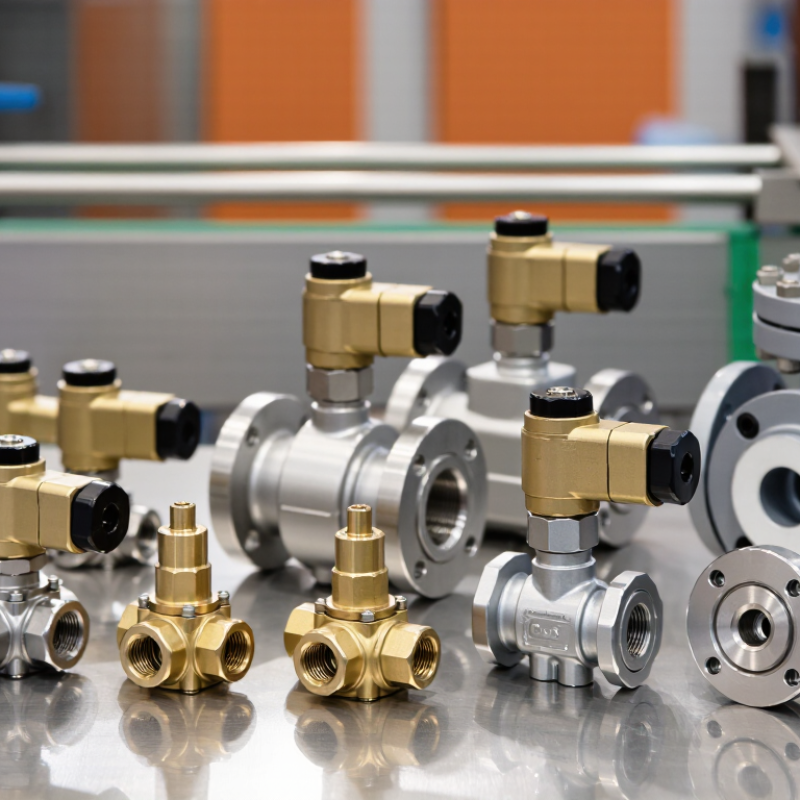
Pneumatic valves control compressed air in cylinders, grippers, and automated production lines. They direct airflow, regulate pressure, and release air safely. Their response must be quick and repeatable. A small seal failure can stop an entire packaging station.
China is a major supplier because its manufacturing ecosystem combines metal machining, electronics, seals, testing, and large-scale assembly. The International Federation of Robotics reported 541,302 industrial robots installed worldwide in 2023. China accounted for 276,288 installations, or about 51 percent. This automation demand supports extensive local production of pneumatic components. MarketsandMarkets’ 2024 industrial automation research also identifies Asia-Pacific as a leading growth region, driven by factory upgrades and smart manufacturing. However, volume is not enough. Quality can vary between factories, and inexpensive products may hide weaker testing or shorter seal life.
Tips: Check pressure range, port size, response time, material compatibility, and cycle-life data. Ask for test records, not only catalog claims. ISO 9001 certification helps, but it does not replace product testing. Observe the valve under real moisture, dust, and temperature conditions. A factory sample may perform well, yet long-term maintenance remains uncertain. Specification details matter.
China Top 10 Pneumatic Valve Manufacturers - What Are Pneumatic Valves and Why China Is a Major Supplier
Comparative industry table based on commonly used pneumatic valve types, standards, applications, and typical technical ranges. Company and brand names are intentionally omitted.
| No. | Pneumatic Valve Category | Basic Function | Typical Ports and Positions | Typical Pressure Range | Common Connection Sizes | Typical Applications | Relevant Standards or Interfaces |
|---|---|---|---|---|---|---|---|
| 1 | 2/2-Way Solenoid Valve | Starts or stops the flow of air, water, gas, or other compatible media. | 2 ports; normally closed or normally open | Vacuum to approximately 16 bar, depending on design | G1/8 to G2; NPT sizes also common | Air preparation, water control, packaging, and general automation | IEC 60534 principles may apply to flow control; thread standards include ISO 7-1 and ASME B1.20.1 |
| 2 | 3/2-Way Directional Valve | Controls a single-acting actuator or provides pilot and exhaust functions. | 3 ports; 2 positions | Typically 1.5 to 10 bar pneumatic supply | G1/8 to G1/2 | Clamping, ejecting, gripping, and single-acting cylinders | ISO 5599-1 for applicable interface designs; ISO 1219 for fluid-power symbols |
| 3 | 5/2-Way Directional Valve | Directs compressed air to extend or retract a double-acting actuator. | 5 ports; 2 positions | Typically 1.5 to 10 bar | G1/8 to G1/2; manifold-mounted versions are common | Automation lines, assembly machines, robotics, and material handling | ISO 5599-1, ISO 15218, and ISO 1219 may be relevant depending on configuration |
| 4 | 5/3-Way Directional Valve | Provides extend, retract, and center-position control for double-acting actuators. | 5 ports; 3 positions | Typically 2 to 10 bar | G1/8 to G1/2 | Position holding, controlled stopping, and machine safety functions | ISO 5599-1 and ISO 1219 symbols are commonly referenced |
| 5 | NAMUR-Mount Solenoid Valve | Mounts directly to pneumatic quarter-turn actuators for compact on/off control. | Usually 3/2 or 5/2 functions | Typically 2.5 to 8 bar | Actuator interface with G1/4 or similar pneumatic ports | Ball valves, butterfly valves, process skids, and fluid-handling systems | VDI/VDE 3845 mounting interface |
| 6 | Pilot-Operated Solenoid Valve | Uses a small solenoid pilot to control a larger main flow path. | 2/2 or 3/2 ports; normally closed or normally open | Commonly up to 16 bar, subject to media and construction | G1/4 to G2 | High-flow compressed air systems and industrial process equipment | Coil safety and ingress protection are often specified using IEC 60529 |
| 7 | Pneumatic Butterfly Valve Assembly | Uses a rotary pneumatic actuator to open, close, or throttle a butterfly valve. | Quarter-turn operation; wafer, lug, or flanged body | Commonly 6 to 16 bar body pressure, depending on valve material | DN25 to DN600 and larger sizes are available in industrial designs | Water treatment, HVAC, chemical processing, and bulk-air systems | ISO 5211 actuator mounting; EN 593 and API 609 may apply to valve designs |
| 8 | Pneumatic Ball Valve Assembly | Provides fast quarter-turn isolation with relatively low flow resistance. | Two-way or three-way; floating or trunnion-mounted designs | Typically 10 to 40 bar, depending on body, seat, and size | DN8 to DN300 in common industrial ranges | Compressed air, water, gases, chemicals, and general process isolation | ISO 5211, EN 1983, and API 608 may be relevant depending on design |
| 9 | Pneumatic Angle-Seat Valve | Controls high-flow liquids, gases, steam, and mildly contaminated media. | Two-way or three-way; normally closed, normally open, or double-acting | Often up to 16 bar; temperature depends on seal material | G1/4 to G3 and flanged versions | Steam, water, process gas, washing systems, and industrial utilities | Pressure equipment and material compatibility requirements depend on the application |
| 10 | Pneumatic Proportional Valve | Continuously regulates pressure, flow, or position instead of providing only on/off control. | Proportional control with analog or digital input | Commonly 0 to 10 bar for pneumatic control circuits | G1/8 to G1/2; manifold and compact electronics-integrated versions | Force control, tension control, pressure regulation, and precision automation | IEC 61131-2 may apply to control-system interfaces; performance is application-specific |
Related Posts
-

Top Pneumatic Valves for Global Buyers What to Consider?
-
Essential Tips for Choosing the Right Pneumatic Ball Valve?
-
How to Choose a Pneumatic Control Valve in 2026?
-
What Are the Best Lined Valves from China?
-
2025 Top 10 PTFE Valves for Chemical Processing with 30 Percent Improved Durability
-

Mastering Ball Valve Selection: A Comprehensive Tutorial for Optimal Flow Control in Industrial Applications
